
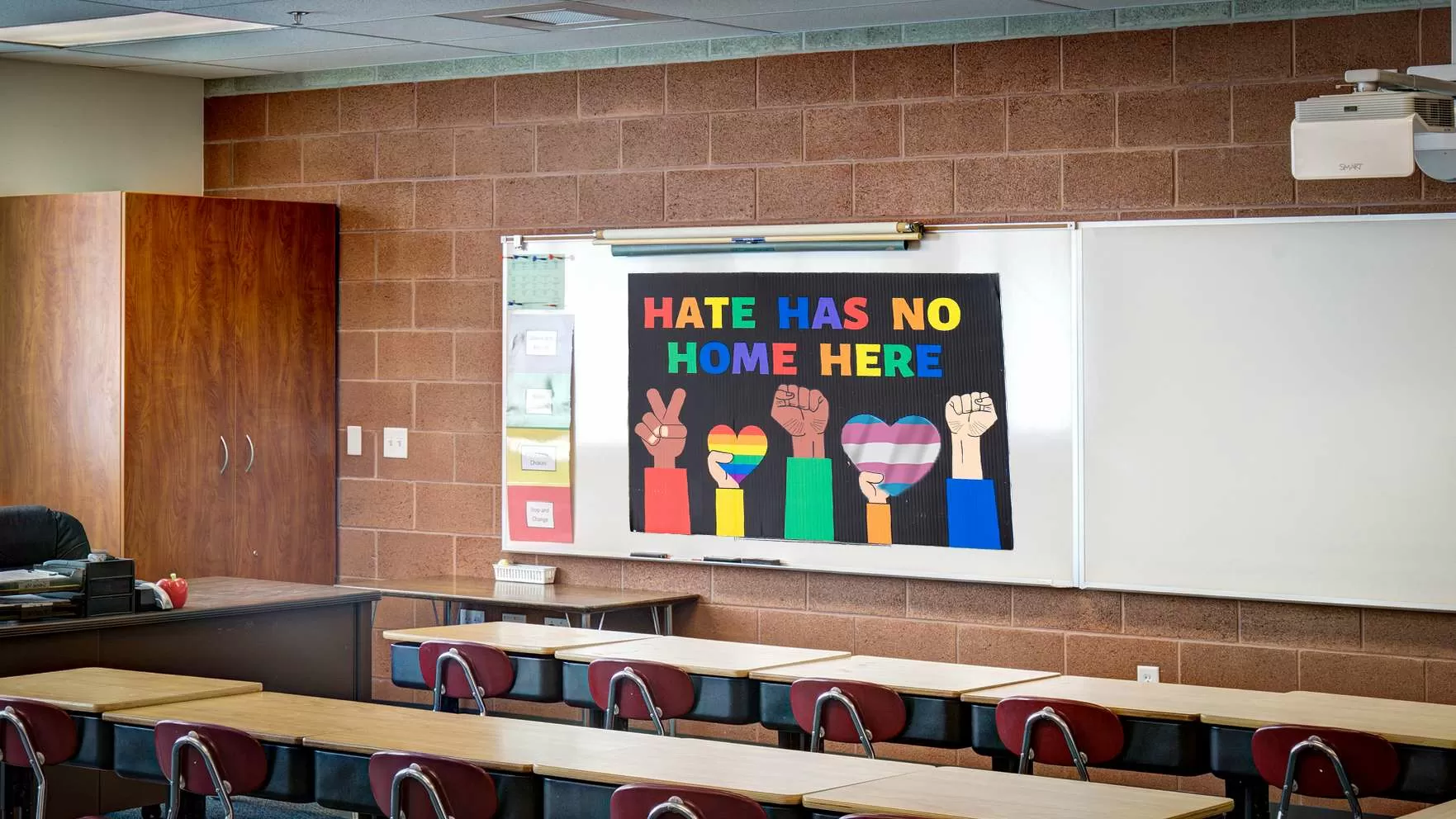
The state of Ohio has recently made headlines for a controversial decision regarding a poster that was displayed in a school. The poster, which featured a rainbow flag, has been deemed as “instruction that includes sexuality content” and has triggered a law that protects parents’ rights in the state. This decision has sparked a debate on the role of schools in educating students about important social issues and the boundaries of parental rights.
The Ohio Board of Education has stated that the poster, which was displayed in a school in the city of Akron, falls under the category of “instruction that includes sexuality content” and therefore, is subject to the state’s parents’ rights law. This law gives parents the right to opt their children out of any instruction that they deem inappropriate for their child’s age or beliefs. The board’s decision has caused an uproar among parents, educators, and activists, with some applauding the move and others criticizing it.
The poster in question was created by a student-led organization called the Gay-Straight Alliance, which aims to promote acceptance and inclusivity for LGBTQ+ students. The poster featured a rainbow flag, a symbol of pride and support for the LGBTQ+ community, along with a message of love and acceptance. The school had displayed the poster as part of their efforts to create a safe and inclusive environment for all students.
However, the board’s decision has raised concerns about the limitations it puts on schools to educate students about important social issues. Many argue that the poster was not promoting any specific sexual activity but rather, was a symbol of support and acceptance. By categorizing it as “instruction that includes sexuality content,” the board is sending a message that any mention of LGBTQ+ issues is inappropriate for students, which goes against the very principles of inclusivity and diversity that schools should be promoting.
On the other hand, some parents have expressed their support for the board’s decision, stating that they have the right to decide what their children are exposed to. They argue that schools should not be teaching students about issues related to sexuality and that it is the parents’ responsibility to educate their children on such matters.
The debate surrounding this issue brings to light the larger question of the role of schools in educating students about social issues. While it is important for schools to create a safe and inclusive environment for all students, it is also crucial for parents to have a say in what their children are taught. Finding a balance between these two is essential to ensure that students receive a well-rounded education that prepares them for the real world.
It is also important to note that the state’s parents’ rights law was put in place to protect parents’ rights to raise their children according to their beliefs and values. However, it should not be used as a tool to limit students’ exposure to important social issues. Schools have a responsibility to educate students about diversity, acceptance, and inclusivity, and this includes discussions about LGBTQ+ issues.
In the end, it is crucial for all parties involved to have open and respectful discussions to find a solution that benefits both students and parents. The poster, which sparked this debate, was created with the intention of promoting love and acceptance, and it is unfortunate that it has caused such controversy. Let us not forget that our children are the future, and it is our responsibility to educate them about the world they live in, including issues related to sexuality and diversity.
In conclusion, the decision of the Ohio Board of Education to categorize the poster featuring a rainbow flag as “instruction that includes sexuality content” has sparked a heated debate. While it is important for parents to have a say in their children’s education, it is equally important for schools to create a safe and inclusive environment for all students. Let us work towards finding a balance that respects both parental rights and the need for students to be educated about important social issues. After all, it is our collective responsibility to create a better and more accepting world for our children.
