Helium-3 Mining: Could the Moon Become Energy's Future Frontier?
Understanding Helium-3: The Rare Isotope Transforming Energy Possibilities
Helium-3 moon mining represents one of the most ambitious frontiers in energy exploration, as scientists and space agencies worldwide recognize the extraordinary potential of this rare isotope. Unlike traditional fossil fuels, helium-3 exists in remarkably limited quantities on Earth, making lunar acquisition an increasingly attractive prospect for addressing global energy demands in the coming decades.
Helium-3 is a lightweight, non-radioactive isotope of helium containing two protons and one neutron. This remarkable element possesses unique properties that make it exceptionally valuable for fusion energy applications. When fused with deuterium, helium-3 produces enormous amounts of clean energy with virtually no radioactive byproducts, distinguishing it fundamentally from conventional nuclear reactions.
Current Helium-3 Supply and Escalating Costs
The terrestrial supply of helium-3 remains severely constrained, contributing to exponentially rising prices that reflect its scarcity and growing demand. Currently, Earth's helium-3 reserves are largely produced as byproducts during tritium manufacturing for nuclear weapons programs. This limited production pathway creates substantial supply bottlenecks that constrain availability for scientific research and medical applications.
Industry analysts project that demand for helium-3 will surge dramatically throughout the 21st century as nations pursue clean energy transitions and invest in advanced fusion research initiatives. Present market prices exceed thousands of dollars per liter, representing extraordinary value compared to conventional energy resources. These escalating costs have motivated researchers and space companies to investigate extraterrestrial sources.
The Moon as a Viable Helium-3 Repository
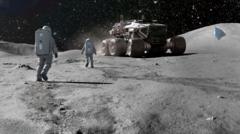
The lunar surface harbors substantial quantities of helium-3, embedded within regolith particles deposited through billions of years of solar wind interaction. Unlike Earth, the moon lacks a protective magnetic field, allowing solar winds to deposit helium-3 directly onto surface materials. Lunar soil samples collected during Apollo missions revealed helium-3 concentrations significantly higher than anything found terrestrially.
Estimates suggest that the moon contains approximately one million metric tons of helium-3, concentrated primarily in the top few meters of lunar regolith. This abundance could theoretically satisfy global energy requirements for centuries, making lunar mining an extraordinarily compelling long-term solution. Scientists calculate that merely one hundred metric tons of helium-3 could satisfy humanity's entire annual energy consumption through fusion reactions.
Technological Challenges in Lunar Helium-3 Extraction
Despite helium-3's tremendous potential, extracting and transporting this resource from the moon presents formidable technical obstacles. Mining operations would require establishing permanent lunar facilities capable of withstanding extreme temperature fluctuations and the harsh vacuum environment. Specialized equipment must extract helium-3 from regolith particles through heating and separation processes.
Transportation represents another significant challenge, as returning helium-3 to Earth requires advanced spacecraft and reliable launch infrastructure. The costs associated with establishing mining operations, maintaining equipment, and conducting routine transportation missions currently exceed projected economic returns. However, continuous technological advancement in space exploration suggests these barriers may diminish substantially within coming decades.
Investment and Future Prospects for Lunar Mining
Numerous space agencies and private companies have initiated planning for helium-3 extraction missions. Lunar resource development agreements and international frameworks continue evolving to establish governance structures for space-based resource exploitation. The convergence of declining space launch costs and intensifying energy demands creates increasingly favorable conditions for lunar mining ventures.
Research institutions worldwide are developing innovative extraction methodologies and advanced fusion reactor designs optimized for helium-3 fuel. Successful demonstration projects on the lunar surface would validate technical feasibility and accelerate commercial development timelines. Industry observers anticipate that helium-3 moon mining could commence within the next two to three decades, contingent upon continued investment and technological progress.
Implications for Global Energy Security and Sustainability
The successful extraction and utilization of helium-3 could fundamentally transform energy production systems globally. Unlike fossil fuels, helium-3 fusion reactions produce minimal environmental consequences and virtually no radioactive waste products. This clean energy pathway aligns with international climate objectives and offers potential solutions to long-standing energy security concerns.
As nations accelerate their transitions toward renewable and sustainable energy sources, helium-3 emerges as a transformative possibility. The combination of abundant lunar reserves, exceptional energy-production efficiency, and environmental benefits positions helium-3 moon mining as a cornerstone technology for future civilization. Continued international cooperation, technological innovation, and strategic investment will determine whether this promising energy frontier becomes reality within our lifetime.


