
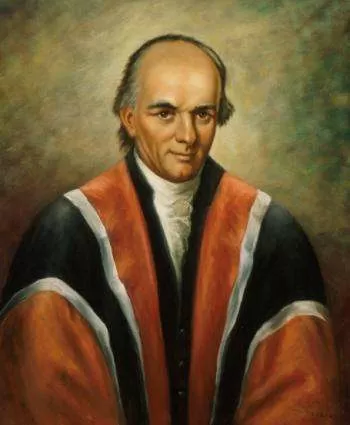
On April 21, 1800, a momentous event took place in the history of the United States Supreme Court. Justice Alfred Moore, a prominent lawyer and politician, took his judicial oath and officially became a member of the highest court in the land. This day marked an important milestone in the development of the American legal system and solidified Justice Moore’s legacy as a respected and influential figure in the country.
Born in 1755 in New Hanover County, North Carolina, Alfred Moore grew up in a family of lawyers and was destined for a career in law. He received his education at the University of North Carolina and went on to study law under the renowned Judge Samuel Johnston. Moore quickly gained recognition for his sharp legal mind and was admitted to the bar at the young age of 19.
Moore’s legal career took off and he became one of the most sought-after lawyers in North Carolina. He was known for his exceptional skills in both criminal and civil law, and his reputation as a fair and just lawyer spread far and wide. In 1787, Moore was elected to the North Carolina House of Commons and later served as a delegate to the state’s ratifying convention for the US Constitution.
In 1799, President John Adams nominated Moore to serve as an Associate Justice on the Supreme Court. This was a great honor for Moore and he accepted the nomination without hesitation. However, his confirmation process was not without challenges. Moore faced opposition from his political opponents who questioned his loyalty to the Federalist party. But despite the opposition, Moore’s impressive record and qualifications won him the support of the Senate, and he was confirmed to the Supreme Court on April 21, 1800.
On that historic day, Justice Alfred Moore stood before Chief Justice Oliver Ellsworth and took his judicial oath. In a solemn ceremony attended by his family, friends, and colleagues, Moore pledged to faithfully and impartially discharge his duties as a Justice of the Supreme Court. With this oath, he officially became a member of the highest court in the land, joining the ranks of the most esteemed legal minds in the country.
Justice Moore’s tenure on the Supreme Court was marked by his unwavering commitment to justice and the rule of law. He was known for his strict interpretation of the Constitution and his adherence to the principles of the Founding Fathers. In his opinions, he displayed a deep understanding of the law and a keen sense of fairness, earning him the respect and admiration of his fellow Justices.
During his time on the bench, Justice Moore played a key role in several landmark cases that shaped the American legal system. He was a strong advocate for the rights of the individual and his opinions often reflected his belief in the importance of protecting the liberties enshrined in the Constitution. His contributions to the development of American jurisprudence cannot be overstated and his legacy continues to influence the legal landscape of the country today.
In addition to his judicial duties, Justice Moore also served as a professor at the University of North Carolina, where he taught law and mentored the next generation of lawyers. He was deeply committed to the education and training of young legal minds, and his legacy lives on through the many students he inspired and influenced.
As we reflect on this important moment in Supreme Court history, we are reminded of the enduring impact of Justice Alfred Moore’s contributions to the legal profession. He was a man of great integrity, intelligence, and dedication, who left an indelible mark on the American legal system. His legacy continues to inspire and guide us, and his memory will forever be honored in the halls of the Supreme Court.
Today, as we celebrate the anniversary of Justice Moore’s judicial oath, let us also remember the principles he stood for and the legacy he left behind. Let us honor his memory by upholding the rule of law and promoting justice for all. As Justice Moore himself once said, “The Constitution is the guide which I never will abandon.” May we all strive to follow in his footsteps and uphold the ideals of justice and equality that he held so dear.
