
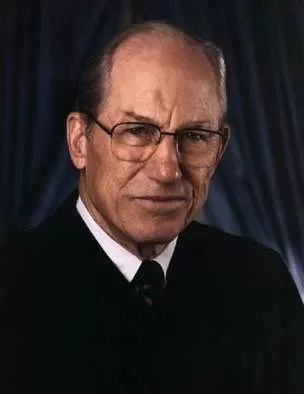
On April 16, 1962, Justice Byron White took his oath as a member of the United States Supreme Court. This day marked a significant moment in the history of the highest court in the country, as Justice White’s appointment brought a new perspective and wealth of experience to the bench.
Born in Fort Collins, Colorado in 1917, Byron White had a distinguished career even before his appointment to the Supreme Court. He was a star athlete at the University of Colorado, where he received a bachelor’s degree in 1938 and later went on to earn a Rhodes Scholarship to study at the University of Oxford. He then attended Yale Law School, where he graduated first in his class in 1946.
After working as a clerk for two Supreme Court justices and serving in the Navy during World War II, White went on to have a successful legal career, including serving as the Deputy Attorney General under President John F. Kennedy. It was during this time that he caught the attention of President Kennedy, who nominated him to the Supreme Court in 1962.
Justice White’s appointment was met with widespread praise and admiration from his peers in the legal community. His credentials and experience were unmatched, and he was seen as a fair and impartial judge who would bring a unique perspective to the Supreme Court.
During his time on the bench, Justice White made significant contributions to the field of law. He was known for his strong opinions on civil rights, free speech, and criminal justice, often taking a moderate stance that balanced the rights of individuals with the interests of society. He was also a strong advocate for judicial restraint, believing that the Supreme Court should not overstep its role and should defer to the decisions of the legislative and executive branches.
But perhaps what Justice White is most remembered for is his unwavering commitment to the Constitution. He believed in the importance of interpreting the law based on its original meaning and intent, rather than imposing one’s own personal beliefs or opinions. This approach has had a lasting impact on the Supreme Court and continues to shape the way cases are decided today.
Justice White’s tenure on the Supreme Court lasted until 1993, when he retired after 31 years of service. He left a lasting legacy and is remembered as one of the most influential and respected justices in the history of the Court. His dedication to upholding the rule of law and protecting the rights of all individuals has left a lasting impact on the American legal system.
Today, we celebrate the anniversary of Justice Byron White’s oath-taking and reflect on the invaluable contributions he made to the Supreme Court and our nation. His legacy serves as a reminder of the importance of having diverse perspectives on the bench and the crucial role of the Supreme Court in safeguarding our democracy.
As we look to the future, let us remember the words of Justice White, who once said, “The Constitution is not a document for the faint-hearted. It is a document for the stout-hearted, and we need more of those in this country.” We can all strive to embody his courage and commitment to justice, and continue to uphold the principles and values upon which our nation was founded.
