
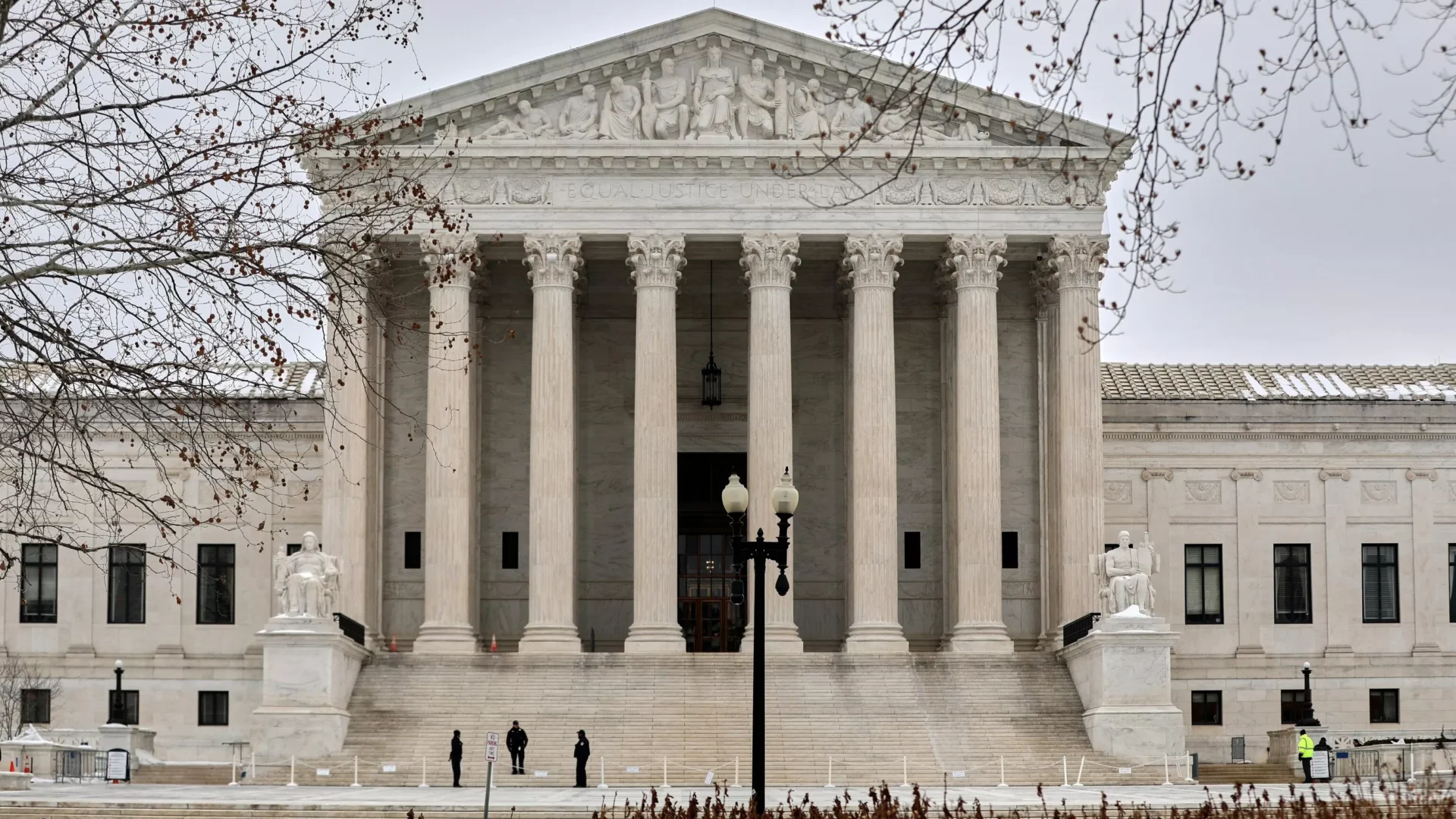
The United States Supreme Court is once again at the center of a controversial case that has the potential to impact the lives of millions of Americans. On Monday, the highest court in the land heard arguments in a case that could potentially loosen a federal law that bars marijuana users from owning guns. This case has caught the attention of the nation as it has crossed typical political lines, with both sides of the aisle coming together to support this change.
The case in question is that of a Nevada woman, S. Rowan Wilson, who was denied the purchase of a firearm in 2011 due to her admission of using marijuana for medical purposes. Despite being a law-abiding citizen with no criminal record, Wilson was denied her constitutional right to bear arms simply because she used marijuana, which is legal for medical purposes in her state. This sparked a legal battle that has now made its way to the Supreme Court.
The federal law in question is the Gun Control Act of 1968, which prohibits anyone who is an “unlawful user” of a controlled substance from owning a firearm. While this law was put in place with the intention of keeping guns out of the hands of drug addicts and criminals, it has also affected law-abiding citizens who use marijuana for medical purposes in states where it is legal. This has caused a conflict between state and federal laws, and the Supreme Court is now tasked with finding a resolution.
During the hearing, the justices seemed inclined to rule in favor of Wilson and potentially loosen the federal law. This was evident as both liberal and conservative justices raised concerns about the impact of this law on the Second Amendment rights of individuals. Justice Clarence Thomas, a conservative, questioned the logic of denying someone their right to bear arms for using a substance that is legal in their state. Similarly, Justice Sonia Sotomayor, a liberal, expressed her concern about the broad language of the law and its potential to infringe on the rights of law-abiding citizens.
This case has brought together unlikely allies, with organizations such as the National Rifle Association and the American Civil Liberties Union both filing briefs in support of Wilson. This shows that this issue goes beyond political affiliations and is a matter of fundamental rights. The NRA argued that the law unfairly targets medical marijuana users and that it is a violation of their Second Amendment rights. The ACLU echoed this sentiment, stating that the law disproportionately affects people of color who are more likely to be arrested for marijuana possession.
The potential loosening of this federal law has also been met with support from various advocacy groups and individuals. Many argue that the use of marijuana for medical purposes should not disqualify someone from owning a firearm, especially when they have no criminal record. Additionally, they argue that this law unfairly stigmatizes medical marijuana users and denies them their constitutional rights.
The outcome of this case could have far-reaching implications, not just for medical marijuana users, but for the overall debate on gun control in the United States. It has sparked a larger conversation about the conflict between state and federal laws, and the need for clarity and consistency in the legal system. The Supreme Court has the opportunity to address this issue and potentially bring about a positive change that will benefit many Americans.
In conclusion, the Supreme Court’s hearing on the federal law that bars marijuana users from owning guns has brought together individuals and organizations from different backgrounds in support of a common cause. This case has the potential to bring about a positive change and protect the rights of law-abiding citizens who use marijuana for medical purposes. It is a step towards addressing the conflict between state and federal laws and ensuring that the rights of all Americans are protected. Let us hope that the Supreme Court makes the right decision and brings about a positive change for the betterment of our society.
