Trump Disputes Weapons Shortage Claims Amid Crackdown on Information Leakers
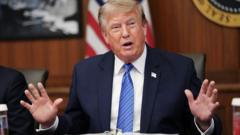
Trump Dismisses Weapons Shortage Narrative
Former President Donald Trump has firmly rejected assertions regarding a US weapons shortage, characterizing the discussion as misleading while simultaneously emphasizing his administration's commitment to addressing what he describes as improper disclosure of sensitive material. The controversy surrounding US weapons shortage claims has gained traction in recent months, prompting clarifications from senior political figures about America's military readiness and procurement capabilities.
Trump's statement represents a direct challenge to reports suggesting significant depletion in America's strategic weapons reserves. Rather than acknowledging inventory constraints, the former president has chosen to redirect focus toward identifying and prosecuting individuals responsible for disseminating restricted information. This dual-pronged approach demonstrates a strategy of both defending military capabilities while simultaneously tackling what the administration perceives as threats to national security through unauthorized disclosures.
The Challenge of Verifying Military Inventory Data
Determining the actual status of US weapons stockpiles presents inherent difficulties due to the classified nature of comprehensive military inventories. While complete and detailed statistics remain restricted from public access, available open-source information provides analysts and defense experts with partial insights into ammunition consumption patterns and weapons utilization rates. This data gap between classified and unclassified information creates space for competing narratives about America's military preparedness.
Public Information on Military Ammunition Consumption
Analysis of declassified reports and officially released defense documents indicates substantial consumption of specialized and technologically advanced weaponry in recent years. Certain categories of military hardware, particularly precision-guided munitions and sophisticated ballistic systems, require extended manufacturing timelines and specialized industrial capacity. The production of these complex weapons systems cannot be rapidly scaled without significant investment in manufacturing infrastructure and skilled labor.
Publicly available procurement records demonstrate notable requests for replenishment of various ammunition types and defensive systems. These requests reflect genuine operational needs arising from sustained military commitments in multiple theaters. However, the distinction between normal operational consumption and critical shortage remains contested among defense analysts and policymakers.
Manufacturing Constraints and Supply Chain Realities
The US weapons shortage debate intersects with broader supply chain challenges affecting defense manufacturing. Production facilities for advanced military equipment operate near capacity in many cases, and rapidly expanding output requires time for facility upgrades, workforce training, and regulatory compliance. Unlike commercial manufacturing, defense production must meet stringent quality control standards and security protocols that cannot be compromised for speed.
Certain weapons categories are particularly difficult to manufacture quickly due to their technological sophistication and reliance on scarce raw materials or specialized components. The supply chains for these items involve multiple contractors and subcontractors, creating potential bottlenecks when demand surges unexpectedly. Investment in domestic production capacity has become a focal point for defense policy discussions.
Information Security and Leak Investigations
Trump's emphasis on hunting down information leakers reflects heightened concern about unauthorized disclosure of defense-related data. Classified information regarding military readiness, weapons inventory levels, and strategic capabilities carries significant implications for national security. The identification and prosecution of those responsible for leaking such material has become a priority for those advocating stricter information security protocols.
These investigations typically involve coordination between the Department of Defense, intelligence agencies, and federal law enforcement. The process of tracking leaked information to its source requires sophisticated digital forensics and personnel security procedures. Public statements about pursuing leakers serve both as warnings to potential disclosures and reassurances to allies about information protection.
Implications for Defense Policy
The debate over US weapons shortage and information security reflects deeper tensions about transparency, military preparedness, and national defense strategy. Policymakers must balance the public's right to information about government operations with legitimate national security requirements. Defense officials continue developing approaches to address documented consumption rates while maintaining technological advantages over adversaries.
The question of whether America faces genuine shortages or manageable supply challenges remains significant for future military funding decisions and strategic planning. Congressional appropriations committees closely examine defense procurement requests and inventory assessments when determining budget allocations. The outcome of these discussions will shape America's military capabilities for years to come.


