Historic Solar Eclipse Captivates Millions Across UK and Europe
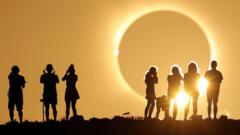
Once-in-a-Generation Solar Eclipse Wows Millions Across UK and Europe
A remarkable solar eclipse UK Europe event has captivated millions of spectators as the Moon passed directly in front of the Sun, creating one of the most anticipated astronomical phenomena in modern history. This extraordinary celestial alignment brought people together across multiple continents in an unforgettable display of nature's cosmic choreography.
Exceptional Coverage in the United Kingdom
The southwestern English county of Cornwall witnessed truly remarkable conditions during the solar eclipse, with the Moon obscuring more than 95% of the Sun's disk. Residents and tourists who gathered across clifftops, beaches, and designated viewing areas experienced a dramatic darkening of the daytime sky, creating an atmosphere of wonder and scientific fascination. The partial eclipse lasted several hours, allowing observers sufficient time to witness this rare astronomical occurrence with proper solar viewing equipment.
Beyond Cornwall, the rest of the United Kingdom experienced varying degrees of solar coverage. Northern regions saw somewhat lesser percentages of the Sun blocked, yet still experienced a noticeable dimming of daylight. Cities including London, Manchester, and Edinburgh drew large crowds to parks and public spaces where viewing events had been organized by astronomical societies and educational institutions.
Total Eclipse Magic in Spain
While the UK experienced a partial eclipse, parts of Spain encountered something even more spectacular—a complete total eclipse. The path of totality crossed through Spanish territory, particularly affecting regions in the southern and central portions of the country. During these precious moments of complete totality, the Sun's corona became visible to the naked eye, revealing the luminous outer atmosphere that remains hidden during normal daylight hours.
Spanish observers in the direct path of totality reported experiencing temporary darkness in the middle of the day, a phenomenon that created an almost surreal midday twilight. Temperature drops of several degrees were recorded during the period of total coverage, and wildlife displayed unusual behavior as confused animals responded to the sudden artificial nightfall.
International Viewing and Scientific Significance
The once-in-a-generation eclipse drew international attention, with astronomers, researchers, and eclipse enthusiasts traveling from around the globe to witness this rare alignment. Scientific institutions positioned sophisticated instruments along the eclipse path to gather valuable data about the Sun's corona and its magnetic properties. Educational institutions organized viewing events, making this astronomical event accessible to students and the general public alike.
Professional photographers and amateur astronomers documented the event extensively, capturing images of the eclipse's progression across different locations. These photographs will serve as lasting records of this significant astronomical moment and contribute to our understanding of solar-lunar interactions.
Impact on Daily Life and Infrastructure
The magnitude of public interest in the solar eclipse UK Europe event necessitated careful planning by local authorities. Transportation networks experienced increased traffic as millions of people relocated to optimal viewing locations. Businesses offered flexible schedules to allow employees to observe the eclipse, recognizing the historical significance of this rare occurrence.
Power companies and utility operators maintained heightened vigilance during the eclipse period, as the temporary reduction in solar radiation affected renewable energy production. However, modern infrastructure proved resilient, and no significant disruptions were reported across the continent.
The Path of Totality and Regional Variations
The specific geography of the eclipse path determined the quality of the viewing experience across different regions. Locations directly in the path of totality witnessed the complete disappearance of the Sun's disk, while areas slightly outside this corridor experienced only partial coverage. Weather conditions also played a crucial role, with cloud cover affecting visibility in certain regions despite optimal eclipse timing.
Meteorological services had issued detailed forecasts helping observers select viewing locations with the highest probability of clear skies. This preparation enabled millions to plan their eclipse-watching strategies effectively.
Historical Significance and Rarity
Astronomers emphasized that opportunities to observe a total eclipse from populated areas of Europe occur only once every several centuries. This once-in-a-generation eclipse represented a remarkable convergence of circumstances, making it scientifically valuable and personally memorable for millions who witnessed it. The last similarly significant eclipse visible from the United Kingdom occurred in 1999, making this 2024 event particularly special for contemporary observers.
The eclipse served as a powerful reminder of humanity's small place within the cosmos and inspired renewed interest in astronomy and space science among viewers of all ages. Educational institutions have already begun incorporating this event into their curricula, ensuring that its significance will be passed to future generations.


