Dover Road Blockade: Far-Right Activists Warn of New Protests
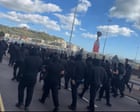
Dover Road Blockade Sparks New Warnings from Activist Groups
The Dover road blockade orchestrated by masked extremists has reignited concerns among civil rights organizations and political figures who fear the Dover road blockade could become a recurring phenomenon. Unless authorities dramatically intensify their response, these disruptive demonstrations may recur with greater frequency and scale, according to warnings issued by prominent campaigners.
Officials and advocacy groups emphasize that the ability of extremist organizations to mobilize participants for the Dover road blockade represents a significant public order challenge. The incident has exposed vulnerabilities in current law enforcement strategies, with critics arguing that inadequate police response has inadvertently emboldened these groups to consider additional coordinated actions.
Who Is Behind the Disruptions
Patriot Platform, the organization claiming responsibility for the recent disruptions, describes itself through nationalist rhetoric and frames its mission around defending national interests. The group's involvement in the Dover road blockade has raised alarm bells among security analysts and anti-extremism researchers who have documented connections between the organization and broader far-right networks operating across the United Kingdom.
The anti-immigration focus of Patriot Platform places it within a category of movements that authorities have been monitoring closely. Their willingness to employ organized blockades as a tactical tool demonstrates an evolution in protest methods, moving from traditional gatherings to coordinated action designed to disrupt critical infrastructure and commerce.
Police Response and Public Safety Concerns
Hope Not Hate, a prominent organization dedicated to countering extremist movements, has criticized what it characterizes as insufficient police action. The foundation's leadership argues that the relative ease with which Patriot Platform was able to mobilize hundreds of participants for the Dover road blockade indicates systemic gaps in enforcement capacity or priority-setting within law enforcement agencies.
The blockade of major transport routes at Dover created significant economic disruption and raised questions about the adequacy of preventative measures. Key trade corridors experienced delays, and the incident prompted calls for enhanced security protocols at vulnerable infrastructure points throughout the region.
Escalation Warnings and Future Threats
Political representatives across multiple constituencies have expressed concern that without tangible improvements in police strategy, the Dover road blockade may serve as a template for future actions. The low barriers to organization and the high visibility achieved through a single coordinated event create incentives for replication by similar groups.
Campaign organizers note that Patriot Platform's decision to publicize its intentions—even in veiled terms—suggests the group believes it can operate with relative impunity. This confidence, they argue, stems from perceived hesitation in law enforcement response to previous demonstrations. The prospect of recurring blockades at critical junctures like Dover represents a genuine threat to both public order and economic stability.
Broader Context of Far-Right Activism
The Dover road blockade must be understood within the context of increasing far-right political mobilization across Western Europe. Anti-immigration sentiment has provided recruitment and funding opportunities for organizations seeking to channel public anxiety into direct action. Patriot Platform's emergence reflects this broader trend, though the group's scale and organizational capacity distinguish it from purely online or localized movements.
Security analysts have warned that tactical innovation in protest methods—particularly the use of coordinated blockades—poses challenges for traditional crowd management approaches. The mobile nature of such actions and the rapid deployment of participants demonstrated during the Dover road blockade reveal the necessity for updated police protocols and resource allocation strategies.
Calls for Enhanced Enforcement
Representatives from both law enforcement and civil society have advocated for comprehensive strategies to address the recurring threat. Enhanced surveillance of extremist communications, faster response protocols for emerging threats, and coordination between multiple agencies have been proposed as potential solutions to prevent future iterations of the Dover road blockade.
The incident has also prompted discussion about addressing underlying grievances that extremist groups exploit for recruitment purposes. While security measures remain essential, analysts argue that longer-term prevention requires engagement with communities vulnerable to radicalization narratives, particularly those experiencing economic insecurity or rapid demographic change.