Amazon Founder Bezos Predicts AI Will Generate More Employment Opportunities
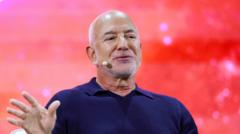
AI Create Jobs Rather Than Eliminate Positions
Jeff Bezos, the founder of Amazon and entrepreneur behind multiple technology and aerospace ventures, has expressed a distinctive perspective on how AI create jobs in the modern economy. Rather than viewing artificial intelligence as a threat to employment, Bezos anticipates that technological advancement will fundamentally reshape the labor market, generating unprecedented opportunities for human workers across various sectors and industries.
The business visionary, whose portfolio spans e-commerce, robotics development, and space exploration through Blue Origin, maintains an optimistic outlook regarding the intersection of automation and human employment. His conviction that AI will create jobs stems from historical precedent and current market dynamics that suggest technological disruption typically leads to new employment categories rather than permanent job loss.
Historical Context of Technological Advancement
Throughout economic history, technological breakthroughs have consistently demonstrated a pattern of employment transformation rather than elimination. The industrial revolution, computerization, and internet adoption each sparked initial concerns about workforce displacement, yet ultimately generated more positions than they replaced. Bezos applies this historical lens to contemporary artificial intelligence development, arguing that similar dynamics will unfold as AI becomes increasingly integrated into business operations and daily life.
The entrepreneur's confidence in AI create jobs reflects observations from current market conditions. As organizations implement automated systems and intelligent algorithms, they simultaneously require expanded teams of specialists, engineers, data scientists, and strategists to develop, maintain, and optimize these technologies. This complementary relationship between automation and human expertise suggests that rather than causing universal unemployment, technological advancement creates demand for different skill sets.
The Emerging Labor Shortage Perspective
Perhaps most significantly, Bezos forecasts that artificial intelligence implementation will generate a labor shortage rather than surplus unemployment. This counterintuitive prediction suggests that the rate of new job creation will outpace available skilled workers, creating competitive conditions where employers actively recruit talent and workers enjoy enhanced bargaining power.
The labor shortage scenario reflects growing recognition that as certain routine tasks become automated, demand intensifies for positions requiring creative thinking, emotional intelligence, complex problem-solving, and strategic decision-making—uniquely human capabilities that artificial intelligence cannot readily replicate. These emerging roles span healthcare, education, design, strategy, and innovation sectors where human judgment remains irreplaceable.
Robotics and Innovation at Amazon
Bezos's companies directly contribute to this AI-driven transformation. Amazon has invested substantially in robotics and automation technologies that streamline warehouse operations and logistics networks. Rather than reducing workforce numbers, these implementations have enabled Amazon to expand operations, serve more customers, and create additional employment opportunities in management, programming, quality assurance, and specialized technical roles.
The integration of robotics within Amazon's infrastructure demonstrates Bezos's practical commitment to leveraging technology while maintaining and expanding human employment. Warehouse automation handles repetitive physical tasks, while human employees focus on oversight, problem-solving, and roles requiring interpersonal interaction with customers and colleagues.
Blue Origin's Space Exploration Vision
Beyond terrestrial business, Bezos's investments in Blue Origin illustrate his belief in AI and advanced technology creating entirely new employment categories. Space exploration and development inherently require specialized workforces—engineers, scientists, technicians, and support personnel—positions that would not exist without technological advancement. This sector exemplifies how innovation generates jobs in fields previously considered science fiction.
The space industry's expansion under entrepreneurs like Bezos demonstrates that visionary technological pursuits create genuine employment opportunities across manufacturing, research, operations, and administration sectors. As space becomes increasingly accessible and commercialized, employment opportunities will multiply substantially.
Implications for Workforce Development
Bezos's perspective carries significant implications for education, training, and workforce development initiatives. If artificial intelligence will create jobs rather than eliminate positions, emphasis should shift toward preparing workers for emerging roles through advanced education, technical training, and continuous skill development programs. Organizations and governments must invest in preparing populations for the types of employment that AI-driven economies will generate.
The entrepreneur's optimism suggests that fear about technological unemployment, while understandable, may be misplaced if proper educational infrastructure and workforce adaptation strategies are implemented. The challenge becomes not preventing job loss, but ensuring workers possess capabilities required for newly created positions.
Conclusion: A Future of Opportunity
Jeff Bezos's conviction that artificial intelligence will create jobs rather than causing technological unemployment reflects both historical precedent and contemporary market observations. Through his diverse business ventures spanning retail, robotics, and space exploration, Bezos demonstrates practical commitment to innovation while maintaining confidence in human employment's future. As technology continues advancing, the labor market will likely shift toward roles leveraging distinctly human abilities, potentially creating the labor shortage Bezos anticipates rather than mass unemployment.


