A bizarre type of black hole could solve three cosmic mysteries in one
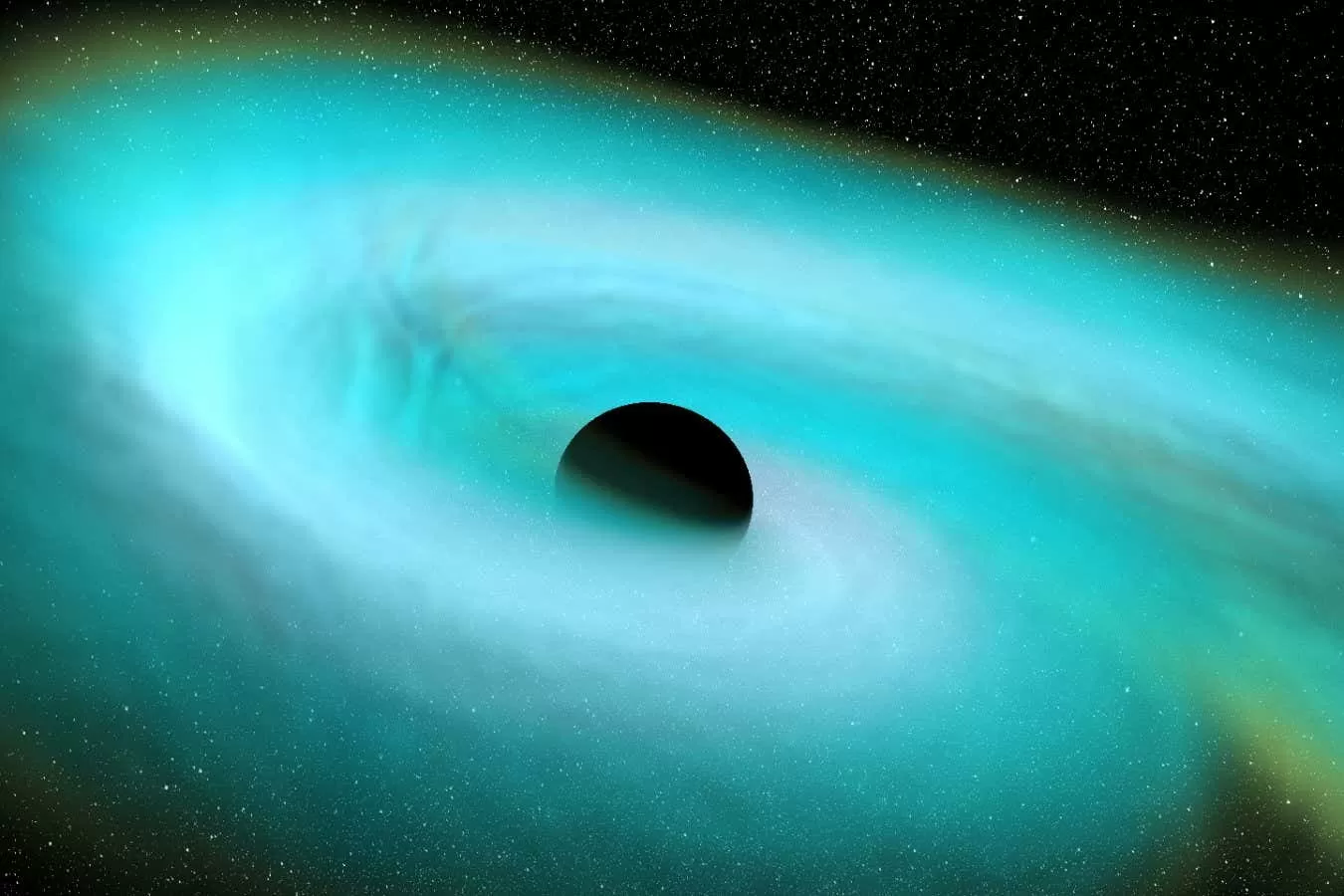
Black holes have always been a source of fascination and mystery for scientists and the general public alike. These massive objects with gravitational pull so strong that not even light can escape have been the subject of numerous studies and theories. But now, a new theory has emerged that suggests black holes may hold the key to solving some of the biggest mysteries in the universe - dark energy and two other cosmic questions.
According to this theory, black holes have the ability to convert matter into energy, a process known as Hawking radiation. This conversion of matter into energy could explain the mysterious force known as dark energy, which is believed to be responsible for the accelerating expansion of the universe. It could also provide an answer to two other cosmic questions - the origin of dark matter and the discrepancy between the predicted and observed expansion rate of the universe.
Dark energy is a term used to describe the unknown force that is causing the expansion of the universe to accelerate. This discovery, made in the late 1990s, was unexpected and has puzzled scientists ever since. Many theories have been proposed to explain this phenomenon, but none have been able to provide a satisfactory explanation. However, the idea that black holes could be responsible for producing dark energy has gained traction in recent years.
The concept of black holes converting matter into energy was first proposed by renowned physicist Stephen Hawking in the 1970s. He theorized that black holes emit radiation, which is a form of energy, due to the quantum effects near the event horizon - the point of no return for anything that gets too close to a black hole. This radiation, known as Hawking radiation, is believed to be responsible for the slow decay of black holes over time.
But what if this process of converting matter into energy is not just limited to the black hole itself? What if it also happens in the surrounding areas of a black hole? This is where the theory of black holes explaining dark energy comes into play. As matter falls towards a black hole, it is converted into energy and is then released back into the universe. This energy, in turn, could be responsible for the accelerated expansion of the universe.
Moreover, this process could also explain the origin of dark matter, which is believed to make up about 85% of the universe's total mass. Dark matter is a type of matter that does not emit or absorb light, making it invisible to telescopes. Its existence is inferred by its gravitational effects on visible matter. However, its composition and origin remain a mystery. But if black holes are constantly converting matter into energy, it could explain the missing mass in the universe, which is believed to be made up of dark matter.
Another cosmic question that could be answered by this theory is the discrepancy between the predicted and observed expansion rate of the universe. According to the standard model of cosmology, the universe should be expanding at a certain rate. However, recent observations have shown that the expansion rate is faster than predicted. This has led scientists to question the accuracy of the standard model. But if black holes are producing dark energy, it could account for this discrepancy and bring the predicted and observed expansion rates in line with each other.
So, if black holes are indeed responsible for dark energy and can provide answers to these cosmic questions, the challenge now is to find them. This may seem like a daunting task, considering black holes are invisible and can only be detected by their gravitational effects. However, advancements in technology and the recent discovery of gravitational waves have opened up new possibilities for detecting and studying black holes.
One method for detecting these black holes is through gravitational lensing, which is an effect caused by the bending of light around a massive object. If a black hole is present, it can bend light from distant galaxies, creating a distorted image. This can help scientists locate and study these elusive objects. Another method is through the observation of the cosmic microwave background, which is the relic radiation from the early universe. Studying this radiation can provide valuable insights into the distribution of dark matter and dark energy in the universe and help pinpoint the locations of black holes.
In conclusion, the idea that black holes could be responsible for dark energy and provide answers to other cosmic questions is an exciting and promising one. It not only offers a potential explanation for these mysteries but also opens up new avenues for research and discovery. The challenge now is to find these black holes and unlock the secrets they hold. With advancements in technology and the tireless efforts of scientists, we may one day