
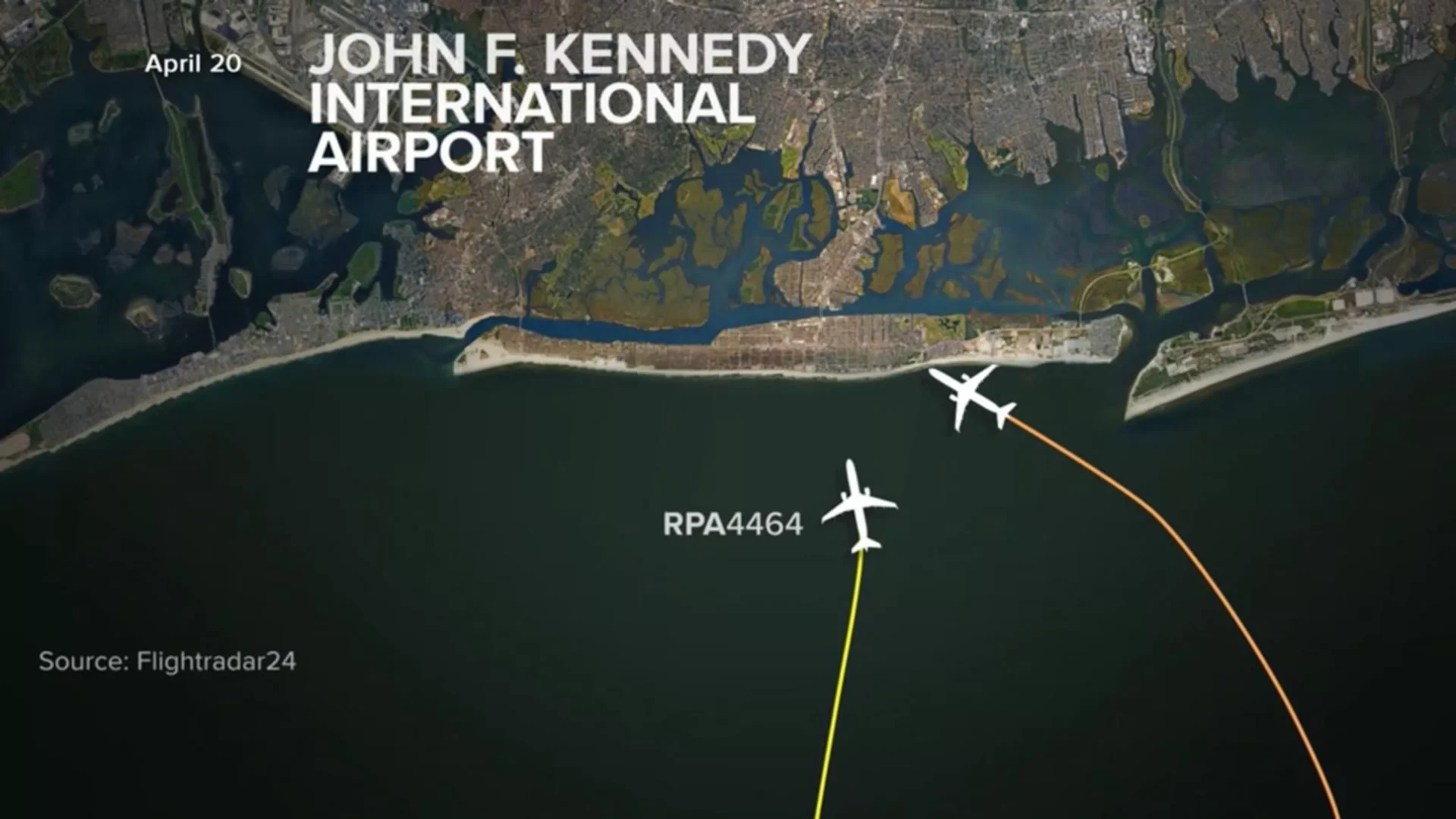
Another close call has been reported at one of the busiest airports in the United States, New York’s JFK Airport. This time, two planes were involved in a near collision while attempting to land, causing anti-collision alarms to sound in both cockpits. The incident has once again raised concerns about the safety and efficiency of air traffic control at this busy airport.
According to reports, the two planes were on final approach to JFK Airport when the pilots received alerts from their anti-collision systems. This forced them to quickly change course and take evasive actions to avoid a potential disaster. The incident occurred during peak hours, when the airport is bustling with numerous flights coming in and going out.
Thankfully, the skilled pilots were able to avert a disaster and safely land their planes. However, this close call has once again highlighted the need for improved safety measures and efficient air traffic control at JFK Airport. This is not the first time such an incident has occurred at this airport, and it certainly won’t be the last if effective measures are not taken.
The Federal Aviation Administration (FAA) has launched an investigation into the incident to determine the cause and prevent future occurrences. The agency has assured the public that it takes safety very seriously and will work closely with the airport authorities to address any issues that may have contributed to this incident.
JFK Airport is known for its high volume of air traffic, with thousands of flights arriving and departing every day. This puts immense pressure on air traffic controllers, who have the crucial task of ensuring the safe and efficient movement of planes in and out of the airport. However, with the increasing number of flights, it is becoming more challenging to maintain the highest level of safety standards.
In recent years, there have been several incidents at JFK Airport, including runway incursions and near misses. These incidents have not only put the lives of passengers and crew at risk but also caused delays and disruptions in air travel. It is imperative that immediate action is taken to address these issues and improve the safety at this vital airport.
One of the proposed solutions is the implementation of advanced technology, such as the Automatic Dependent Surveillance-Broadcast (ADS-B) system. This system uses satellite-based technology to track and monitor aircraft in real-time, providing more accurate and timely information to air traffic controllers. It also allows pilots to see the location of other planes in their vicinity, enabling them to take necessary precautions to avoid collisions.
Another crucial aspect that needs to be addressed is the staffing shortage at JFK Airport. The air traffic control tower at JFK Airport is severely understaffed, with controllers working long hours and handling an overwhelming number of flights. This not only puts a strain on the controllers but also increases the risk of errors and incidents. The FAA must take immediate steps to address this issue and ensure that the tower is adequately staffed at all times.
In addition to technological advancements and staffing, it is also essential to improve communication and coordination between pilots and air traffic controllers. Clear and concise communication is critical in ensuring the safe and efficient movement of planes at busy airports like JFK. Proper training and regular drills must be conducted to enhance the skills of controllers and pilots in handling emergency situations.
The recent close call at JFK Airport serves as a wake-up call for the authorities to take swift action and address the safety concerns at this crucial airport. It is the responsibility of the FAA, airport authorities, and airlines to work together and prioritize the safety of passengers and crew. The public must also be assured that every measure is being taken to prevent such incidents from happening in the future.
In conclusion, the incident at JFK Airport is a reminder that safety must always be the top priority in air travel. It is crucial that all stakeholders work together to implement effective measures and ensure the highest level of safety standards at this busy airport. Let us hope that this incident serves as a catalyst for positive changes, and we can soon see a safer and more efficient JFK Airport.
