
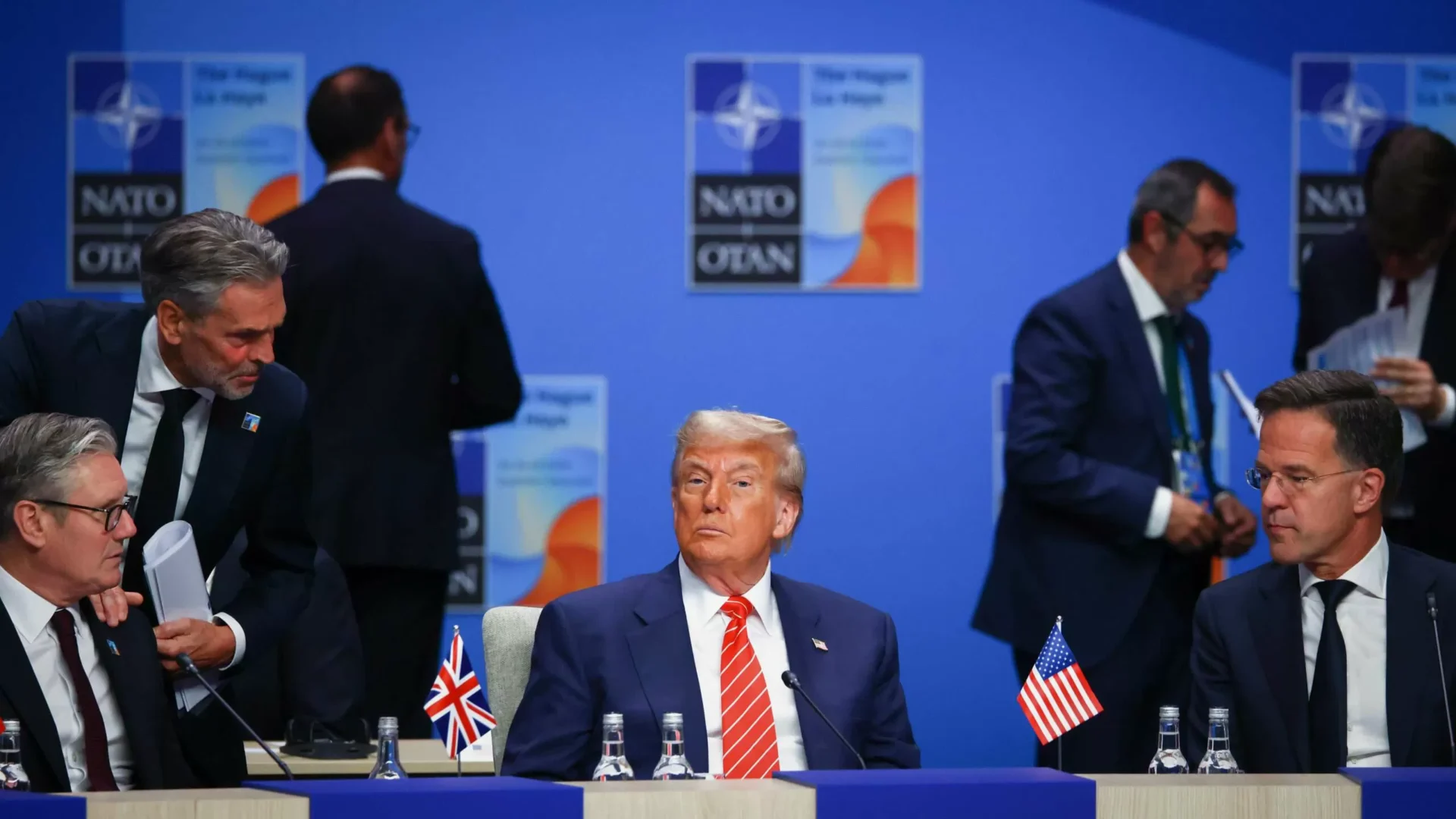
The Cold War, a period of intense political and military tension between the Soviet Union and the United States, came to an end in 1991 with the collapse of the Soviet Union. One of the major characteristics of this era was the formation of military alliances, with the two superpowers leading their respective blocs – the Soviet-led Warsaw Pact and the US-led North Atlantic Treaty Organization (NATO). However, with the dissolution of the Soviet Union and the emergence of new global threats, the question arises – has the Cold War-era military alliance, specifically NATO, outlived its usefulness?
Since its inception in 1949, the main purpose of NATO has been to serve as a collective defense alliance for its member states. This meant that an attack on one member would be considered an attack on all, and the alliance would take necessary actions to protect the attacked member. During the Cold War, this was a crucial deterrent against potential Soviet aggression. However, with the collapse of the Soviet Union and the end of the Cold War, the threat of a large-scale conventional war in Europe diminished significantly. This raises the question of whether NATO is still relevant in the current global security landscape.
One argument against the continued relevance of NATO is that the alliance has shifted its focus from its original purpose of collective defense to new and complex security challenges. These include terrorism, cyber attacks, and hybrid warfare, which require a different approach than traditional military alliances. Critics argue that NATO’s structure and decision-making process are ill-equipped to handle these emerging threats, and the alliance has struggled to adapt to the changing security environment.
Moreover, the expansion of NATO’s membership over the years has also been a contentious issue. The alliance has grown from 12 members in 1949 to 30 members today, with the addition of former Soviet Bloc countries and former Soviet Republics. This expansion has been seen by Russia as a threat to its national security, creating tensions between the two powers. Some experts argue that this expansion has only served to escalate tensions and has not enhanced the alliance’s security.
On the other hand, supporters of NATO argue that the alliance has been successful in maintaining peace and stability in Europe since its establishment. The integration of former Soviet Bloc countries into the alliance has been a crucial factor in preventing any potential Russian aggression. Furthermore, NATO’s expansion has also been seen as a stabilizing factor for these countries, providing them with security guarantees and economic opportunities. Additionally, NATO’s involvement in peacekeeping operations and crisis management, such as in the Balkans and Afghanistan, has showcased its ability to adapt to new security challenges.
Moreover, NATO has also been a platform for cooperation and dialogue between its member states. Despite having different political systems and ideologies, the alliance has managed to maintain unity and collective action, especially during times of crisis. This unity has also been evident in the alliance’s response to the recent pandemic, with NATO providing support and coordinating efforts among its member states.
Another argument in favor of NATO’s continued relevance is its role in maintaining a balance of power and deterring potential threats. With the rise of authoritarian regimes and their aggressive actions, such as Russia’s annexation of Crimea and China’s militarization of the South China Sea, NATO serves as a deterrent against any potential aggression. The alliance’s strong defense capabilities and military infrastructure act as a deterrence and a warning to any country considering hostile actions.
In addition to its military role, NATO also serves as an important political forum for its member states. The alliance provides a platform for discussions and decision-making on important global issues, including climate change, counterterrorism, and nuclear non-proliferation. This political cooperation and dialogue among its member states contribute to maintaining stability and promoting shared values and interests.
In conclusion, while the Cold War-era military alliance may have evolved and faced criticism, it has not outlived its usefulness. NATO remains a crucial contributor to international security and stability, with its collective defense capabilities, political cooperation, and role in deterring potential threats. However, the alliance must continue to adapt and evolve to address new security challenges and maintain its relevance in the ever-changing global landscape. As the saying goes, “peace through strength,” and NATO’s strength is vital in ensuring a peaceful and secure world for its member states and beyond.
