
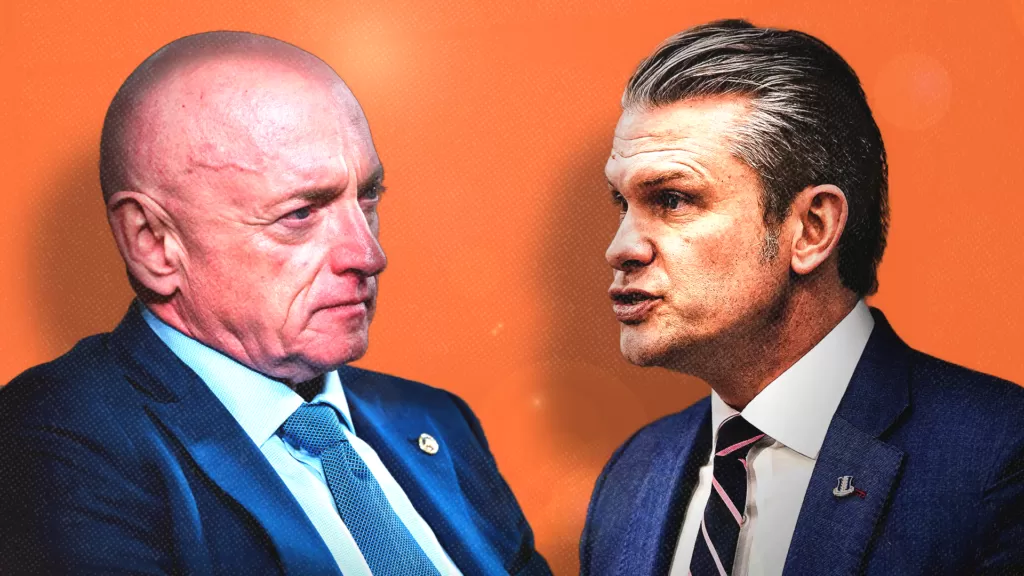
The right to freedom of speech has always been a fundamental principle in any democracy. It is a cornerstone of our society and a crucial aspect of our constitutional rights. However, recent developments have raised concerns about the limits of this right, particularly for retired military officers. The Defense Secretary’s asserted authority to control the speech of retired military officers has sparked a heated debate, with a brief supporting Mark Kelly warning of the potential chilling effect it could have on public participation by veterans.
Mark Kelly, a retired Navy captain and astronaut, is no stranger to speaking out on important issues. He has been a vocal advocate for veterans’ rights and has used his platform to raise awareness about issues that affect them. However, his recent involvement in a case challenging the Defense Department’s ability to restrict the speech of retired military officers has garnered significant attention.
In a brief supporting Mark Kelly, a group of retired military officers argued that the Defense Secretary’s asserted authority to control their speech would have a chilling effect on public participation by veterans. They argued that this authority could be used to silence dissenting voices and suppress important discussions on policy matters, effectively limiting the public’s access to crucial information.
The concern stems from a recent policy change by the Defense Department that requires retired military officers to obtain approval before participating in media interviews or public appearances that discuss their military service or the Department’s policies. This policy not only applies to active-duty officers but also to retired officers who may have left the military decades ago.
Supporters of the policy argue that it is necessary to maintain the military’s apolitical nature and to protect sensitive information. However, opponents argue that this policy is an overreach of the government’s power and could have far-reaching consequences.
Retired military officers, particularly those who have served in high-ranking positions, often have valuable insights on national security and defense matters. Their unique perspective and experience can inform public debates and discussions about important issues. Restricting their ability to speak on these matters could deprive the public of valuable information and perspectives.
Moreover, retired military officers are still citizens of the United States and are entitled to the same rights and freedoms as any other citizen. By restricting their speech, the government is effectively silencing a significant portion of the population and limiting their ability to participate in public discourse.
The brief supporting Mark Kelly also argues that the policy could have a disproportionate effect on veterans, who may be more likely to engage in discussions about military matters. This could lead to a chilling effect on public participation by veterans, who may fear retribution for speaking out.
The right to freedom of speech is not just about expressing one’s opinions; it is about holding those in power accountable. By restricting the speech of retired military officers, the government is effectively limiting the public’s ability to hold the Department of Defense accountable for its actions and policies.
Furthermore, this policy sends a concerning message to those who have dedicated their lives to serving their country. It suggests that their service and sacrifice do not entitle them to the same rights and freedoms as other citizens.
In a democracy, it is crucial to have open and robust discussions on important issues. Restricting the speech of retired military officers would be a dangerous step in the wrong direction. It is vital to protect the right to freedom of speech, especially for those who have served our country.
In conclusion, the Defense Secretary’s asserted authority to control the speech of retired military officers has raised serious concerns about the limits of our freedom of speech. The brief supporting Mark Kelly rightly warns that this authority could have a chilling effect on public participation by veterans and limit the public’s access to crucial information. It is essential to safeguard the right to freedom of speech and to ensure that all citizens, regardless of their background, have the same voice in our democracy.
