
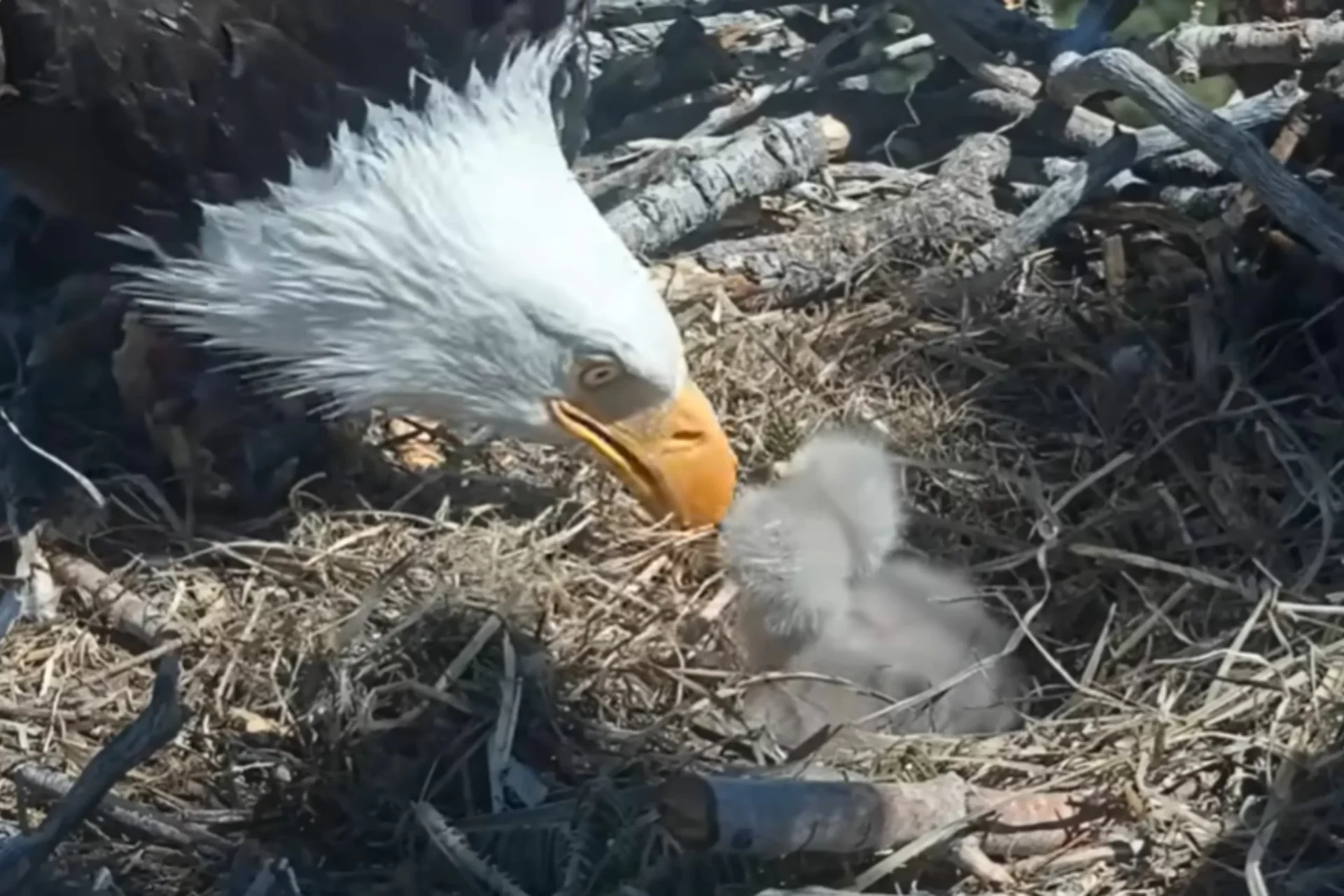
The majestic bald eagles, a symbol of strength and freedom, have long been a treasured part of California’s Big Bear Valley. These magnificent birds of prey have called this valley their home for generations, soaring through the skies and nesting in the tall trees that line the valley. However, their peaceful existence may soon be threatened as a housing development seeks approval to build in their habitat.
The proposed development, known as the Big Bear Valley Estates, plans to build a large residential community in the heart of the valley. While this may seem like a promising opportunity for economic growth and development, it could have devastating consequences for the bald eagles and their habitat.
The bald eagles, which are listed as a protected species under the Endangered Species Act, have already faced numerous challenges in their journey towards recovery. In the 1960s, their population was on the brink of extinction due to the use of pesticides, habitat destruction, and illegal hunting. Thanks to conservation efforts and strict laws, their numbers have slowly increased, and they have become a symbol of hope and resilience.
However, the proposed housing development threatens to undo all the progress that has been made in protecting these magnificent birds. The construction of houses, roads, and other infrastructure would disrupt their natural habitat and could potentially lead to the destruction of their nesting sites. The noise and pollution from the construction could also disturb their breeding and hunting patterns, making it difficult for them to survive.
Moreover, the influx of people into the valley could also have a negative impact on the bald eagles. These birds are highly sensitive to human disturbance and could be scared away from their nesting sites, leaving their eggs and young vulnerable to predators. The increased human activity in the area could also lead to an increase in pollution, which could harm the eagles and their food sources.
The bald eagles are not the only ones who will be affected by this development. The Big Bear Valley is also home to a diverse range of wildlife, including black bears, mountain lions, and various bird species. The construction of the Big Bear Valley Estates could disrupt the delicate balance of this ecosystem, causing irreparable damage to the environment and its inhabitants.
It is not just the wildlife that will suffer; the local community will also feel the impact of this development. The Big Bear Valley is a popular tourist destination, known for its stunning natural beauty and abundant wildlife. The construction of a large residential community could lead to an increase in traffic, noise, and pollution, taking away from the peaceful and serene atmosphere that draws visitors to the valley. This could have a negative impact on the local economy, which heavily relies on tourism.
It is crucial to remember that the bald eagles are not just a part of the ecosystem; they are also a part of our national identity. These birds hold a special place in the hearts of Americans, symbolizing freedom, courage, and resilience. Allowing their habitat to be destroyed for the sake of development would be a great disservice to these magnificent creatures and to our nation’s values.
Fortunately, there is still time to prevent this potential disaster from happening. The developers of the Big Bear Valley Estates have yet to receive approval from the local authorities, and it is up to us to make our voices heard. We must urge the authorities to consider the long-term consequences of this development and to prioritize the protection of the bald eagles and their habitat.
We can also take action by supporting local conservation efforts and organizations that work towards protecting the bald eagles and their habitat. By educating ourselves and others about the importance of preserving our natural heritage, we can create a stronger and more united voice in the fight against this development.
In conclusion, the bald eagles living in California’s Big Bear Valley are facing a grave threat to their existence. The proposed housing development could have devastating consequences for these magnificent birds and their habitat, as well as the local community and economy. It is our responsibility to speak up and take action to protect these national treasures and ensure that they continue to soar through the skies of the Big Bear Valley for generations to come.
