
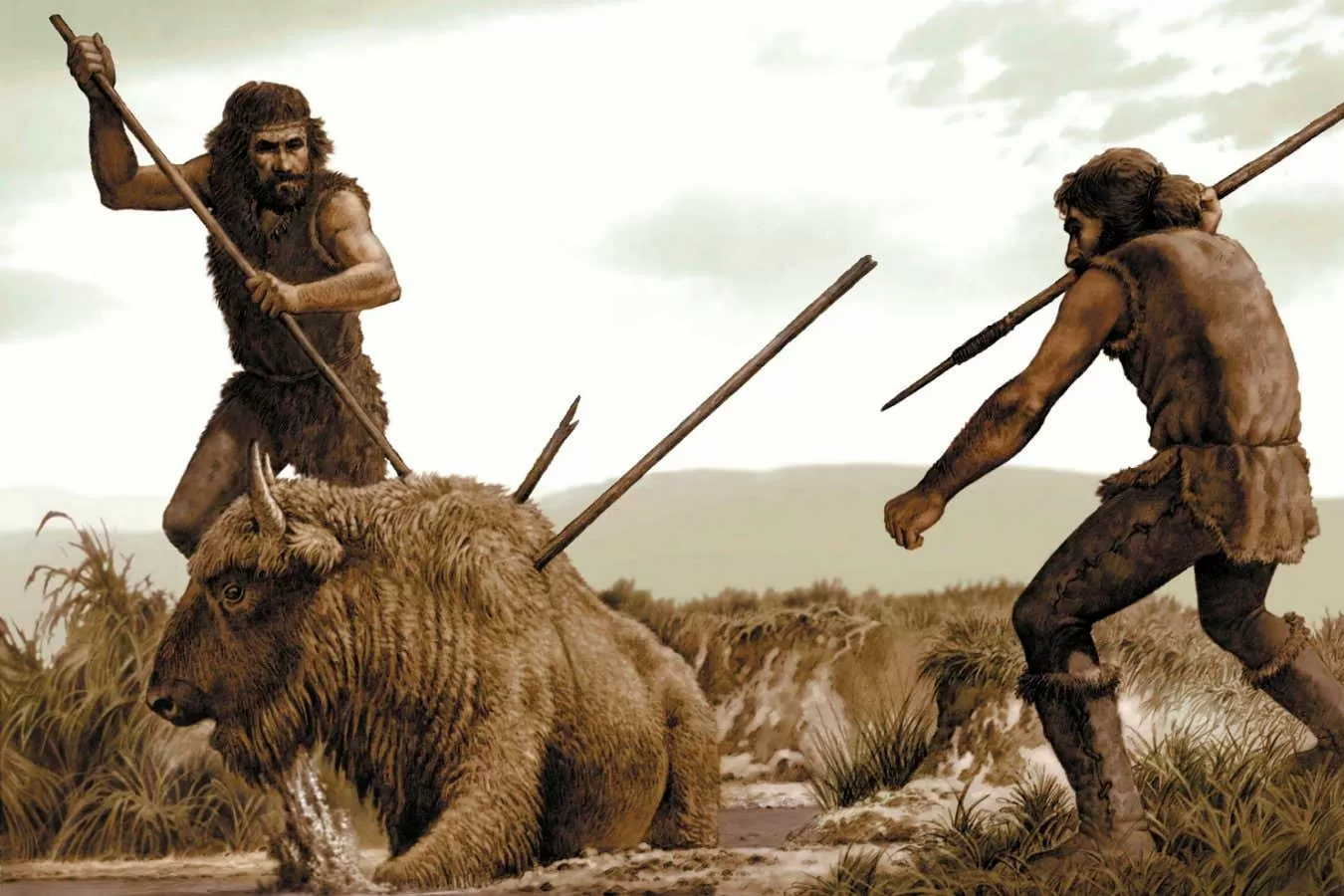
The Middle East is a region rich in history and culture, with a diverse landscape that has been shaped by both natural and human forces. One of the most intriguing mysteries of this region is the sudden disappearance of massive herbivores around 200,000 years ago. This event coincided with a significant shift in the archaeological record, where smaller and lighter toolkits became more prevalent. This has led scientists and researchers to question the possible connection between these two phenomena.
Before we delve into the possible explanations for this coincidence, let us first take a closer look at the evidence. The Middle East was once home to a variety of large herbivores, including elephants, rhinoceroses, and giant deer. These animals roamed the region in large numbers and played a crucial role in shaping the landscape. However, around 200,000 years ago, these massive creatures started to disappear from the archaeological record. This decline was not a gradual process, but rather a sudden and significant event.
At the same time, there was a noticeable shift in the tools used by the inhabitants of the Middle East. The previously dominant heavy and robust stone tools were replaced by smaller and lighter ones. These tools were more finely crafted and allowed for more precise and delicate tasks. This shift in tool technology is evident in the archaeological record and has been linked to the emergence of modern humans in the region.
So, what could have caused the sudden disappearance of massive herbivores and the shift towards smaller and lighter toolkits in the Middle East? One theory suggests that it was a result of climate change. Around 200,000 years ago, the region experienced a significant shift in climate, with a shift towards drier and colder conditions. This change in climate would have had a significant impact on the vegetation and food sources available for the large herbivores. As a result, these animals may have been unable to adapt to the new conditions and eventually died out.
The decline of the large herbivores would have had a significant impact on the human populations in the region. These animals would have been a vital source of food and materials for tools and other necessities. With their disappearance, the humans would have had to find alternative food sources and adapt their tool technology to suit the new conditions. This could explain the shift towards smaller and lighter toolkits.
Another theory suggests that the decline of the massive herbivores was a result of overhunting by humans. As the human population grew and spread across the region, they may have put too much pressure on the large animals, leading to their eventual extinction. This theory is supported by evidence of hunting and butchering of these animals found in archaeological sites.
It is also possible that a combination of climate change and overhunting contributed to the disappearance of the massive herbivores. The changing climate may have made these animals more vulnerable to human hunting, leading to their eventual extinction.
While the exact cause of the disappearance of the massive herbivores in the Middle East remains a mystery, one thing is clear – this event had a significant impact on the human populations in the region. The shift towards smaller and lighter toolkits shows the ability of humans to adapt to changing conditions and find new ways to survive. It also marks a crucial point in human evolution, where our ancestors began to develop more sophisticated tools and technology.
The disappearance of the massive herbivores also highlights the delicate balance between humans and the environment. It serves as a reminder that our actions can have a profound impact on the world around us. The lessons learned from this event can help us make more informed decisions about how we interact with our environment and the species that share it with us.
In conclusion, the sudden disappearance of massive herbivores in the Middle East around 200,000 years ago remains a fascinating mystery. While there are several theories that attempt to explain this event, we may never know the exact cause. However, one thing is certain – this event played a crucial role in shaping human evolution and the development of our tool technology. It serves as a reminder of the delicate balance between humans and the environment and the need to protect and preserve the natural world around us.
