
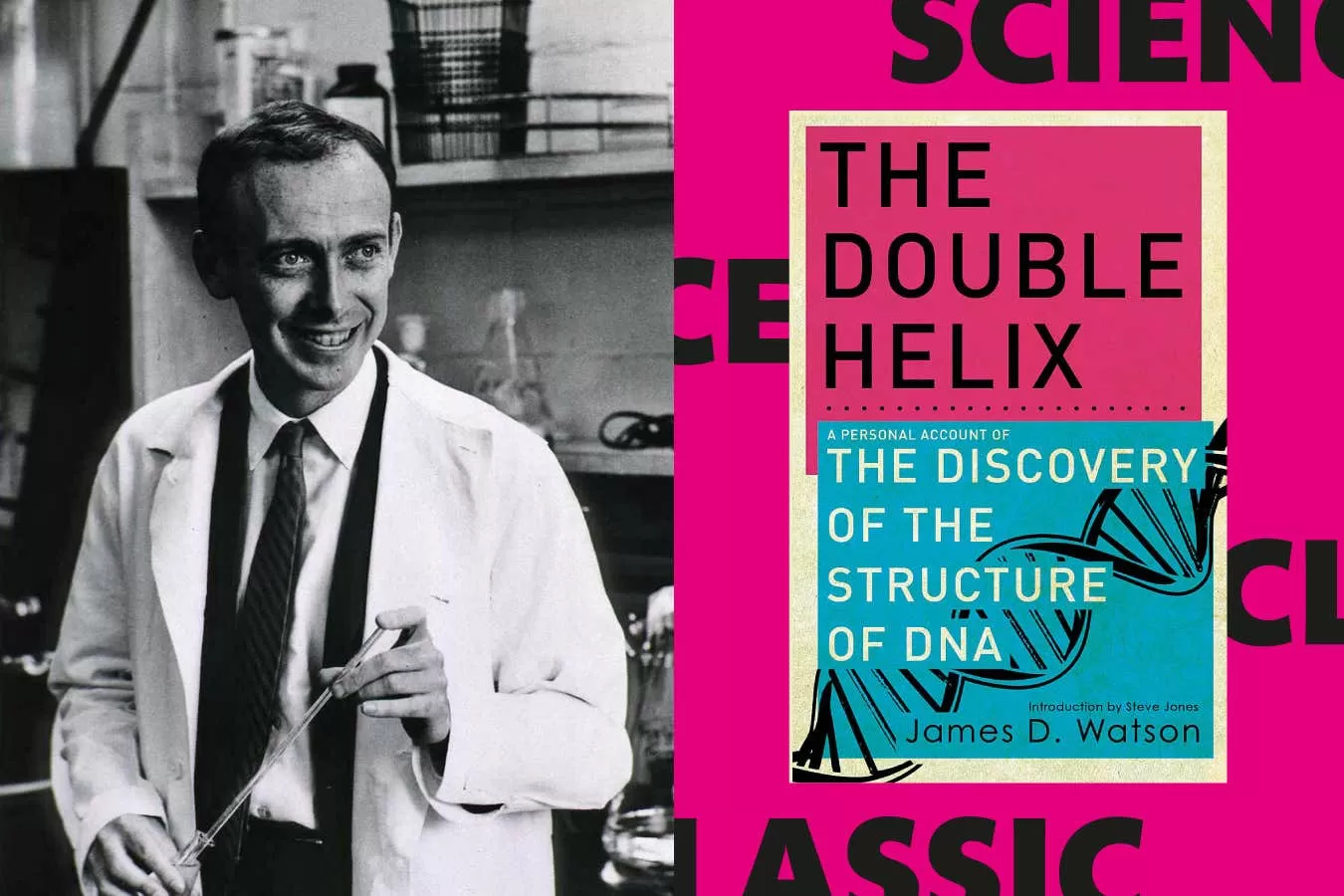
When it comes to science books, there are few that have achieved the level of acclaim and influence as James Watson’s The Double Helix. This groundbreaking work, first published in 1968, details the discovery of the structure of DNA and is often hailed as one of the greatest science books of all time. However, as I delved into its pages, I found myself unable to recommend it to anyone.
Let me start by saying that The Double Helix is a remarkable piece of literature. Watson’s writing is engaging, witty, and at times, even humorous. He takes us on a journey through his personal experiences as a young scientist, working alongside the likes of Francis Crick and Maurice Wilkins, to unravel the mystery of DNA. His vivid descriptions and personal anecdotes make for a compelling read, and it’s easy to see why this book has captivated readers for decades.
But as I turned the last page, I couldn’t help but feel a sense of disappointment. The reason? Watson’s blatant sexism and racism throughout the book. While it may have been acceptable to hold such views in the 1960s, it certainly does not sit well with modern readers. Watson’s derogatory comments about his female colleagues and his belief in the superiority of the white race are not only offensive but also take away from the scientific achievements he describes.
Some may argue that we should view the book in the context of the time it was written. But I believe that it’s important to hold works of literature, especially those that are considered great, to a higher standard. We cannot simply brush aside Watson’s discriminatory views and continue to celebrate his work without acknowledging its flaws.
Moreover, as a science book, The Double Helix falls short in providing a comprehensive understanding of the discovery of DNA. While Watson does a fantastic job of capturing the excitement and drama of the race to unravel the structure of DNA, he neglects to give credit to the work of Rosalind Franklin, whose crucial contributions were largely overlooked and undervalued at the time. This omission is particularly disappointing, considering that Watson and Crick famously used Franklin’s data without her knowledge or consent.
Furthermore, the book’s focus on the personal lives and conflicts of the scientists involved often takes precedence over the science itself. While this may make for an entertaining read, it does little to educate the reader about the groundbreaking research that led to the discovery of DNA. As a result, The Double Helix may not be the best choice for those seeking a deeper understanding of the science behind the discovery.
So, while I cannot deny the significance of The Double Helix in the history of science and its impact on our understanding of DNA, I find myself unable to recommend it as a must-read. Its outdated views and lack of scientific detail make it a problematic and incomplete account of the discovery of DNA. Instead, I would encourage readers to seek out more recent books on the subject, which provide a more accurate and inclusive portrayal of the science and the scientists involved.
In conclusion, The Double Helix may be considered one of the greatest science books of all time, but its flaws cannot be ignored. While I applaud Watson for his literary prowess and his contributions to science, I cannot in good conscience recommend a book that perpetuates harmful and outdated beliefs. Let us celebrate the scientific achievements, but not at the cost of overlooking the problematic aspects of this otherwise remarkable book.
