
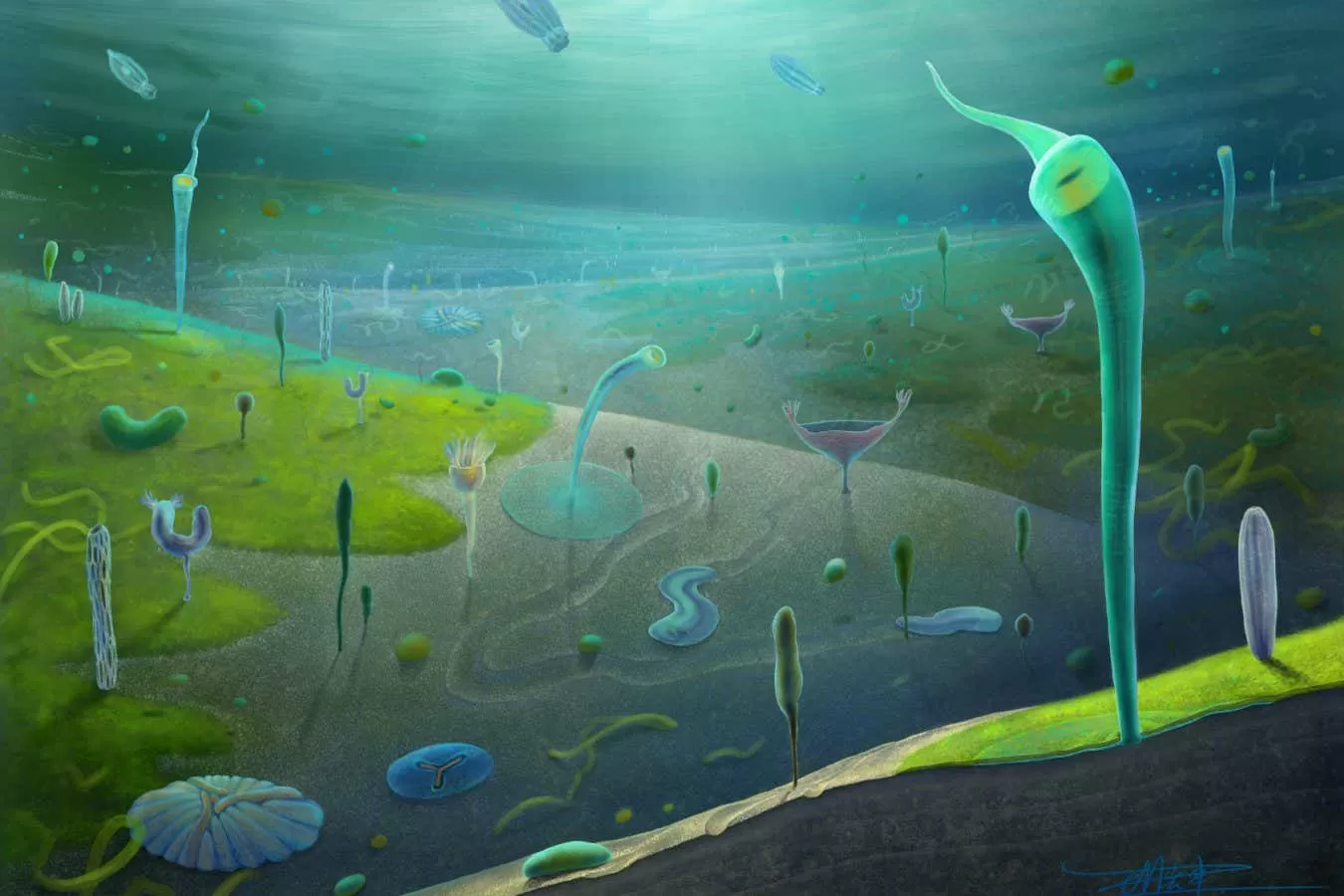
A recent discovery in China has challenged our long-held belief about the origin of life on Earth. A fossil bed containing animals up to 554 million years old has been found, suggesting that the sudden diversification of life during the Cambrian explosion may not have been as sudden as we once thought.
The Cambrian explosion, which occurred around 541 million years ago, is considered a pivotal moment in the history of life on Earth. It is believed that during this period, there was a rapid diversification of animal species, leading to the emergence of complex and diverse life forms. This event has long been considered a turning point in the evolution of life, but the recent discovery in China may force us to reconsider this idea.
The fossil bed, located in the Yunnan province of China, contains a wide variety of well-preserved animal fossils, including sponges, jellyfish, and even some early forms of vertebrates. What makes this discovery even more significant is the fact that these fossils date back to the Ediacaran period, which predates the Cambrian explosion by millions of years.
This finding challenges the traditional view that the Cambrian explosion was a sudden and unique event. It suggests that the diversification of life may have been a gradual process, with the Ediacaran period playing a crucial role in the development of complex animal forms. This is a groundbreaking discovery that could potentially change our understanding of the history of life on Earth.
The fossils found in the Yunnan province also provide valuable insights into the early stages of animal evolution. They offer a glimpse into the diverse and complex ecosystems that existed before the Cambrian explosion. This challenges the notion that the Cambrian explosion was a result of a sudden burst of new life forms, and instead suggests that it was a continuation of an ongoing process of evolution.
The discovery of these ancient fossils also sheds light on the environmental conditions that existed during the Ediacaran period. It is believed that the Earth was going through a period of extreme climate change during this time, with the planet experiencing a series of ice ages. This could have played a significant role in shaping the evolution of early animal life.
Furthermore, the fossils found in China also provide evidence of a global distribution of animal life during the Ediacaran period. This suggests that the diversification of life was not limited to a specific region but was a widespread phenomenon. It also raises questions about the role of continental drift in the evolution of life on Earth.
The discovery of this fossil bed in China is a testament to the importance of continuous scientific research and exploration. It is a reminder that there is still so much we have yet to discover about the history of our planet and the evolution of life. This finding challenges our preconceived notions and encourages us to keep an open mind and continue to explore and learn.
The implications of this discovery are far-reaching and have the potential to change our understanding of the origins of life. It is a reminder that the story of life on Earth is a complex and ever-evolving one, and we must be willing to adapt and revise our theories as new evidence emerges.
In conclusion, the fossil bed found in China containing animals up to 554 million years old is a significant discovery that challenges our understanding of the Cambrian explosion. It suggests that the diversification of life was a gradual process, and the Ediacaran period played a crucial role in the development of complex animal forms. This discovery opens up new avenues for research and highlights the importance of continuous exploration and scientific inquiry. It is a reminder that there is still so much we have yet to uncover about the history of our planet and the evolution of life.
