
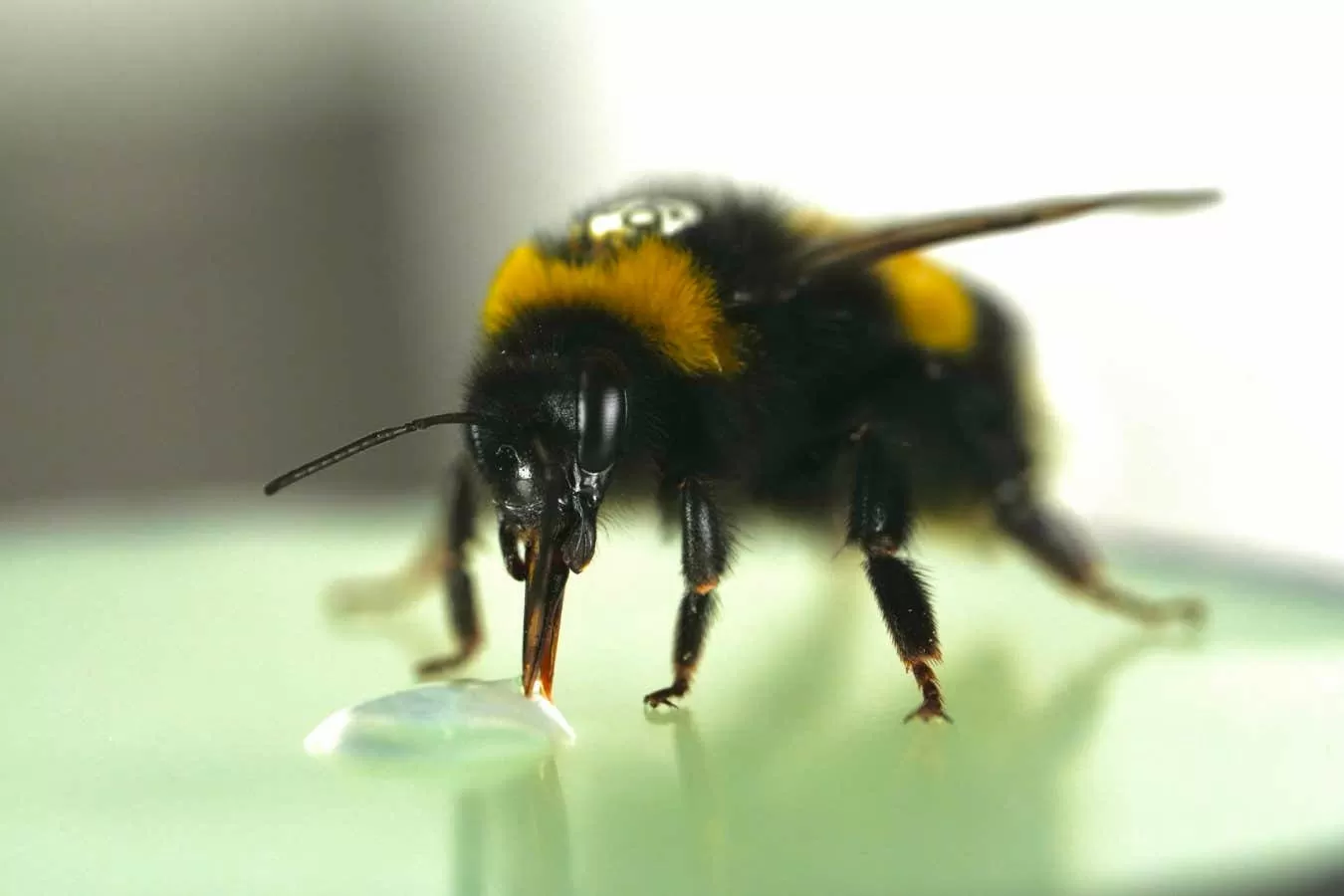
Recognising Rhythmic Patterns: The Surprising Ability of Buff-Tailed Bumblebees
When we think of animals with impressive cognitive abilities, bumblebees are not usually the first creatures that come to mind. However, recent research has shown that these small, buzzing insects are capable of much more than we previously thought. In fact, a series of experiments has revealed that buff-tailed bumblebees possess the ability to recognise rhythmic patterns, a skill that was once thought to require a big brain.
The study, conducted by researchers at Queen Mary University of London, was inspired by the fact that bumblebees are known to perform complex tasks such as navigating through mazes and learning to associate certain colors with food sources. This led the team to wonder if these tiny creatures could also recognise and respond to rhythmic patterns, a skill that is typically associated with larger, more complex brains.
To test this hypothesis, the researchers trained buff-tailed bumblebees to associate a specific sound with a sugary reward. The bees were then exposed to a series of sound sequences, some of which followed a regular, repeating pattern while others were random. Surprisingly, the bees were able to distinguish between the two and consistently chose the sound associated with the reward.
But the researchers didn’t stop there. They wanted to see if the bees could also recognise more complex rhythmic patterns, similar to those found in music. To do this, they exposed the bees to a series of sound sequences that followed a simple beat, similar to a drum rhythm. Once again, the bees were able to distinguish between the rhythmic and random patterns and chose the rhythmic sound associated with the reward.
These findings were further supported by a second experiment, in which the bees were trained to associate a specific color with a sugary reward. The researchers then exposed the bees to a series of visual patterns, some of which followed a regular, repeating rhythm while others were random. Just like in the first experiment, the bees were able to recognise and respond to the rhythmic patterns, choosing the visual pattern associated with the reward.
So how do these tiny insects possess such an impressive ability? The researchers believe that it may be due to the bees’ ability to process information in a similar way to humans. Just like how we can recognise and respond to a beat in music, the bees may be able to do the same by processing the sound or visual patterns as a whole, rather than individual elements.
This discovery not only sheds light on the cognitive abilities of bumblebees, but it also challenges our understanding of what it takes to possess certain skills. For a long time, it was believed that only animals with large brains, such as primates, could recognise and respond to rhythmic patterns. However, this study has shown that even creatures with much smaller brains, like bumblebees, are capable of this skill.
But why is this ability important for bumblebees? The researchers suggest that it may play a role in their communication and navigation. Bumblebees use sound and visual cues to communicate with each other and to navigate through their environment. Being able to recognise and respond to rhythmic patterns may help them to better understand and interpret these cues, allowing them to communicate more effectively and navigate more efficiently.
This study not only highlights the impressive cognitive abilities of bumblebees, but it also emphasises the importance of further research on these often overlooked creatures. Bumblebees play a crucial role in pollination and are essential for the health of our ecosystems. By understanding their abilities and behaviours, we can better protect and preserve these important insects.
So the next time you see a bumblebee buzzing around, take a moment to appreciate their incredible abilities. These small but mighty creatures are capable of much more than we ever imagined, and their ability to recognise rhythmic patterns is just one of the many fascinating aspects of their intelligence. Who knows what other surprises these tiny insects may have in store for us in the future?
