
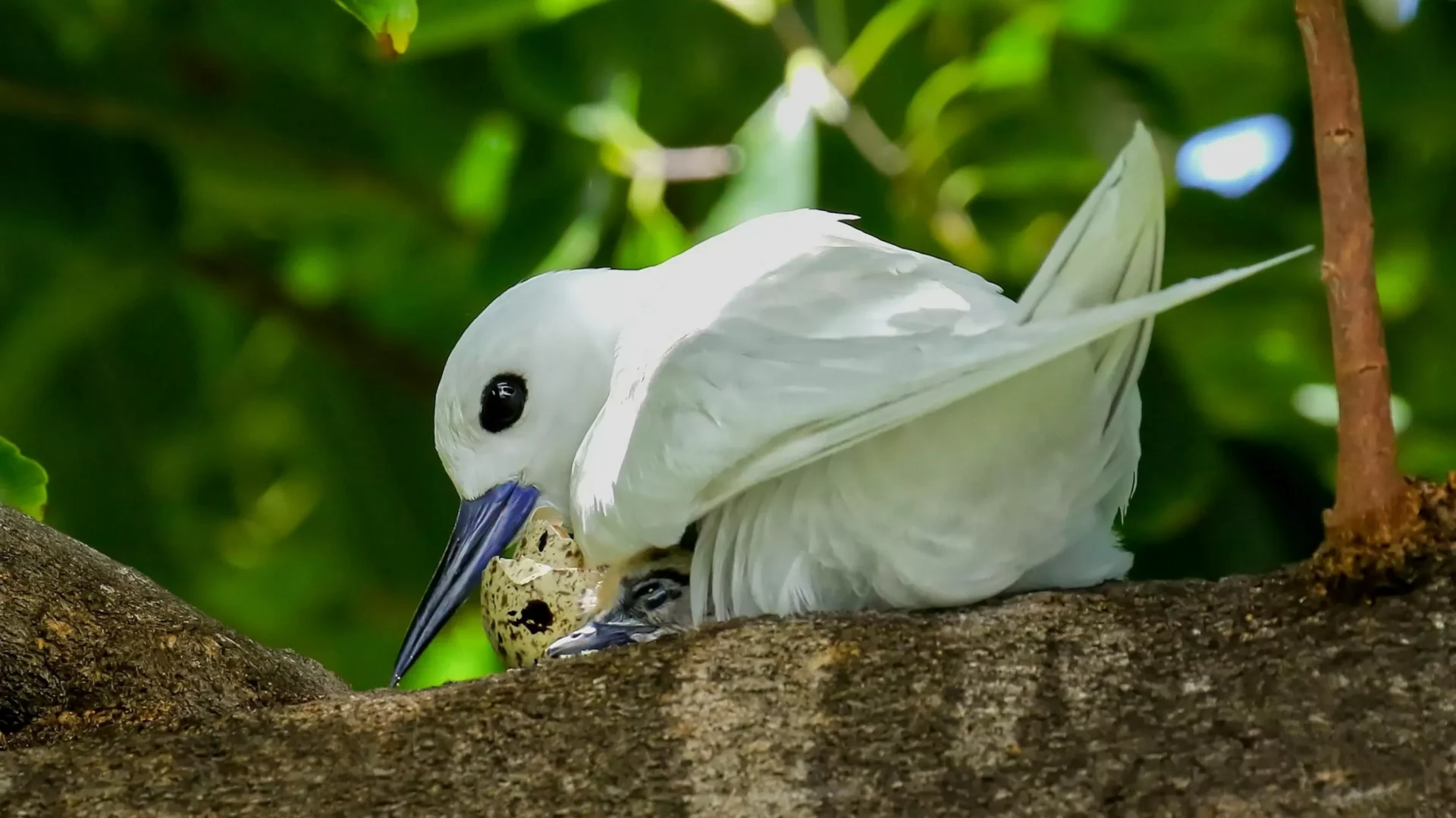
Hawaii, known for its stunning beaches, lush greenery and tropical climate, is also home to a unique seabird that has managed to thrive in the midst of Honolulu’s urban landscape. The White Tern, also known as the Manu-o-Kū in Hawaiian, is a native bird that has adapted to the bustling city life and is flourishing in the middle of Honolulu’s concrete towers, traffic-clogged roads and Waikiki hotels.
This small, graceful bird with its distinctive white feathers and forked tail is a common sight in the city, often seen flying between buildings and perching on rooftops. Despite the rapid development and urbanization of Honolulu, the White Tern has managed to find its niche and has become a symbol of resilience and adaptability.
The White Tern’s presence in the city is a testament to the successful conservation efforts of the Hawaii Department of Land and Natural Resources. In the 1980s, the White Tern population was in decline due to habitat loss and predation by invasive species. However, with the implementation of conservation measures such as protection of nesting sites and control of predators, the White Tern population has steadily increased and is now considered to be stable.
One of the reasons for the White Tern’s success in the city is its unique nesting habits. Unlike other seabirds, the White Tern does not build a nest but instead lays its egg on a small branch or ledge. This makes it well-suited to urban environments where there may not be many suitable nesting sites. The bird’s ability to lay its egg on a narrow surface also protects it from ground predators.
Moreover, the White Tern’s diet consists mainly of fish, making it less reliant on natural resources that may be scarce in the city. This adaptable diet has allowed the bird to thrive in an urban environment where its natural food sources may be limited.
The White Tern’s presence in the city has also sparked interest and admiration among locals and tourists alike. The bird’s graceful flight and striking appearance have made it a popular subject for photographers and artists. Many hotels in Waikiki have even incorporated the White Tern into their branding and decor, further raising awareness and appreciation for this unique seabird.
The White Tern’s success in the city is not only a testament to its adaptability and resilience, but also a reminder of the importance of preserving and protecting our natural environment. It serves as a reminder that even amidst the concrete and chaos of city life, nature still has a place and can thrive if given the chance.
The presence of the White Tern in the heart of Honolulu is a positive sign for the future of Hawaii’s native wildlife. It shows that with proper conservation efforts, even in the face of urbanization and development, we can coexist with nature and help it thrive.
In a world where many species are facing extinction, the thriving population of White Terns in Honolulu is a ray of hope. It is a reminder that we can make a difference and that our actions have a direct impact on the well-being of our environment and the creatures that call it home.
So the next time you find yourself in the midst of Honolulu’s concrete towers and bustling streets, take a moment to appreciate the White Terns flying above. They are a symbol of resilience, adaptability and the beauty of nature in unexpected places. Let us continue to protect and preserve these magnificent birds and their habitat, and ensure that they continue to flourish in the middle of our bustling city.
