
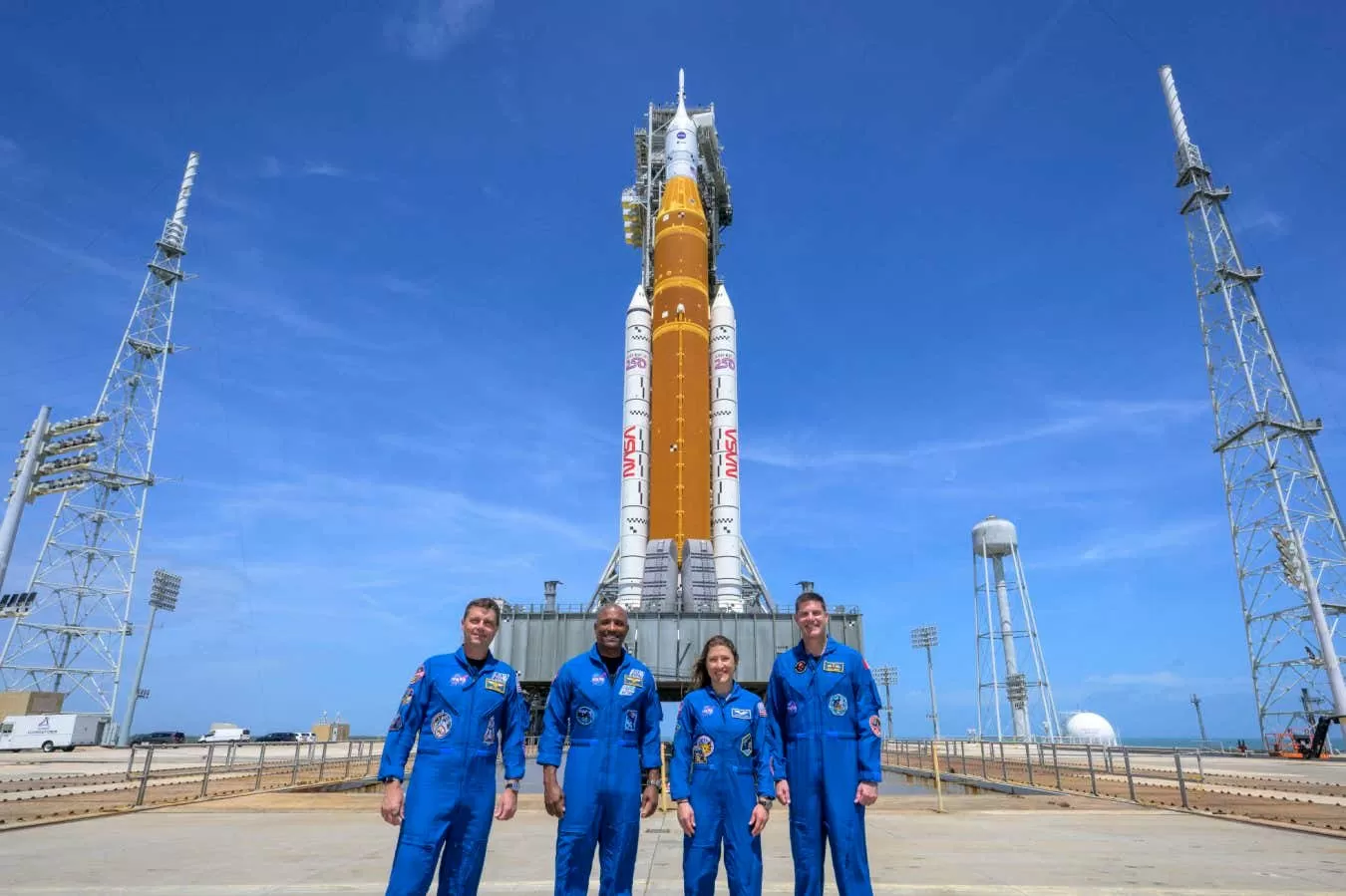
NASA’s Artemis II Mission: A Historic Voyage to the Moon After 50 Years
In today’s rapidly advancing world, it’s easy to forget the monumental achievements that have taken place in the past. However, there are certain events that remain etched in our memories forever. One such event is NASA’s Apollo 11 mission, where humans first set foot on the moon. It was a historic moment not just for the United States, but for the entire world. And now, after half a century, NASA is all set to embark on another historic mission – Artemis II.
The Artemis II mission, named after the Greek goddess of the moon, is a part of NASA’s ambitious Artemis program, which aims to land the first woman and the next man on the lunar surface by 2024. But before we reach that milestone, Artemis II will pave the way and make history as the first time humans have been around the moon in 50 years. And the next launch window for this mission opens on 1st April, taking us one step closer to achieving this extraordinary feat.
The Artemis II mission will be a manned voyage, with a crew of four astronauts on board the Orion spacecraft. They will travel around the moon, making the Artemis II the first crewed mission to the lunar vicinity since Apollo 17 in 1972. This mission will not only push the boundaries of human exploration but also provide crucial insights and technology for the upcoming lunar landing missions.
The spacecraft will be launched using NASA’s powerful Space Launch System (SLS) rocket, which will mark its maiden flight with the Artemis II mission. This rocket is designed to have the most powerful thrust capability ever created, making it the key to future deep space exploration missions, including the journey to Mars.
One of the main objectives of the Artemis II mission is to test and validate the capabilities of the Orion spacecraft. This is crucial for the Artemis program as the spacecraft will be used for transporting astronauts to the moon and back, and its performance needs to be flawless. The Artemis II mission will also help to identify any potential improvements needed for the spacecraft before the crewed lunar landing missions.
Apart from its technical objectives, the Artemis II mission also carries a symbolic significance. The mission will be a tribute to NASA’s Apollo program and the astronauts who made the first journey to the lunar surface possible. It will also be a testament to the spirit of human exploration and the determination to constantly push the boundaries of what’s possible.
With the Artemis II mission, NASA is also taking a step towards a more sustainable and responsible approach to space exploration. The mission will utilize lunar resources, such as water, to support future long-duration missions on the moon. This not only reduces the reliance on Earth for resources but also opens up the possibility of using these resources for future missions to Mars and beyond.
But the Artemis II mission is not just about scientific and technological advancements. It’s about reviving the collective dream of human space exploration and inspiring future generations to reach for the stars. With its diverse and inclusive crew, which includes the first woman to walk on the moon, NASA is showing that space is for everyone and anyone can be a part of this incredible journey.
As we look ahead to the next launch window for the Artemis II mission, there’s a sense of excitement and anticipation in the air. The journey to the moon is not just about reaching a destination, but it’s about the experience, the challenges and the lessons learned along the way. The Artemis II mission will undoubtedly add another golden chapter to the history of human space exploration, and we can’t wait to witness it unfold on 1st April.
In conclusion, NASA’s Artemis II mission is a historic and momentous event that will take us back to the moon after 50 years. It’s a tribute to the past and a leap into the future, showing that the spirit of human exploration knows no bounds. Let’s join hands and cheer as we countdown to this incredible mission, and let it be a reminder of the endless possibilities that await us in the vastness of space.
