
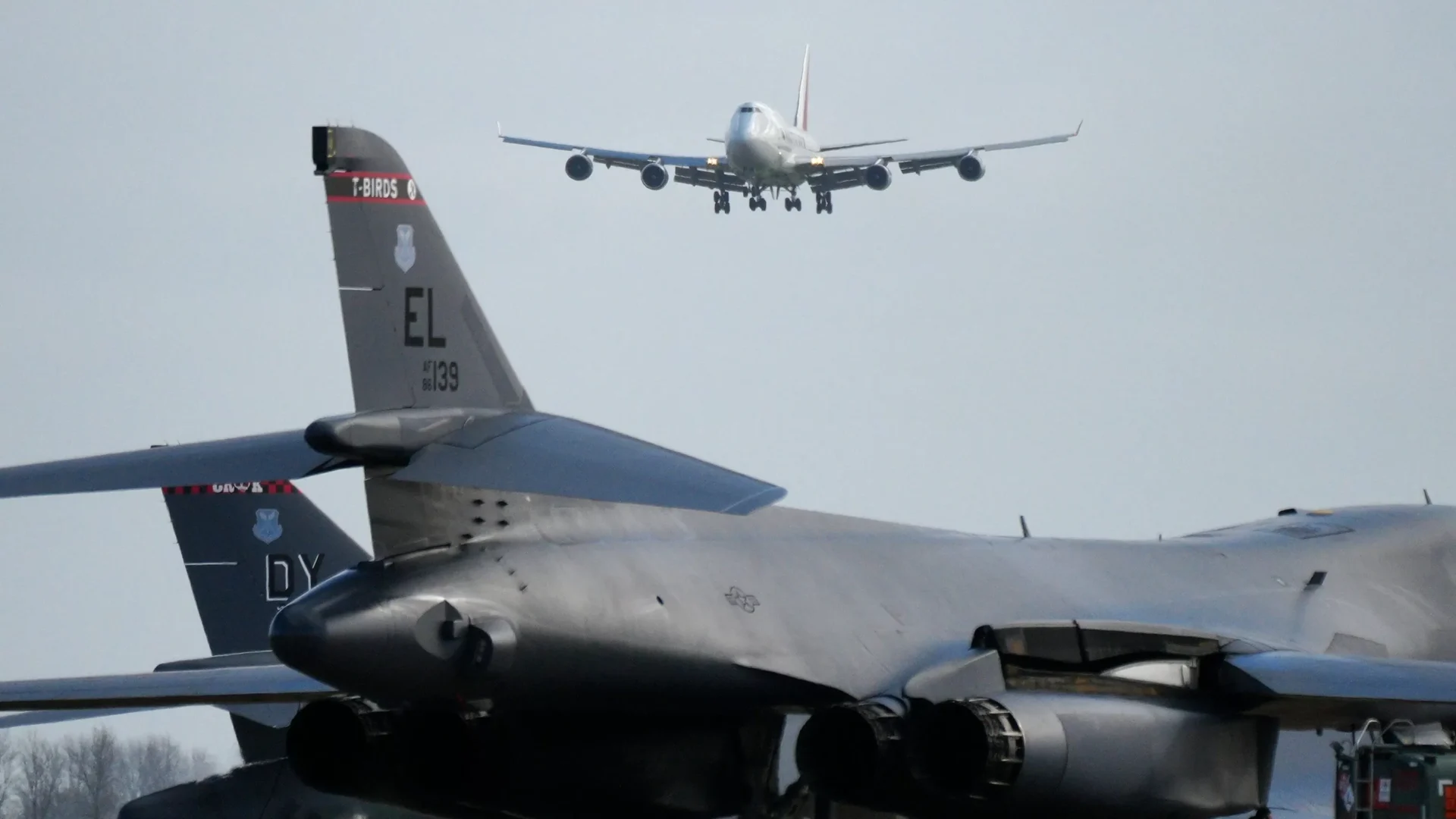
A recent drone sighting at one of the United States Air Force’s largest airfields has raised alarms and brought attention to the potential dangers of unauthorized drones in restricted airspace.
The incident occurred earlier this month at Joint Base Andrews in Maryland, which is home to Air Force One and serves as a critical base for various military operations. The drone was spotted flying near the base’s runway, causing a temporary shutdown of all flight operations and triggering a security response.
Initial reports deemed the sighting as a mere nuisance, with the drone being described as a “small, commercially available quadcopter.” However, further investigation has revealed that the situation was potentially more dangerous than first thought.
According to sources familiar with the incident, the drone was flying at a dangerously high altitude, which could have easily collided with an aircraft during takeoff or landing. This poses a serious threat not only to the aircraft and its passengers but also to the surrounding area and personnel on the ground.
The incident has sparked concerns about the growing accessibility and use of drones, which have become increasingly popular among hobbyists and professionals alike. While drones offer many benefits, such as aerial photography and delivery services, their misuse or unauthorized use can have severe consequences.
This is not the first time that Joint Base Andrews has dealt with unauthorized drone activity. In 2015, a drone crashed on the base’s lawn, and in 2017, another drone was intercepted while flying in restricted airspace. These incidents highlight the need for stricter regulations and enforcement to prevent similar situations from occurring in the future.
In response to the recent drone sighting, the Federal Aviation Administration (FAA) has issued a warning to drone operators to adhere to the rules and regulations when flying near military bases and other restricted areas. The FAA has also emphasized the importance of obtaining proper authorization before flying in controlled airspace.
The United States Air Force, along with other military branches, has been working on developing counter-drone technology to detect and mitigate unauthorized drones in restricted airspace. However, it is a race against time as the technology and capabilities of drones continue to advance.
The incident at Joint Base Andrews serves as a wake-up call for both authorities and drone operators to take the necessary precautions and adhere to regulations to ensure the safety and security of our airspaces. The potential consequences of unauthorized drone activity cannot be taken lightly, as they could lead to catastrophic events.
It is crucial for the public to understand the severity of the situation and to abide by the rules and regulations set forth by the FAA. Unauthorized drone activity not only poses a threat to military bases but also to airports, critical infrastructure, and even public events. It is the responsibility of every drone operator to ensure the safety of others and to fly responsibly.
The United States Air Force, along with the FAA and other government agencies, is continuously working to address the challenges posed by drones and to mitigate their potential risks. As technology continues to advance, so must our strategies and efforts to maintain the safety and security of our airspace.
In conclusion, the recent drone sighting at Joint Base Andrews has shed light on the potential dangers of unauthorized drone activity in restricted airspace. It serves as a reminder for drone operators to adhere to regulations and for authorities to continue developing effective measures to counter this growing threat. Let us all work together to ensure the safety and security of our skies.
