
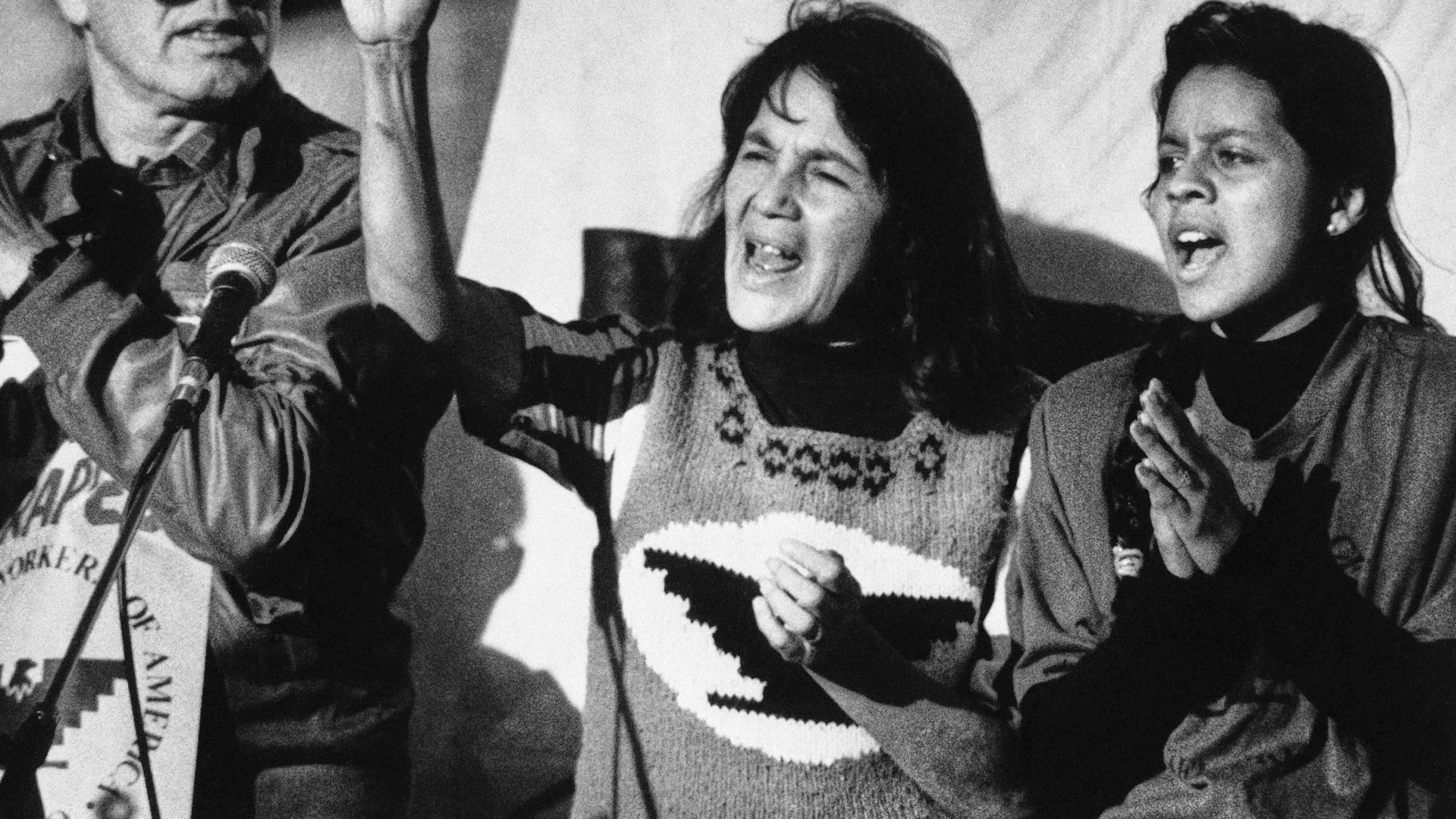
Dolores Huerta has dedicated her life to breaking down barriers and cemented her place in history as one of the nation’s most influential labor leaders, civil rights icons, and feminist activists. Her unwavering commitment to social justice and equality has made her a force to be reckoned with, and her impact on the world is immeasurable.
Born on April 10, 1930, in Dawson, New Mexico, Dolores grew up in a working-class family. Her parents were farmworkers, and from a young age, she witnessed the injustices and struggles faced by the Latino community. This experience ignited a fire within her to fight for the rights of her people and to create a better world for future generations.
Dolores’ journey as an activist began in the 1950s when she co-founded the Stockton chapter of the Community Service Organization (CSO). This organization aimed to empower and improve the lives of Mexican-Americans through voter registration, citizenship classes, and fighting against discrimination. It was during this time that she met Cesar Chavez, who would become her lifelong friend and partner in the fight for social justice.
In 1962, Dolores and Cesar co-founded the National Farm Workers Association (NFWA), which later became the United Farm Workers (UFW). As the first female vice president of the union, Dolores played a crucial role in organizing and leading the Delano grape strike in 1965. This strike, which lasted for five years, brought national attention to the poor working conditions and low wages of farmworkers and resulted in the first collective bargaining agreement for agricultural laborers in the United States.
Dolores’ leadership and determination were instrumental in the success of the UFW. She organized numerous boycotts, strikes, and marches, and her tireless efforts led to significant improvements in the lives of farmworkers. She also fought for the rights of women within the union, advocating for equal pay and opportunities for female workers.
But Dolores’ activism was not limited to the labor movement. She was also a fierce advocate for civil rights and women’s rights. She co-founded the National Women’s Political Caucus in 1971 and served as its first vice president. She also played a crucial role in the passage of the California Agricultural Labor Relations Act, which granted farmworkers the right to organize and bargain collectively.
Throughout her career, Dolores faced numerous challenges and obstacles, including violence, arrests, and death threats. But she never wavered in her commitment to the cause. Her courage and determination inspired countless others to join the fight for social justice and equality.
Today, at the age of 91, Dolores continues to be a vocal and active advocate for marginalized communities. She founded the Dolores Huerta Foundation, which focuses on community organizing, leadership development, and advocacy for social and economic justice. She also travels the country, speaking at universities and events, and inspiring the next generation of activists.
Dolores’ impact on the world is undeniable. She has received numerous awards and honors, including the Presidential Medal of Freedom, the highest civilian honor in the United States. She has also been inducted into the National Women’s Hall of Fame and the California Hall of Fame.
But perhaps her greatest legacy is the inspiration she has provided to millions of people around the world. Her unwavering dedication to breaking down barriers and fighting for the rights of the marginalized has made her a true hero and a role model for generations to come.
In conclusion, Dolores Huerta’s life and work have been nothing short of extraordinary. She has dedicated her life to creating a more just and equal society, and her impact will be felt for generations to come. Her legacy serves as a reminder that one person can make a difference and that the fight for social justice and equality is far from over. Dolores Huerta is a true icon, and her place in history is cemented as one of the nation’s most influential labor leaders, civil rights icons, and feminist activists.
