
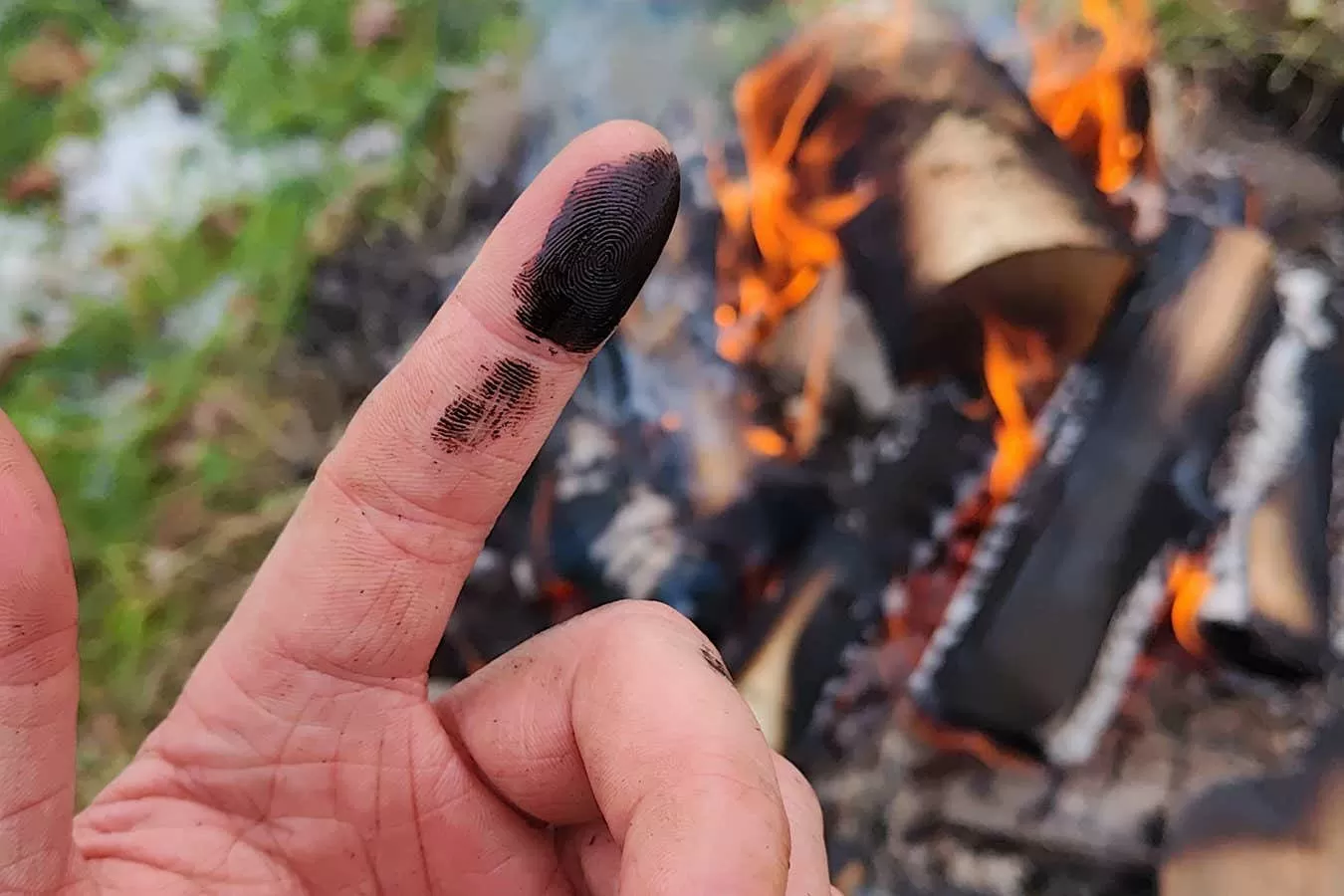
Tar, a sticky, black substance known for its water-repelling qualities, has been used for centuries by humans for various purposes. From waterproofing to medicinal uses, tar has played a significant role in our history. However, recent studies have shed light on a surprising use of tar by our ancient ancestors, the Neanderthals. It has been found that Neanderthals commonly used tar made from birch tree bark at their sites, and further experiments have shown that this tar has antibacterial properties that could have been used to treat skin infections. This discovery has not only shed light on the intelligence and resourcefulness of Neanderthals but also has potential implications for modern medicine.
Neanderthals, an extinct species of human, inhabited Europe and parts of Asia from about 400,000 to 40,000 years ago. For a long time, they were considered to be inferior to modern humans in terms of intelligence and behavior. However, recent research has challenged this viewpoint and has shown that Neanderthals were, in fact, quite skilled and resourceful. One such example is the use of tar made from birch tree bark. This tar was commonly found at Neanderthal sites, and its use has been traced back to at least 200,000 years ago.
The process of making tar from birch tree bark is a complex one. It involves heating the bark in a low-oxygen environment to produce a black, sticky substance. This process requires a certain level of knowledge and skill, and it is impressive that Neanderthals were able to figure it out and utilize it. The use of tar by Neanderthals was not limited to one specific area or group, as it has been found at sites across Europe and Asia. This suggests that it was a commonly used and valuable resource for them.
In order to understand the potential uses of tar for Neanderthals, scientists conducted experiments to test its properties. One such experiment conducted by a team at the University of Bergen showed that the tar has antibacterial properties that could have been used to treat skin infections. The researchers found that the tar killed bacteria that cause skin infections such as Staphylococcus aureus and Escherichia coli. This finding is significant as these types of infections would have been common among Neanderthals, who lived in close contact with nature and were exposed to various types of bacteria.
The antibacterial properties of tar can be attributed to the presence of certain compounds, such as phenols and volatile organic compounds (VOCs). These compounds act as natural preservatives and prevent the growth of bacteria. This was confirmed by another experiment conducted by a team at the University of York, which found that tar mixed with bacteria was able to kill them within a few hours.
This discovery has potential implications for modern medicine. Antibiotic resistance is a growing concern, and researchers are constantly searching for new ways to combat bacteria. The use of tar as a natural antibacterial agent could provide an alternative to traditional methods and could potentially lead to the development of new medicines. Furthermore, this discovery also highlights the importance of traditional knowledge and the potential benefits it can offer.
The use of tar by Neanderthals also raises questions about their level of intelligence and medical knowledge. The fact that they were able to identify and utilize the antibacterial properties of tar shows a level of understanding and observation that was previously underestimated. This discovery adds to the growing evidence that Neanderthals were not primitive cavemen, but rather intelligent and resourceful beings.
In conclusion, the use of tar made from birch tree bark by Neanderthals is a fascinating discovery that sheds light on their intelligence and resourcefulness. The antibacterial properties of tar have been confirmed through experiments, suggesting that it was used for medicinal purposes by our ancient ancestors. This discovery not only changes our perception of Neanderthals but also has potential implications for modern medicine. It serves as a reminder of the value of traditional knowledge and the potential benefits it can offer. Surely, our ancestors were much more advanced and knowledgeable than we ever gave them credit for.
