
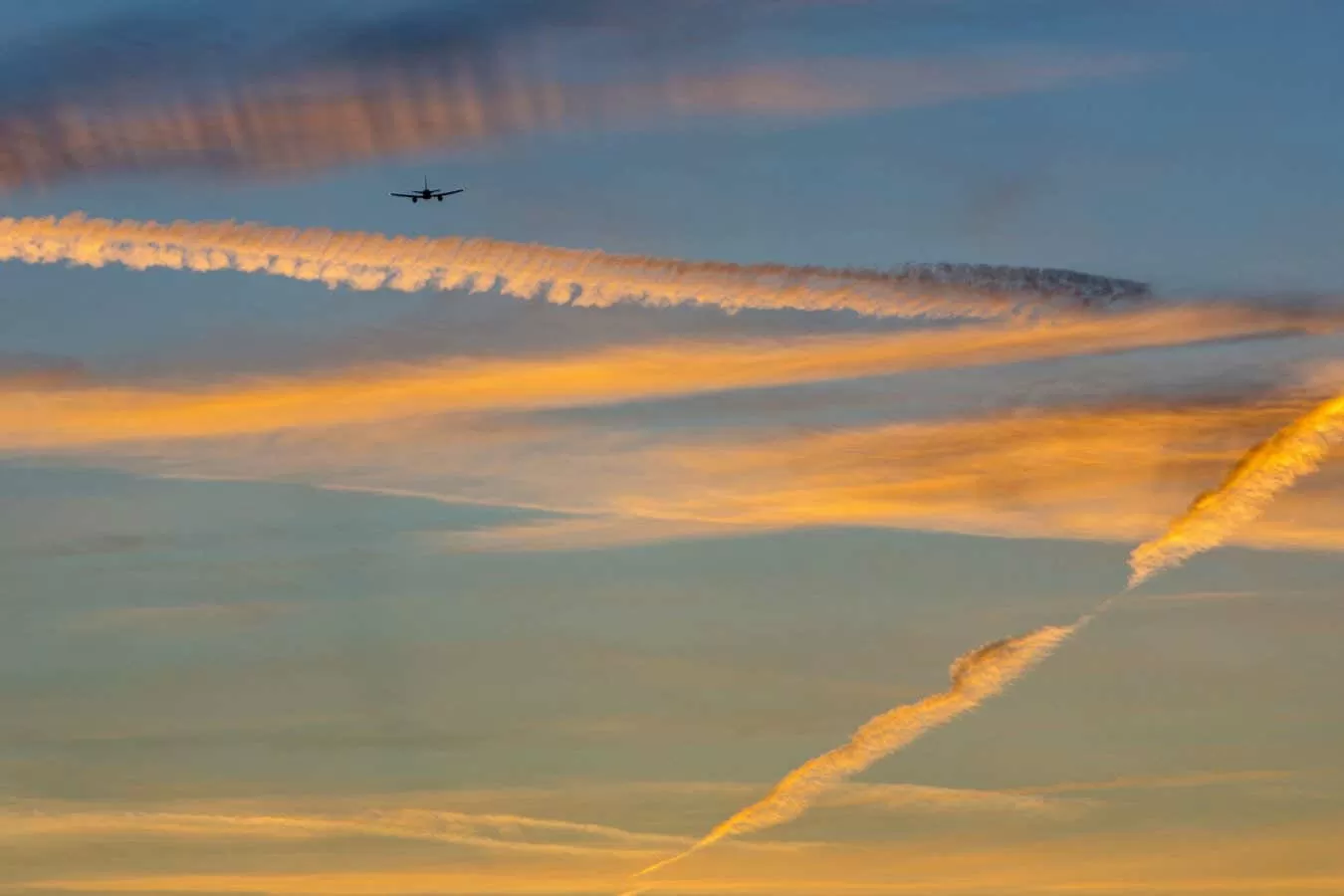
In the fight against climate change, every effort counts. And now, American Airlines is taking a step forward by utilizing the power of Artificial Intelligence (AI) to reduce their carbon footprint. The airline has recently announced that they will be using a weather-forecasting AI to recommend routes for their flights between the US and Europe, with the goal of reducing the formation of contrails – the white streaks often seen behind airplanes in the sky. These contrails not only affect the visibility of the sky, but also contribute to global warming. This innovative move by American Airlines is a significant step towards a greener and more sustainable future for the aviation industry.
Contrails, short for “condensation trails”, are formed when the hot exhaust from an aircraft mixes with the cold air in the atmosphere. This creates a visible trail of ice crystals, which can linger in the sky for hours. While they may seem harmless, contrails actually have a significant impact on the environment. They trap heat in the Earth’s atmosphere, contributing to the greenhouse effect and ultimately leading to global warming. In fact, according to a study by the Intergovernmental Panel on Climate Change, contrails are responsible for about 2% of global warming. This may seem like a small number, but in the grand scheme of things, every little bit counts.
This is where American Airlines’ new AI technology comes in. By analyzing weather patterns and conditions, the AI is able to recommend flight routes that will minimize the formation of contrails. This means that the airline’s planes will be flying through areas with less humidity and lower temperatures, reducing the chances of contrails forming. This not only benefits the environment, but also has the potential to save the airline millions of dollars in fuel costs.
But how exactly does this AI technology work? It uses a combination of real-time weather data, historical weather patterns and advanced algorithms to predict which routes will have the least impact on the environment. This information is then used by the airline’s pilots and air traffic controllers to make informed decisions about flight routes. This not only reduces the formation of contrails, but also helps to avoid turbulence and improve overall flight efficiency.
This move by American Airlines is a prime example of how technology can be used for the greater good. By harnessing the power of AI, the airline is able to make a significant impact on the environment and take a step towards a more sustainable future. And this is just the beginning. American Airlines has also announced plans to invest in more sustainable fuel alternatives and to reduce their overall carbon emissions by 30% by 2030.
But American Airlines is not the only airline taking steps towards a greener future. Other major airlines such as Delta and United have also implemented initiatives to reduce their carbon footprint. These include using more fuel-efficient aircrafts, investing in sustainable fuel alternatives and implementing recycling programs. It is encouraging to see that the aviation industry as a whole is recognizing the need for change and taking action to reduce their impact on the environment.
In addition to reducing their carbon footprint, American Airlines’ new AI technology also has the potential to improve the overall flying experience for passengers. By avoiding areas with high humidity and turbulence, flights are likely to be smoother and more comfortable. This is a win-win situation for both the environment and the passengers.
It is important to note that while this AI technology is a step in the right direction, it is not a solution to the problem of global warming. The aviation industry still has a long way to go in terms of reducing their carbon emissions. However, this move by American Airlines is a significant and commendable step towards a more sustainable future.
In conclusion, American Airlines’ use of a weather-forecasting AI to recommend routes for their flights between the US and Europe is a groundbreaking move in the fight against climate change. By reducing the formation of contrails, the airline is making a positive impact on the environment and setting an example for the rest of the industry. This is a testament to the fact that with the help of technology and a strong commitment to sustainability, we can all work towards a greener and more sustainable future.
