
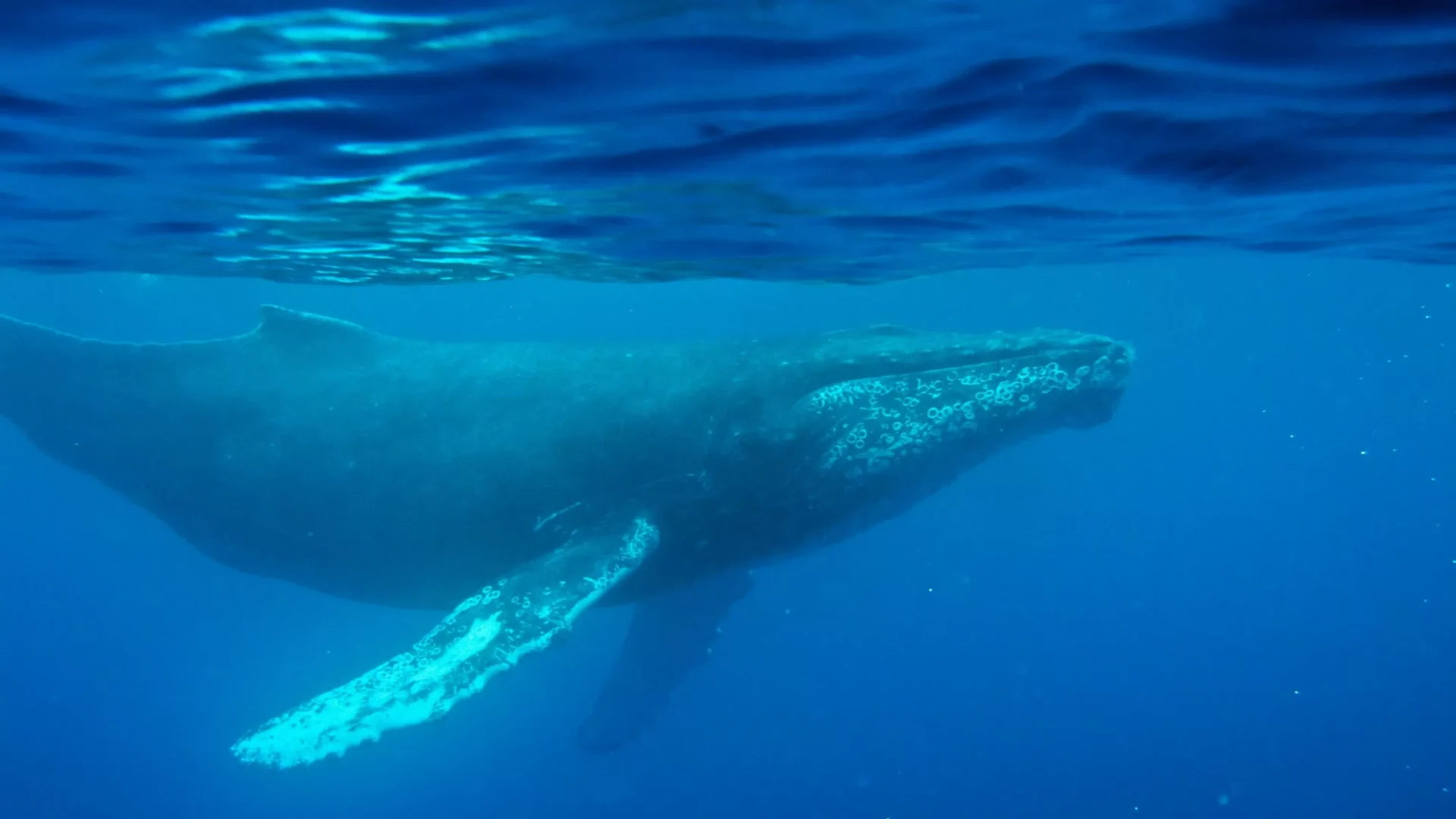
Researchers have made an exciting discovery that could change our understanding of how whales communicate. According to a recent study, the oldest known recordings of whale sounds have been found, shedding light on the vocalizations of these majestic creatures.
The study, published in the journal Biology Letters, reveals that the recordings were made in the 1960s by a team of researchers from the University of California, San Diego. The team was studying the behavior of blue whales in the Pacific Ocean when they stumbled upon these rare recordings.
The recordings were made using a hydrophone, a device that can detect and record underwater sounds. The team had placed the hydrophone in the ocean to capture the sounds of the blue whales, but they were surprised to find that the recordings also contained the sounds of other whale species.
After careful analysis, the researchers were able to identify the sounds of fin whales, humpback whales, and minke whales in the recordings. What makes this discovery even more remarkable is that these recordings are the oldest known recordings of whale sounds, dating back to the 1960s.
This finding is significant because it provides a glimpse into the communication patterns of whales from over 50 years ago. It also challenges the common belief that whales have a limited vocal repertoire and only produce a few distinct sounds.
Dr. Simone Baumann-Pickering, the lead author of the study, explains that these recordings could open up a whole new understanding of how whales communicate. She says, “We have always known that whales are highly vocal animals, but these recordings show that their vocalizations are much more complex and diverse than we previously thought.”
Whales use sound to communicate with each other, navigate, and locate food. They produce a variety of sounds, including clicks, whistles, and moans, which can travel long distances underwater. These sounds are crucial for their survival, and understanding them is essential for their conservation.
The discovery of these old recordings could also help researchers track the changes in whale vocalizations over time. With the increasing noise pollution in the oceans, it is possible that the vocalizations of whales have changed in response to the changing environment.
The study also highlights the importance of preserving historical data and recordings. Dr. Baumann-Pickering emphasizes the need for more long-term studies and the importance of maintaining and digitizing old recordings. She says, “These recordings are a valuable resource for future studies and could provide valuable insights into the behavior and communication of whales.”
This discovery has sparked excitement and enthusiasm among the scientific community, with many researchers eager to delve deeper into the world of whale vocalizations. It also serves as a reminder of how much we still have to learn about these magnificent creatures.
Whales have always captured our imagination with their size, beauty, and mysterious nature. And now, with the discovery of these old recordings, we have a chance to understand them better and appreciate their complex communication system.
This study is a testament to the power of scientific research and the endless possibilities it holds. It is a reminder that there is still so much to discover and learn about the world around us. And with each new discovery, we come one step closer to unraveling the mysteries of our planet.
In conclusion, the discovery of the oldest known recordings of whale sounds is a groundbreaking achievement that could revolutionize our understanding of these magnificent creatures. It is a reminder that we must continue to explore and preserve our natural world, for there is always something new and exciting waiting to be discovered.
