
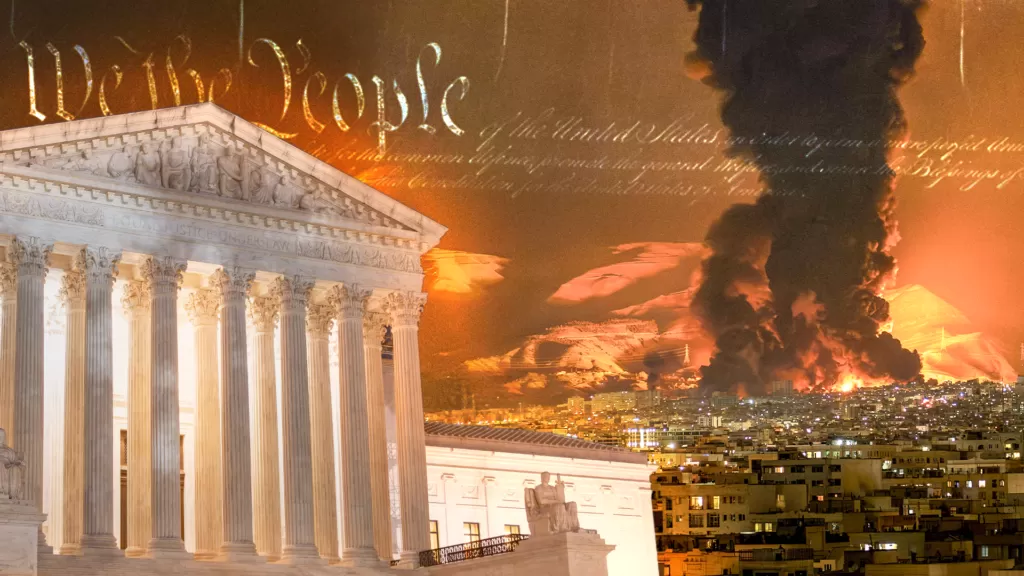
The judiciary is a crucial pillar of any democratic society, responsible for upholding the rule of law and protecting the rights of its citizens. However, when it comes to the ongoing debate surrounding undeclared foreign wars, the judiciary has taken a back seat. This is a concerning issue, as the judiciary has the power and responsibility to ensure that the executive branch is held accountable for its actions. In this article, we will explore the reasons for the judiciary’s absence in this debate and why it is essential for them to play a more active role.
The United States has been engaged in conflicts around the world for decades, without the formal declaration of war by Congress. This has resulted in a debate over the constitutionality of these actions, as the Constitution clearly states that only Congress has the power to declare war. However, despite this ongoing debate, the judiciary has not played a significant role in addressing this issue.
One of the main reasons for the judiciary’s absence is the doctrine of political question. This doctrine states that certain issues are better left to the political branches of government and should not be interfered with by the courts. The constitutionality of foreign wars has been considered a political question, thus preventing the judiciary from getting involved. This has been the case since the landmark Supreme Court decision, Baker v. Carr, in 1962, which established the doctrine of political question.
Another reason for the judiciary’s absence is the lack of a concrete case that directly challenges the constitutionality of undeclared foreign wars. While there have been several cases that have touched upon this issue, none have directly addressed it. As a result, the courts have not had the opportunity to rule on the matter and establish a precedent.
Furthermore, the judiciary may also be hesitant to intervene in issues of national security and foreign policy, as these are areas that are traditionally left to the executive branch. The courts may be reluctant to take a stand that could potentially undermine the country’s security and diplomatic efforts. This is especially true in times of war when the government’s actions are often seen as necessary for the protection of the nation.
However, the absence of the judiciary in this debate is not without consequences. The lack of a clear ruling on the constitutionality of undeclared foreign wars has allowed the executive branch to continue engaging in such actions without any real oversight. This goes against the checks and balances system that is essential for a functioning democracy. The judiciary’s absence also undermines its role as the ultimate interpreter of the Constitution, as it allows the executive branch to interpret and apply the Constitution as it sees fit.
Moreover, the absence of the judiciary also deprives the public of a vital avenue for seeking redress for any potential constitutional violations. The courts provide a forum for citizens to hold their government accountable, and without their involvement, the public’s voice is significantly weakened.
It is essential for the judiciary to take a more active role in this debate and address the issue of undeclared foreign wars. While the political question doctrine may limit their involvement, it should not be seen as a complete barrier. The courts should be willing to intervene when there is a clear violation of the Constitution, and the issue at hand is not purely a political question.
Furthermore, it is the judiciary’s responsibility to uphold the rule of law and ensure that the government does not overstep its constitutional boundaries. By remaining absent in this debate, the judiciary is failing in its duty to protect the rights and liberties of the citizens.
In conclusion, the judiciary’s absence from the long-running constitutional debate over undeclared foreign wars is a concerning issue. While there may be valid reasons for their limited involvement, it is crucial for the courts to play a more active role in addressing this issue. It is their duty to uphold the Constitution and provide a check on the actions of the executive branch. The judiciary must not shy away from its responsibilities and must actively engage in this debate to protect the integrity of our democracy.
