
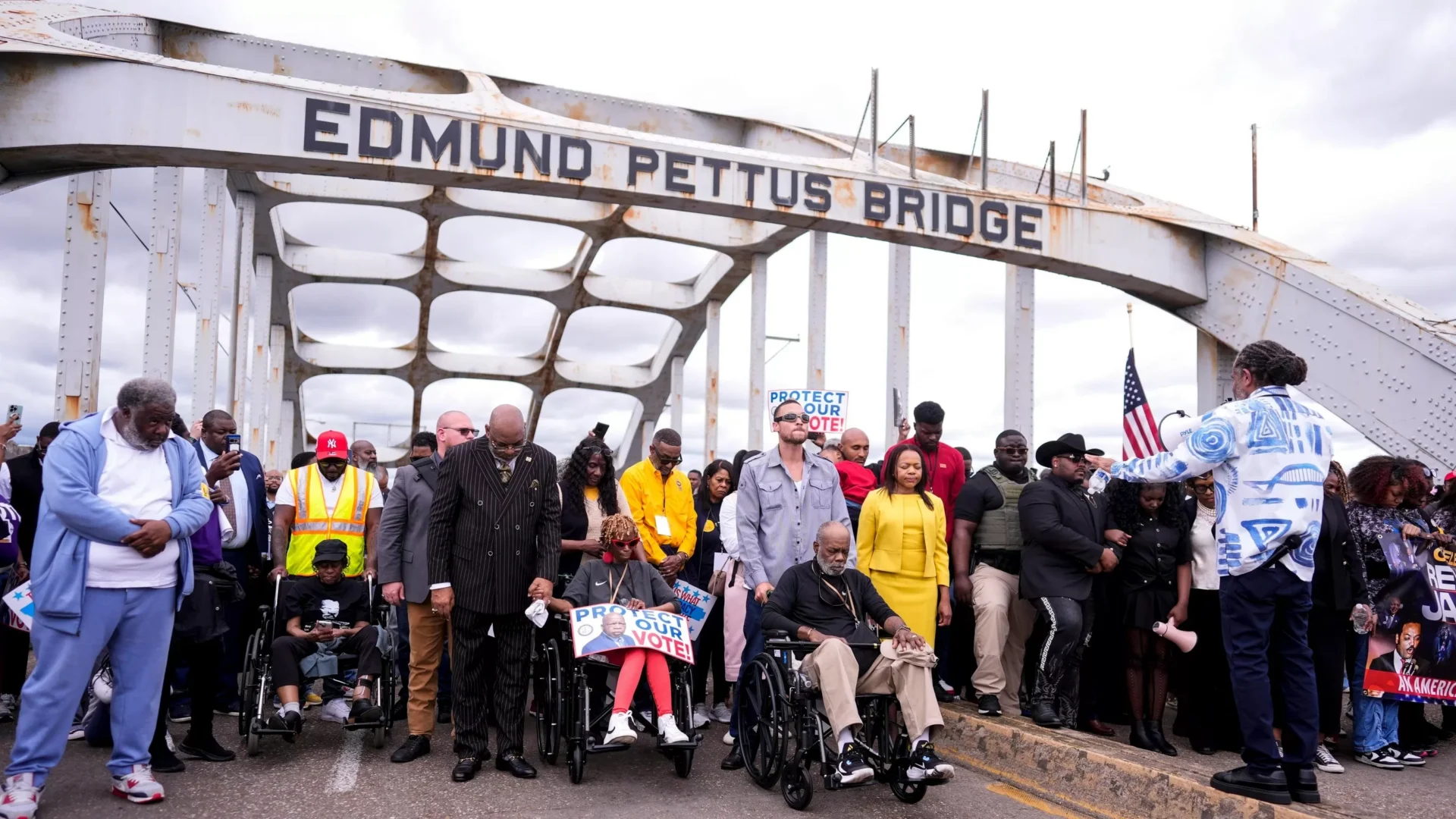
On March 7, 1965, a group of peaceful protesters marched across the Edmund Pettus Bridge in Selma, Alabama, demanding their constitutional right to vote. However, their peaceful demonstration was met with violence and brutality from state troopers, marking a pivotal moment in the Civil Rights Movement. This year, on the 61st anniversary of this event, Alabama once again commemorates the bravery and determination of those who fought for equal voting rights.
The march, known as “Bloody Sunday,” was organized by civil rights activists, including Dr. Martin Luther King Jr., to draw attention to the discriminatory practices that prevented African Americans from exercising their right to vote. Despite the passage of the 15th Amendment in 1870, which granted African American men the right to vote, many states, including Alabama, had implemented laws and policies that effectively denied this right.
As the marchers approached the Edmund Pettus Bridge, they were met with a line of state troopers armed with clubs, tear gas, and horses. Without warning, the troopers attacked the peaceful demonstrators, beating them and using tear gas to disperse the crowd. The images of this violent confrontation were broadcasted across the nation, sparking outrage and galvanizing support for the Civil Rights Movement.
The events of Bloody Sunday brought national attention to the issue of voting rights and ultimately led to the passage of the Voting Rights Act of 1965. This landmark legislation prohibited racial discrimination in voting and provided federal oversight to ensure fair and equal access to the ballot box for all Americans.
Today, as we reflect on the 61st anniversary of this pivotal moment in history, we must remember the sacrifices and courage of those who marched in Selma. Their determination and unwavering commitment to justice and equality paved the way for future generations to exercise their right to vote.
But the fight for voting rights is far from over. In recent years, there have been attempts to roll back the protections of the Voting Rights Act, and voter suppression tactics continue to disproportionately affect marginalized communities. It is up to us to honor the legacy of those who marched in Selma by continuing to fight for equal access to the ballot box for all.
Fortunately, Alabama has taken steps to honor this important moment in history. In 2015, on the 50th anniversary of Bloody Sunday, the Edmund Pettus Bridge was declared a National Historic Landmark. And in 2019, the Alabama State Senate passed a resolution to rename the bridge the “Journey to Freedom Bridge,” recognizing the courage and determination of the marchers.
As we look to the future, let us remember the lessons of Selma and continue to work towards a more just and equal society. Let us honor the memory of those who marched by exercising our right to vote and advocating for the rights of all Americans. And let us never forget the sacrifices made on that fateful day in Selma, Alabama, 61 years ago.
