
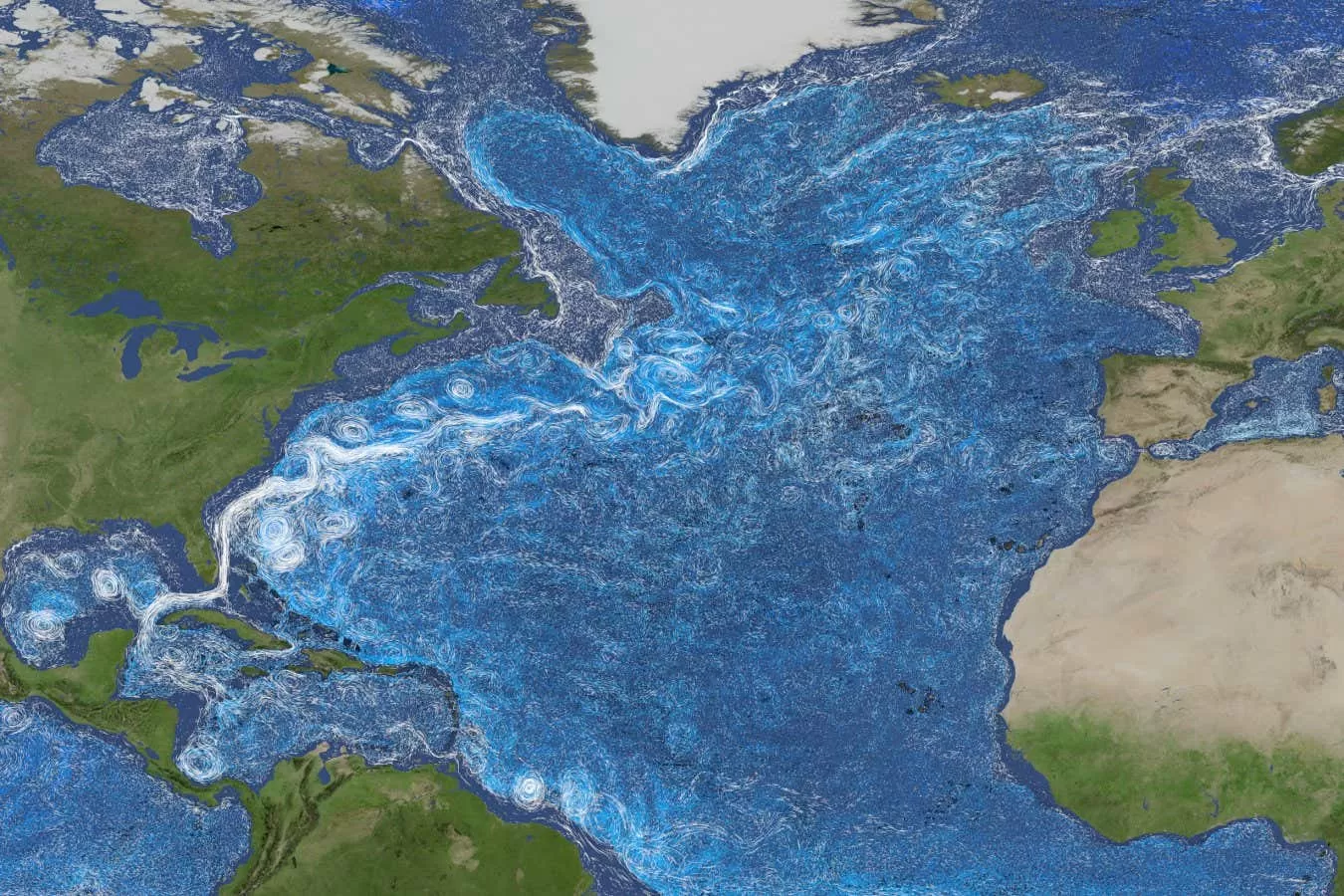
The Atlantic Meridional Overturning Circulation (AMOC) is a critical component of our planet’s climate system. It is a powerful ocean current that transports warm water from the tropics to the North Atlantic, where it cools and sinks to the depths of the ocean. This process drives the global ocean circulation and plays a significant role in regulating the Earth’s climate.
However, scientists have been studying the AMOC and have found alarming evidence that it is weakening. This weakening could have severe consequences for our planet, including a shift in the Gulf Stream’s path. This change could have a domino effect on the Earth’s climate, leading to more severe weather events and disruptions to marine ecosystems.
Recent studies have shown that the AMOC has weakened by about 15% since the mid-20th century. This weakening is due to the increasing amount of freshwater entering the North Atlantic from melting ice sheets and glaciers. This influx of freshwater dilutes the saltwater, making it less dense and less likely to sink, thus weakening the AMOC.
As a result, the Gulf Stream, which is a branch of the AMOC, is also being affected. The Gulf Stream is a warm ocean current that flows along the east coast of the United States and then across the Atlantic towards Europe. It plays a crucial role in regulating the climate of both regions, keeping them relatively warm and temperate.
However, as the AMOC weakens, the Gulf Stream is beginning to drift northwards. This shift has already been observed by scientists, and there are signs that it is happening at a faster rate than previously thought. If this trend continues, it could have severe consequences for the climate of North America and Europe.
One of the most significant impacts of a northward drift of the Gulf Stream would be a change in weather patterns. The Gulf Stream helps to distribute heat from the equator to the poles, creating a more moderate climate in the regions it passes through. If the Gulf Stream shifts northwards, it could lead to colder winters in North America and Europe, while the tropics could experience more extreme heatwaves.
Moreover, the change in the Gulf Stream’s path could also have a significant impact on marine ecosystems. Many marine species, including fish and plankton, rely on the Gulf Stream’s warm waters for their survival. A shift in the Gulf Stream’s path could disrupt these ecosystems, leading to a decline in fish populations and other marine life.
But perhaps the most concerning aspect of this weakening and shift in the AMOC and Gulf Stream is the potential for a more abrupt change. Scientists have warned that if the AMOC weakens too much, it could reach a tipping point, leading to a sudden and dramatic shift in the climate. This could result in more extreme weather events, such as hurricanes and droughts, and could have severe consequences for human populations.
The evidence of the weakening AMOC and the northward drift of the Gulf Stream is a clear warning sign that we need to take action to prevent a more abrupt and severe shift in our climate. We must reduce our carbon emissions and take steps to mitigate the effects of climate change. This includes reducing our dependence on fossil fuels and transitioning to renewable energy sources.
Governments and individuals must also take steps to adapt to the changing climate. This could include implementing coastal protection measures to prepare for sea-level rise and investing in more sustainable farming practices to mitigate the effects of droughts and extreme weather events.
We must also continue to monitor and study the AMOC and Gulf Stream to better understand how they are being affected by climate change and what we can do to mitigate these impacts. The more we know, the better equipped we will be to make informed decisions and take appropriate actions to protect our planet’s climate.
In conclusion, the evidence is clear – the weakening of the AMOC and the northward drift of the Gulf Stream are signs that we must act now to prevent a more abrupt and severe shift in our climate. We have the power to make a difference, and it is our responsibility to take action and protect our planet for future generations. Let us work together to create a more sustainable and resilient future for all.
