
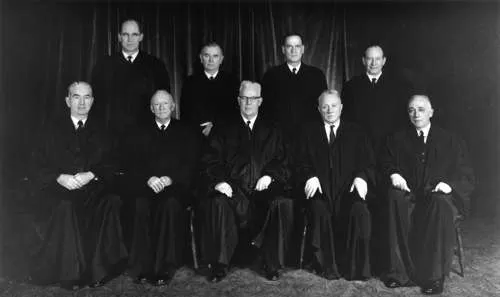
On February 28, 1966, a historic case was argued in the Supreme Court of the United States. The case was Miranda v. Arizona and it would forever change the landscape of American criminal law. This case would go on to become one of the most well-known and influential cases in the history of the Supreme Court, setting a precedent for the protection of individual rights in the criminal justice system.
The case of Miranda v. Arizona involved a man named Ernesto Miranda, who had been arrested and charged with kidnapping and rape. During his interrogation, Miranda confessed to the crimes without being informed of his right to remain silent or to have an attorney present. This confession was used as evidence against him in court, and he was ultimately convicted and sentenced to 20 to 30 years in prison.
However, Miranda’s legal team argued that his confession was not voluntary, as he had not been made aware of his rights during the interrogation. They believed that this violated his Fifth Amendment right against self-incrimination and his Sixth Amendment right to counsel. After appealing his case all the way to the Supreme Court, the justices agreed to hear his case and oral arguments were presented on February 28, 1966.
The case sparked a heated debate among the nine justices, with some arguing that the confession should be admissible as evidence since Miranda had not specifically requested an attorney. However, in a 5-4 decision, the majority of the Supreme Court ruled in favor of Miranda, stating that his rights had indeed been violated. Chief Justice Earl Warren wrote the majority opinion, stating that “the prosecution may not use statements, whether exculpatory or inculpatory, stemming from custodial interrogation of the defendant unless it demonstrates the use of procedural safeguards effective to secure the privilege against self-incrimination.”
This decision led to the now-famous Miranda warnings, which are read to individuals upon their arrest and before any interrogation takes place. These warnings inform individuals of their right to remain silent and to have an attorney present during questioning. Failure to provide these warnings can result in any statements made by the individual being deemed inadmissible in court.
The Miranda decision was met with both praise and criticism. Some believed that it would hinder law enforcement’s ability to gather evidence and obtain confessions from suspects. However, others saw it as a crucial step in protecting the rights of individuals in the criminal justice system. The decision also sparked a debate over the interpretation of the Fifth Amendment and whether or not it required specific warnings to be given to individuals in police custody.
Regardless of the controversy surrounding the decision, Miranda v. Arizona remains a landmark case in American legal history. It has been cited in countless court cases and has become a fundamental aspect of the criminal justice system. The Miranda warnings have become ingrained in our culture, with many people being able to recite them from memory thanks to their frequent portrayal in television and movies.
The case also serves as a reminder of the importance of the Supreme Court in upholding the rights and freedoms of individuals. Miranda v. Arizona is just one example of how the highest court in the land can make a lasting impact on the lives of everyday Americans. The decision has helped to ensure that individuals are treated fairly and justly in the criminal justice system, and it continues to be a beacon of hope for those who may find themselves in a similar situation as Ernesto Miranda.
As we reflect on the 55th anniversary of the oral arguments in Miranda v. Arizona, let us remember the importance of protecting individual rights and the vital role that the Supreme Court plays in upholding those rights. This case serves as a reminder that even the smallest of cases can have a significant impact on the legal landscape of our country. And as we move forward, let us continue to strive for a fair and just criminal justice system for all.
