
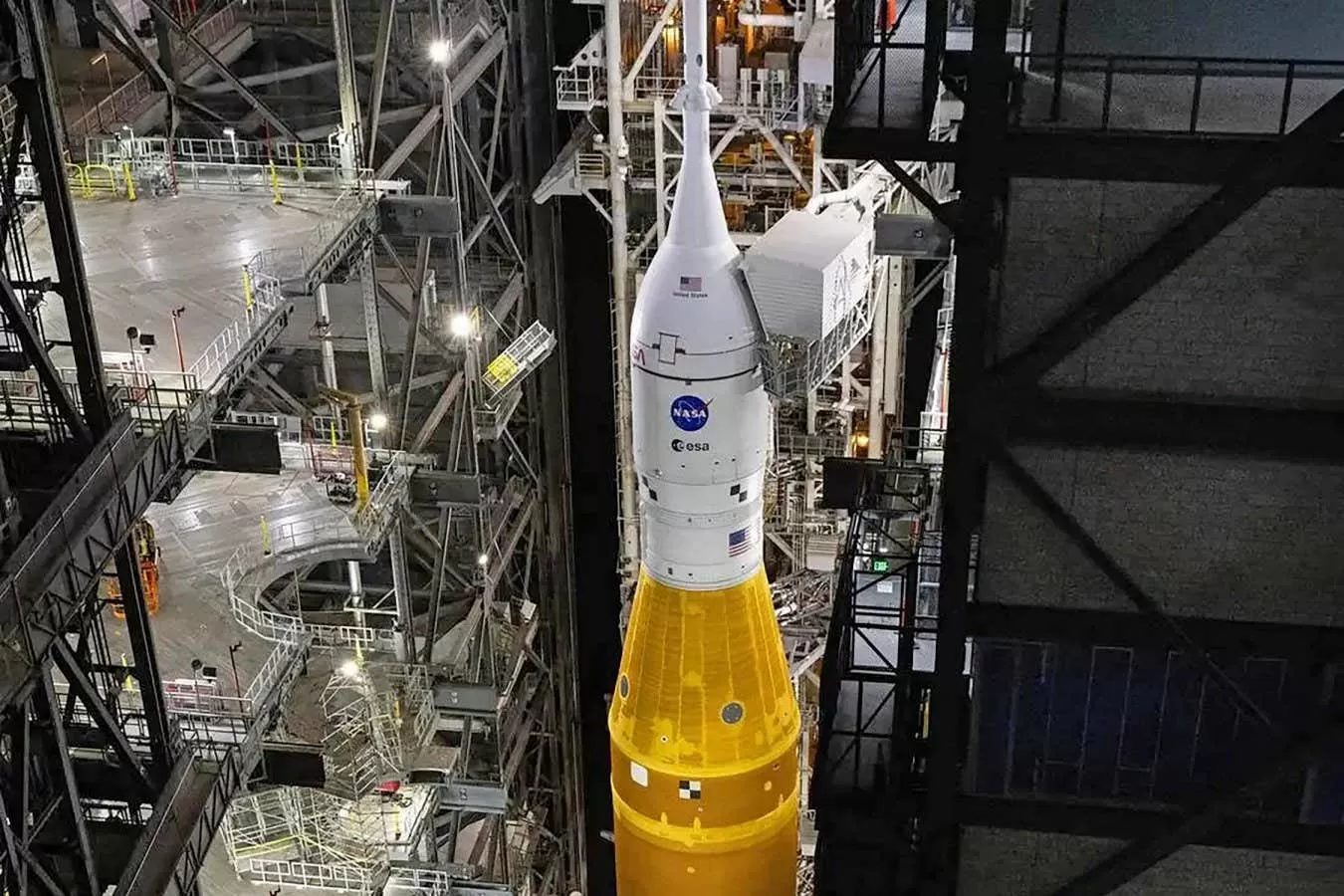
NASA’s Artemis program, which aims to send the first woman and the next man to the moon by 2024, has faced yet another set of delays. This news may come as a disappointment to many who have been eagerly anticipating the return to the moon, but it is important to understand that these delays are not a setback, but rather a strategic move to ensure the success of the mission.
The Artemis program, named after the Greek goddess of the moon, was announced by NASA in 2019 with an ambitious goal of landing humans on the lunar surface by 2024. This would have been the first time humans have set foot on the moon since the Apollo 17 mission in 1972. However, due to various technical and budgetary challenges, the timeline for the mission has been pushed back multiple times.
The latest delay comes as NASA has decided to shake up the Artemis program, opting for smaller, faster steps forward instead of a direct moon landing. This decision has been met with mixed reactions, with some questioning the agency’s ability to meet its own deadlines. However, upon closer examination, it is clear that this change in approach is a smart and necessary move.
One of the main reasons for the delay is the development of the Space Launch System (SLS), the most powerful rocket ever built by NASA. This rocket will be used to launch the Orion spacecraft, which will carry astronauts to the moon. The SLS has faced numerous technical challenges, resulting in delays and increased costs. By shifting the focus to smaller, more achievable goals, NASA can ensure that the SLS is thoroughly tested and ready for the mission.
Another factor contributing to the delay is the budgetary constraints faced by NASA. The agency has requested an additional $3.2 billion for the Artemis program, but this has yet to be approved by Congress. Without the necessary funding, it would be difficult for NASA to meet the 2024 deadline. By taking smaller steps, the agency can make the most of its current budget and still make progress towards the ultimate goal of a moon landing.
Moreover, the decision to delay the moon landing does not mean that NASA is slowing down its efforts. In fact, the agency has already made significant progress towards the Artemis mission. The Orion spacecraft has completed multiple successful test flights, and the SLS is undergoing rigorous testing. NASA has also selected the first group of astronauts who will be part of the Artemis program, including the first woman to walk on the moon.
The new approach to the Artemis program also includes the development of the Lunar Gateway, a space station that will orbit the moon and serve as a staging point for future missions. This will allow for more sustainable and long-term exploration of the moon, as well as serve as a testing ground for technologies that will be crucial for future missions to Mars.
While the delay in the moon landing may be disappointing, it is important to remember that space exploration is a complex and challenging endeavor. The safety of the astronauts and the success of the mission must always be the top priority. By taking smaller, more calculated steps, NASA is ensuring that the Artemis program will be a success.
In addition, this change in approach also opens up opportunities for international collaboration. NASA has already announced partnerships with other space agencies, including the European Space Agency and the Canadian Space Agency, to work together on the Artemis mission. This will not only bring in additional expertise and resources but also foster cooperation and unity among nations.
The Artemis program is not just about landing humans on the moon, but also about inspiring the next generation of scientists, engineers, and explorers. By taking smaller steps, NASA can continue to engage the public and keep the excitement and momentum going. The agency has already launched the “Artemis Generation” campaign, which aims to inspire young people to pursue careers in STEM and be a part of the historic mission to the moon.
In conclusion, while the delay in the Artemis program may be disappointing, it is a necessary step to ensure the success of the mission. NASA’s decision to take smaller, faster steps forward is a strategic move that will ultimately lead to a more sustainable and successful return to the moon. Let us continue to support and be inspired by the Artemis program, as it paves the way for future exploration and discovery in space.
