
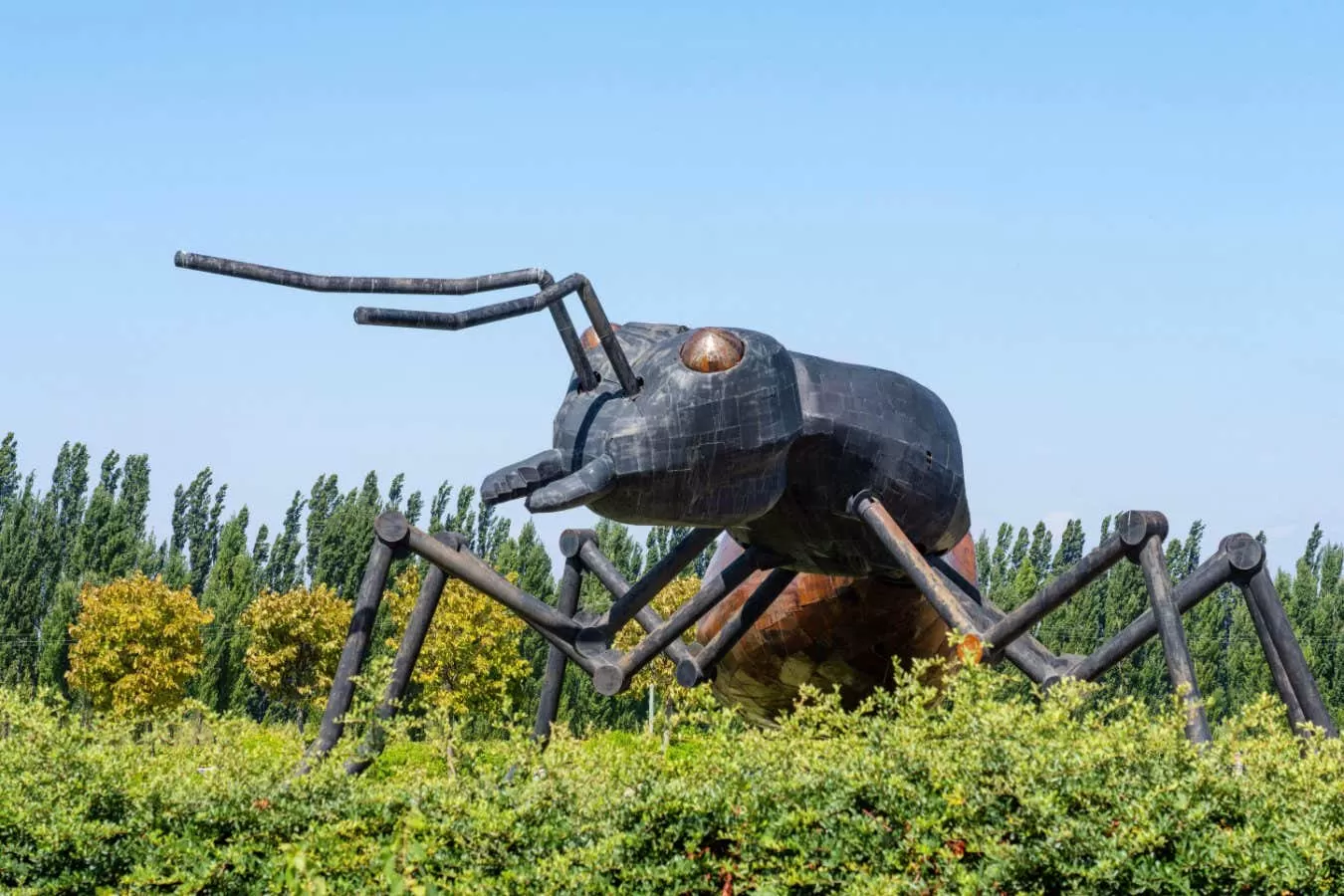
For centuries, humans have been fascinated by the tiny creatures known as ants. These industrious insects have been the subject of many comparisons to our own species, highlighting their remarkable abilities to work together and build complex societies. However, in recent years, a new comparison has emerged – ants and computers. But according to Annalee Newitz, it is time for us to stop using ants as analogues for ourselves and our machines.
In her thought-provoking article, Newitz argues that the comparison between ants and computers is not only flawed, but also harmful. She believes that this comparison perpetuates the idea that humans and machines are superior to other living beings, and that we should strive to emulate their efficiency and productivity. But in doing so, we are overlooking the unique qualities and value of both ants and humans.
Firstly, let us examine the parallels drawn between ants and computers. Both are highly organized and efficient systems, with individual members working together towards a common goal. Ants, like computers, have specific roles and tasks assigned to them, and they carry them out with precision and speed. This has led many to believe that ants are the ultimate example of a well-oiled machine, and that humans should strive to be more like them.
However, Newitz argues that this comparison is flawed because it ignores the fact that ants are living beings with their own complex behaviors and emotions. They are not just mindless drones following a set of instructions, but rather, they possess a level of intelligence and adaptability that is often underestimated. Ants have been observed to exhibit problem-solving skills, communication, and even empathy towards their fellow colony members. These are qualities that cannot be replicated by machines.
Moreover, the comparison between ants and computers also perpetuates the idea that humans are superior to other living beings. By striving to be more like machines, we are essentially devaluing the unique qualities and abilities of both ants and humans. We are reducing them to mere cogs in a machine, rather than appreciating them for the complex and diverse creatures that they are.
Newitz also points out that this comparison is harmful because it reinforces the idea that efficiency and productivity are the ultimate goals to strive for. In our fast-paced and technology-driven society, we are constantly bombarded with the message that we need to do more, be more, and achieve more. This has led to a culture of overwork and burnout, where our worth is measured by our productivity. By comparing ourselves to ants and computers, we are only perpetuating this harmful mindset.
So, what is the alternative? Newitz suggests that instead of striving to be more like ants and computers, we should embrace our own unique qualities and abilities. Humans are not machines, and that is something to be celebrated. We possess creativity, empathy, and the ability to think critically – qualities that cannot be replicated by any machine. And just like ants, we are social creatures who thrive when we work together towards a common goal.
In conclusion, it is time for us to stop using ants as analogues for ourselves and our machines. The comparison between ants and computers is not only flawed, but also harmful. It devalues the unique qualities of both ants and humans, and perpetuates a harmful mindset of overwork and burnout. Instead, let us embrace our own strengths and celebrate the diversity of all living beings on this planet. After all, there is no one-size-fits-all model for success, and that is something to be celebrated.
