
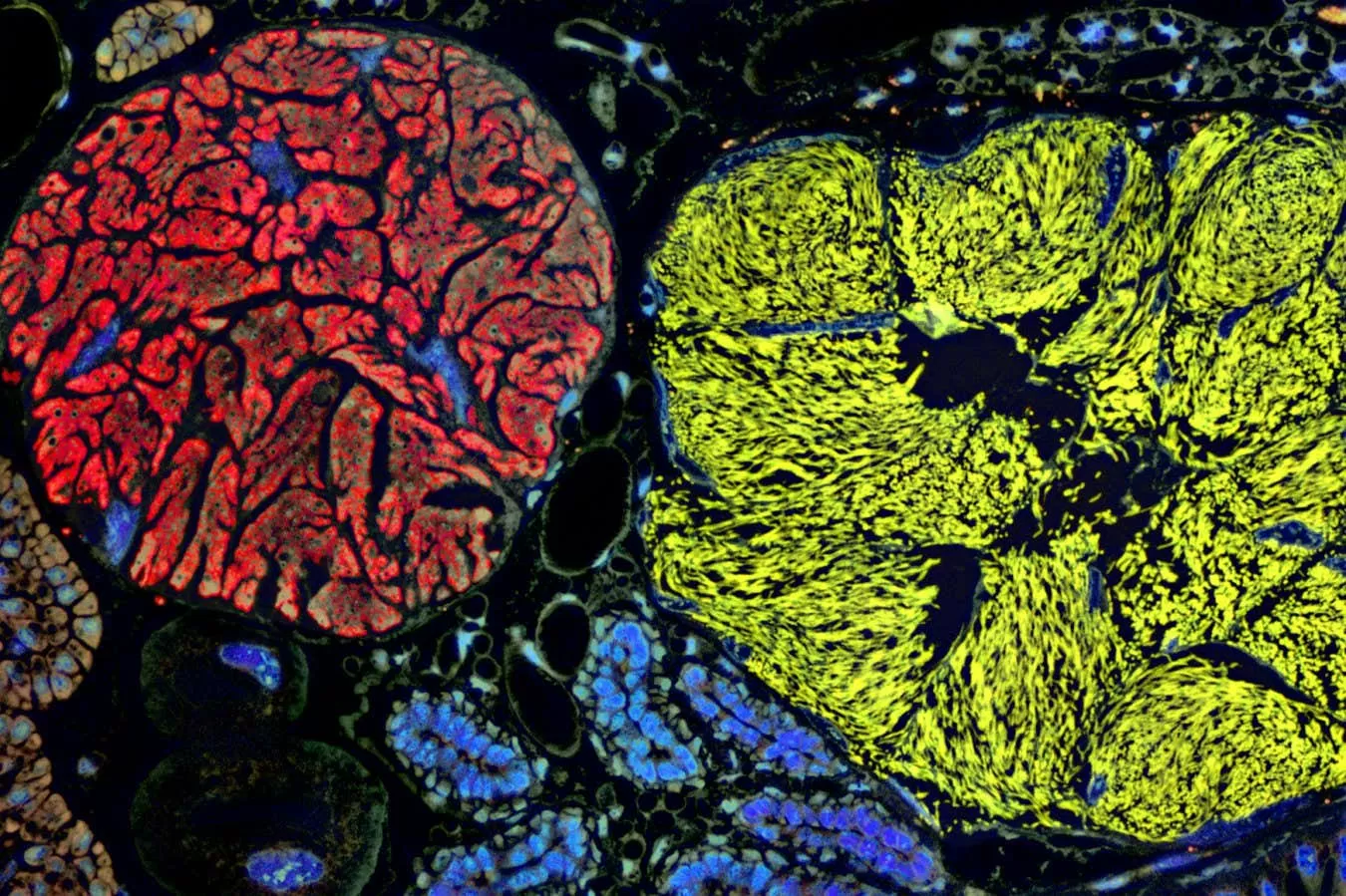
Symbiotic bacteria living inside insect cells have been a topic of fascination for scientists for many years. These tiny microorganisms have evolved alongside their insect hosts, forming a mutually beneficial relationship that has lasted for hundreds of millions of years. However, recent research has revealed a surprising similarity between these bacteria and the ancient microbes that eventually evolved into mitochondria – the powerhouse of our own cells.
Mitochondria are organelles found in most eukaryotic cells, including those of humans. They are responsible for producing the energy that our cells need to function. However, these organelles were not always a part of our cells. In fact, they were once free-living bacteria that were engulfed by larger cells and eventually evolved into an essential part of our cellular machinery.
Similarly, the symbiotic bacteria living inside insect cells have also undergone a process of genome reduction, resulting in the loss of much of their DNA. This process, known as endosymbiosis, is a common evolutionary phenomenon where one organism lives inside another and both benefit from the relationship. In the case of these bacteria, they have lost many of the genes that were once necessary for their survival because their insect hosts provide them with everything they need.
This discovery was made by a team of researchers from the University of Montana, who studied the genomes of bacteria living inside the cells of insects such as aphids, cicadas, and beetles. They found that these bacteria have lost anywhere from 20-50% of their original genome, with some species having lost up to 90%. This is a significant reduction, considering that the average bacterial genome contains thousands of genes.
But why would these bacteria lose so much of their DNA? The answer lies in the nature of their symbiotic relationship with their insect hosts. These bacteria live inside specialized cells called bacteriocytes, which are found in the insect’s body. The bacteriocytes provide a safe and nutrient-rich environment for the bacteria to thrive, while the bacteria, in turn, provide essential nutrients to their hosts.
Over time, as the bacteria became more reliant on their insect hosts, they no longer needed many of the genes that were once necessary for their survival. This is because their hosts were providing them with these essential nutrients, making these genes redundant. As a result, these genes were lost through a process known as genetic drift, where genes that are no longer needed are gradually eliminated from the genome.
This process of genome reduction has been observed in other endosymbiotic relationships, such as the one between mitochondria and their host cells. In fact, the similarities between these bacteria and mitochondria are striking. Both have lost much of their DNA, and both rely on their hosts for survival. This suggests that the process of endosymbiosis has played a crucial role in the evolution of complex life forms on our planet.
But the story doesn’t end there. The researchers also found that these bacteria have acquired new genes through horizontal gene transfer – the process by which genes are transferred between different species. This means that while they have lost many of their original genes, they have also gained new ones that have helped them adapt to their new environment inside the insect cells.
This discovery has shed new light on the evolution of endosymbiotic relationships and the role they have played in shaping the diversity of life on our planet. It also highlights the incredible adaptability of these tiny bacteria, which have managed to survive and thrive inside their insect hosts for millions of years.
But why is this research important? Understanding the mechanisms behind endosymbiosis and genome reduction can provide valuable insights into the evolution of complex life forms and the role of symbiotic relationships in shaping our world. It can also help us better understand the intricate relationships between different organisms and how they have co-evolved over time.
Furthermore, this research has potential implications for fields such as medicine and agriculture. By studying the genomes of these bacteria, scientists may be able to identify new ways to combat insect-borne diseases or develop more effective methods of pest control.
In conclusion, the discovery that symbiotic bacteria living inside insect cells have lost much of their DNA over hundreds of millions of years, much like the ancient microbes that evolved into mitochondria, is a fascinating insight into the world of endosymbiosis. It highlights the incredible adaptability of these microorganisms and their crucial role in the evolution of complex life forms. This research opens up new avenues for further study and has the potential to impact various fields, making
