
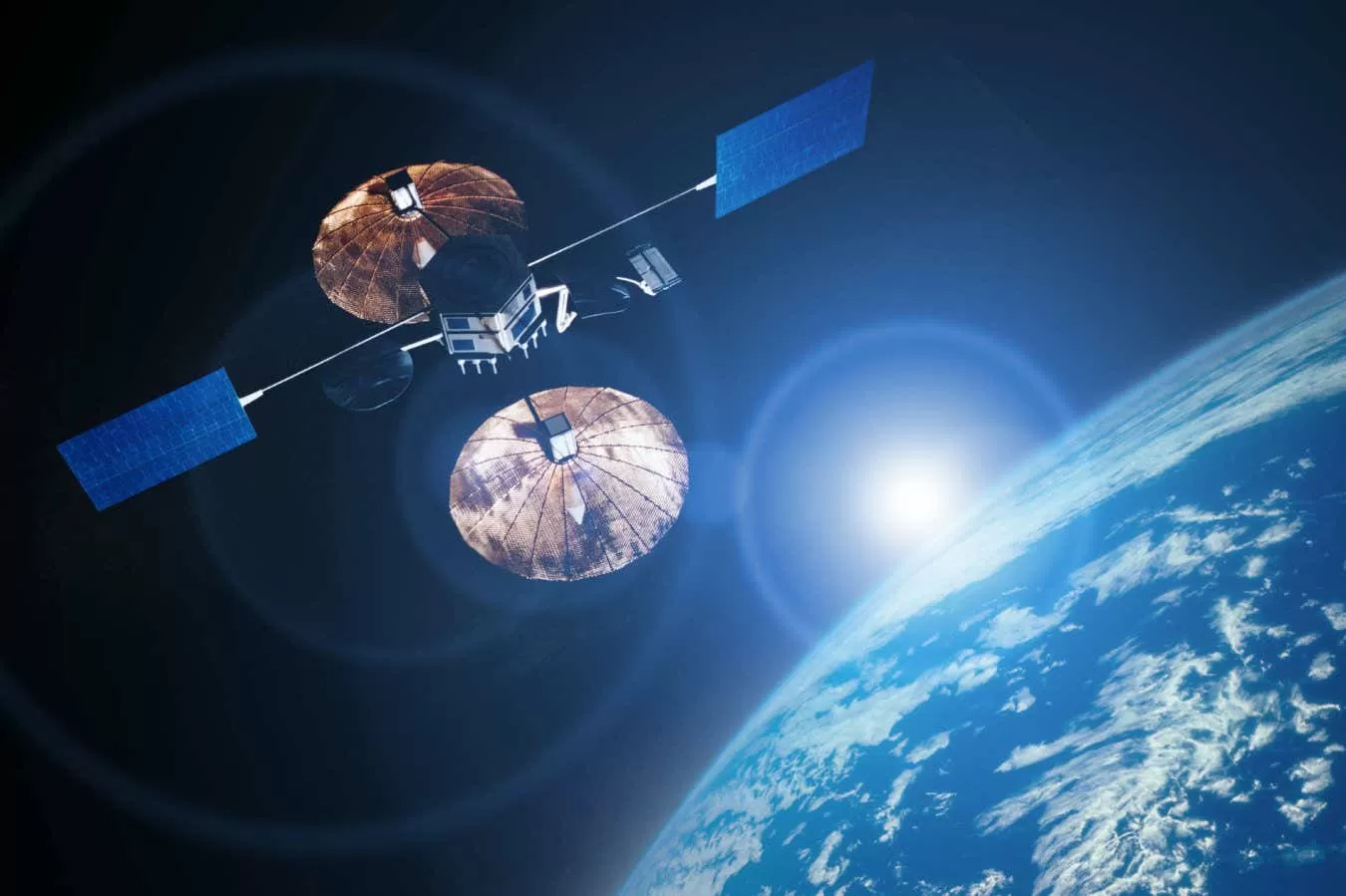
Satellites play a crucial role in our modern world, providing us with vital information and services such as weather forecasting, navigation, communication and monitoring of Earth’s resources. But have you ever imagined two or more satellites communicating and manoeuvring around each other in space using magnetic fields? Well, it may sound like something out of a sci-fi movie, but it is not too far-fetched. Scientists and engineers are currently exploring the possibility of using magnetic fields to control the movement and communication of satellites in space.
The concept of using magnetic fields for satellite manoeuvring and communication is not entirely new. In fact, it has been used by NASA’s Magnetospheric Multiscale (MMS) mission to study Earth’s magnetic field. However, this technique has not been implemented on a large scale in space. But before we delve into the challenges and potential of this technique, let’s first understand how it works.
The idea is to use the Earth’s magnetic field as a tool to control the movement of satellites. As we know, Earth has a magnetic field that extends out into space. This field interacts with charged particles emanating from the Sun, creating magnetic fields and currents in space. Satellites orbiting around Earth also interact with these magnetic fields, which can cause them to drift from their original orbit. Scientists have found a way to use this interaction between the Earth’s magnetic field and satellites to manipulate their movement.
The process involves equipping satellites with powerful magnetic coils, similar to those used in MRI machines. These coils produce a localized magnetic field, which can interact with Earth’s magnetic field and alter the satellite’s trajectory. By controlling the strength and direction of the magnetic field, scientists can steer the satellite in any desired direction. This technique, known as magnetic torque, could potentially eliminate the need for traditional propulsion systems, which require a significant amount of fuel.
Furthermore, this technique can also be used for satellite communication. As the satellites move towards each other, their magnetic fields interact, creating a force that pulls them together. This interaction can be used to establish a stable distance between the satellites, allowing them to communicate with each other through magnetic signals. This could improve the efficiency of communication between satellites, reducing the risk of signal interference and potential errors.
However, implementing this technique on a large scale in space is not without its challenges. One of the major challenges is the need for a precise and accurate control system. As the satellites would be moving around each other in close proximity, even the slightest miscalculation could lead to collisions. To overcome this, scientists are working on developing advanced control algorithms and sensors to ensure accurate manoeuvring of the satellites.
Another challenge is the potential impact of the magnetic fields on other objects in space, such as smaller satellites or debris. Although the magnetic fields used for satellite manoeuvring are relatively weak, they could still interact with other objects in space. Scientists need to carefully study and understand these interactions to ensure the safety and stability of other objects in space.
Moreover, the deployment and maintenance of the magnetic coils on satellites could also pose technical challenges. The installation process would require precise and careful positioning of the coils, and any damage or malfunction could significantly affect the satellite’s manoeuvring capabilities.
Despite these challenges, the potential of using magnetic fields for satellite manoeuvring and communication is immense. It could drastically reduce the cost and resources required for satellite missions, making them more sustainable in the long run. It could also open up new opportunities for advanced satellite formations, such as constellations, which could improve our understanding of Earth and the universe.
In addition to its practical applications, this technology is also a significant step towards achieving more sustainable space exploration. With the increasing amount of space debris and the depletion of resources on Earth, finding alternative and sustainable methods for space missions is becoming more critical than ever. Using magnetic fields not only reduces the use of traditional propulsion systems, which are harmful to the environment, but also enables the recycling of satellites, making space exploration more sustainable.
In conclusion, the concept of satellites using magnetic fields to manoeuvre and communicate with each other is a promising development in the field of space exploration. While there are still challenges to overcome, scientists and engineers are working tirelessly to make this concept a reality. The potential benefits of this technology are vast and could pave the way for a more sustainable and advanced space exploration. As we continue to explore the vastness of space, let’s keep our minds open to new possibilities and embrace
