
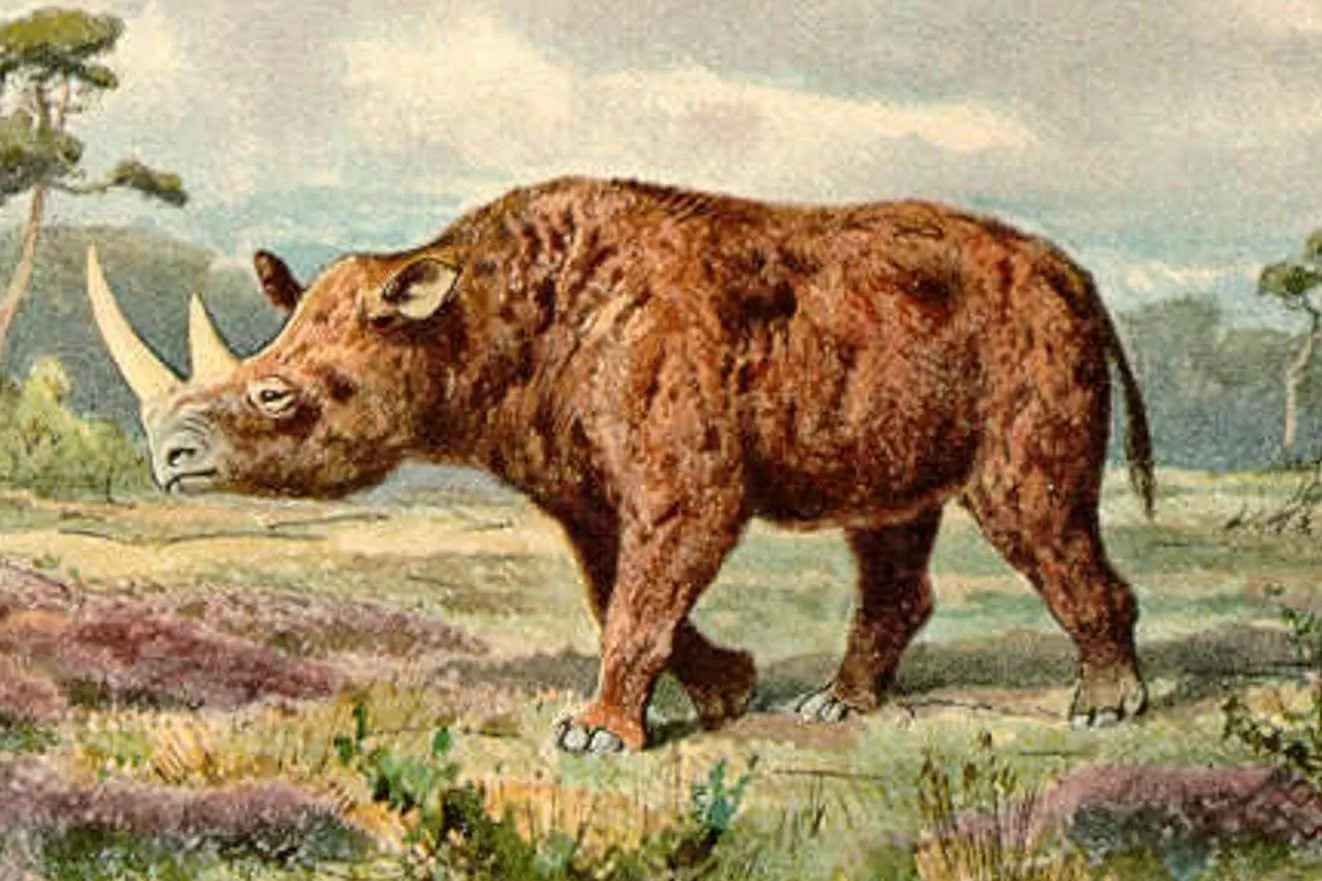
Scientists have made a groundbreaking discovery that sheds light on the mysterious extinction of one of the most iconic megafauna species of the last glacial period – the woolly rhinoceros. A piece of woolly rhinoceros flesh, hidden inside the remains of a wolf that died 14,400 years ago, has provided valuable genetic information that improves our understanding of why this majestic creature disappeared from our planet.
The woolly rhinoceros, also known as the Coelodonta antiquitatis, was a large, herbivorous mammal that lived during the Pleistocene epoch, around 300,000 to 10,000 years ago. It was a common sight in the subarctic regions of Europe and Asia, with its thick, shaggy coat and two impressive horns on its nose. However, despite its dominance in the ecosystem, the woolly rhinoceros disappeared from the Earth’s surface around 14,000 years ago, leaving behind only its remains and a sense of mystery.
For years, scientists have been trying to unravel the reasons behind the extinction of this magnificent creature. Some theories suggest that climate change and the changing landscape played a significant role, while others believe that human hunting and competition for resources may have contributed to its demise. However, with limited genetic information available, it has been challenging to determine the exact cause.
But now, thanks to a team of researchers from the Swedish Museum of Natural History and the Centre for Palaeogenetics, we have new insights into the woolly rhinoceros’s genetic makeup. By extracting DNA from a piece of well-preserved woolly rhinoceros flesh found inside the remains of a wolf, they were able to sequence the animal’s genome.
The results of this study, published in the journal Current Biology, have provided valuable information about the woolly rhinoceros’s evolutionary history and its relationship with other species. It has also shed light on the genetic adaptations that allowed the woolly rhinoceros to thrive in the harsh, cold environment of the last glacial period.
One of the most significant findings from this study is the woolly rhinoceros’s genetic diversity. It was previously believed that the species had low genetic diversity and was vulnerable to extinction. However, the genetic analysis revealed that the woolly rhinoceros had a surprisingly high level of genetic variation, comparable to other large mammal species that still exist today.
This discovery challenges the theory that the woolly rhinoceros’s extinction was caused by a lack of genetic diversity. It suggests that other factors, such as climate change and human hunting, may have played a more significant role in its disappearance.
The study also revealed that the woolly rhinoceros had a close genetic relationship with the modern-day Sumatran rhinoceros. This finding has raised questions about the evolutionary history of these two species and how they may have diverged from a common ancestor.
Furthermore, the genetic analysis showed that the woolly rhinoceros had adaptations to its diet and metabolism that allowed it to survive in the harsh, cold environment of the last glacial period. These adaptations included an increased ability to break down fats and a reduced ability to produce sweat, which helped the animal retain body heat in the freezing temperatures.
This study has not only provided crucial information about the woolly rhinoceros but also highlights the importance of preserving genetic material from extinct species. With advancements in technology, we can now extract and analyze DNA from well-preserved specimens, giving us a glimpse into the past and a better understanding of the natural world.
The discovery of the woolly rhinoceros’s genetic information is a significant step towards solving the mystery of its extinction. It has also given us a deeper appreciation for this magnificent creature and its role in the ecosystem. We must continue to support and fund scientific research that helps us unravel the mysteries of our planet’s past, and ultimately, protect its present and future.
In conclusion, the piece of woolly rhinoceros flesh hidden inside a wolf that died 14,400 years ago has provided us with valuable genetic information that has improved our understanding of this iconic megafauna species. It has challenged previous theories, raised new questions, and highlighted the importance of preserving genetic material from extinct species. This groundbreaking discovery is a testament to the power of science and our never-ending quest to unravel the mysteries of our planet’s past.
