
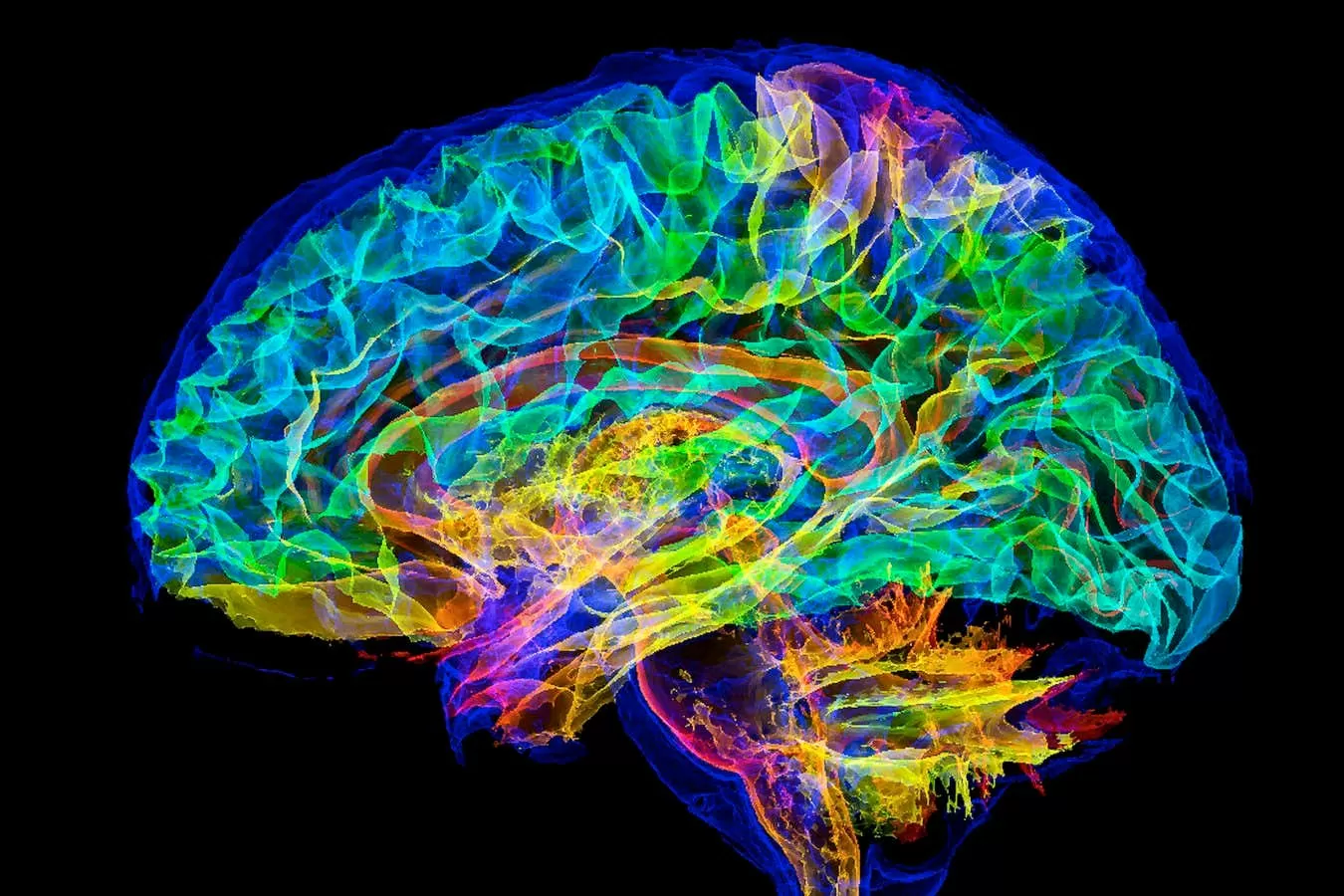
The human brain has been a mystery for centuries, with researchers and scientists trying to understand its complex workings. But with the advancement of technology, the world’s most powerful supercomputers are now able to run simulations of billions of neurons, offering unprecedented insights into the workings of our brains. This breakthrough has the potential to revolutionize our understanding of the brain and bring us closer to unlocking its mysteries.
Supercomputers, also known as high-performance computers, are capable of performing trillions of calculations per second. These machines are used for complex tasks such as weather forecasting, climate modeling, and now, simulating the human brain. With the increase in their processing power, supercomputers have become an essential tool for researchers in various fields, including neuroscience.
One of the most significant developments in the field of neuroscience is the Human Brain Project, a global initiative to create a comprehensive understanding of the human brain’s structure and function. This project aims to develop a simulation of the brain using the latest technology and computer models. The project’s success depends greatly on the use of supercomputers, which have the ability to run complex simulations of the brain’s neurons and synapses.
One of the key benefits of using supercomputers in neuroscience is the speed at which simulations can be run. In the past, researchers had to rely on animal studies or limited human experiments to understand the brain’s functioning. With supercomputers, they can now simulate billions of neurons in a matter of hours, providing a much more comprehensive and accurate understanding of the brain’s complex networks.
Moreover, supercomputers offer researchers the ability to manipulate various parameters in the simulation, giving them more control over the experiment. This enables them to test different hypotheses and scenarios, allowing for a more in-depth analysis of the brain’s functions. Such simulations also eliminate the ethical concerns associated with animal experiments, making them a more ethical and reliable alternative.
The potential of supercomputers in neuroscience is vast. By simulating the brain’s neurons, researchers can study how they communicate with each other and form networks. This will aid in understanding how different parts of the brain are connected and how they work together to control our thoughts, emotions, and behavior. Such insights can pave the way for the development of advanced treatments for neurological disorders such as Alzheimer’s and Parkinson’s disease.
Additionally, these simulations can help researchers study the effects of various drugs and treatments on the brain. Instead of relying on animal testing, which may not accurately reflect the human brain’s functioning, supercomputers can simulate the effects of drugs and treatments in a virtual environment. This will not only save time and resources but also provide more reliable results.
The use of supercomputers in neuroscience also has implications for artificial intelligence (AI). By simulating the brain’s neurons, scientists can gain a better understanding of how to create more sophisticated AI systems that can mimic human thought processes. This could lead to significant advancements in fields such as robotics, healthcare, and transportation.
However, it’s important to note that even with the world’s most powerful supercomputers, simulating the human brain is still a massive challenge. The human brain is estimated to have over 100 billion neurons, each with thousands of connections. This complexity makes it difficult to create an accurate model that can fully replicate the brain’s functions. Therefore, further advancements in technology and computer modeling are necessary to improve the accuracy of these simulations.
In conclusion, the use of supercomputers in neuroscience has the potential to unlock the mysteries of the human brain and bring us closer to understanding the complexities of our thoughts and behaviors. These advancements have the potential to revolutionize the field of neuroscience and pave the way for new treatments for neurological disorders. With continued research and development, we can look forward to a future where we have a deeper understanding of the brain and its functions.
