
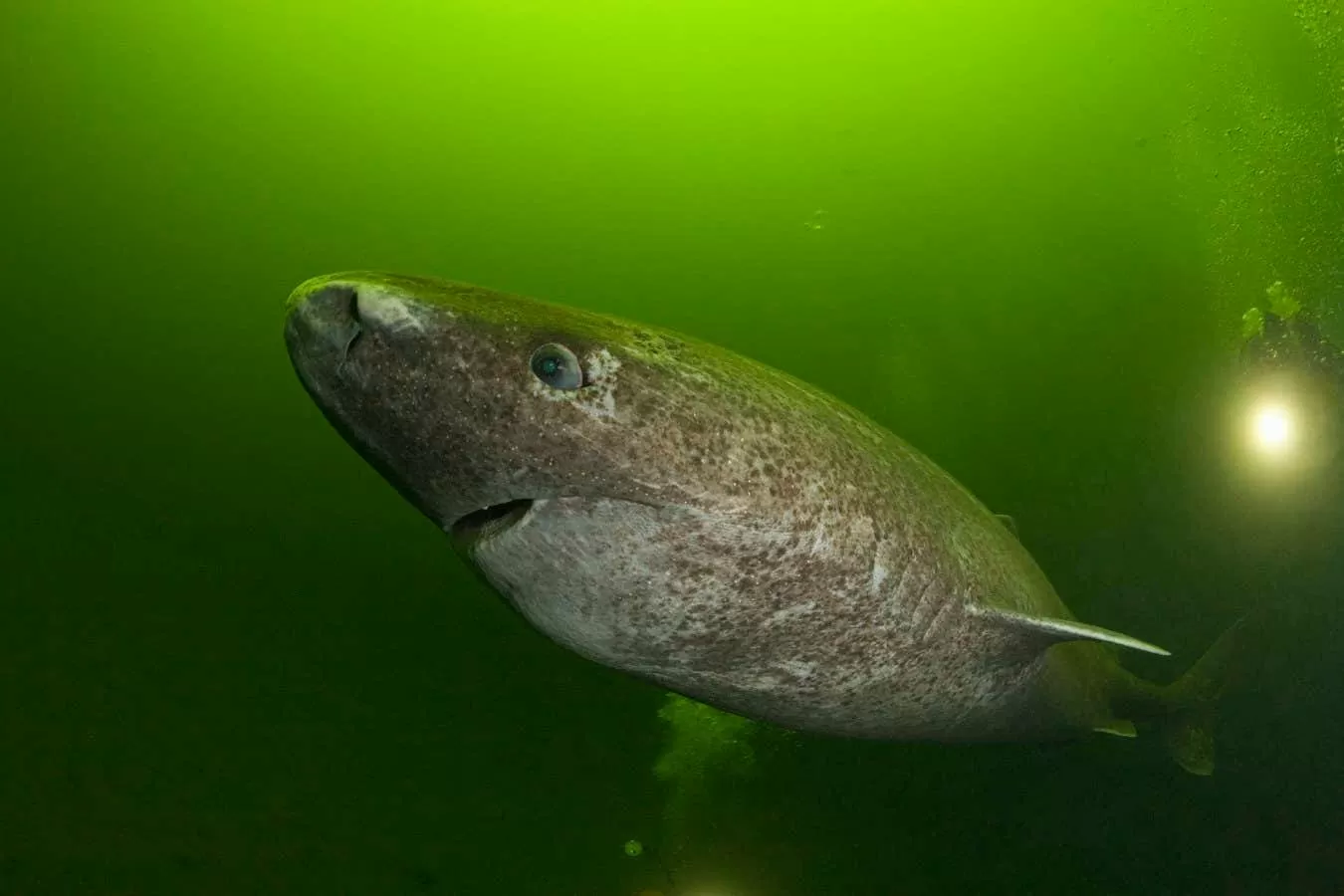
A recent study on the hearts of Greenland sharks has revealed fascinating insights into the lives of these deep-sea predators. Researchers have found that despite having massive accumulations of ageing markers, such as severe scarring, these sharks do not seem to be affected in terms of their health or longevity. This groundbreaking discovery challenges our understanding of ageing and opens up new avenues for research.
Greenland sharks, also known as the gurry sharks, are one of the largest and longest-lived species of sharks in the world. They can reach lengths of up to 20 feet and have been known to live for over 400 years. These elusive creatures are found in the cold, deep waters of the Arctic and North Atlantic oceans, making them difficult to study. However, a team of scientists from the University of Copenhagen and the Greenland Institute of Natural Resources managed to obtain samples of the shark’s heart tissue and conducted a thorough analysis.
The results of the study, published in the journal Science, have shed light on the remarkable resilience of these sharks. The researchers found that the hearts of Greenland sharks have massive accumulations of ageing markers, such as severe scarring and fat deposits. These markers are typically associated with age-related health issues in other animals, including humans. However, what is surprising is that despite these markers, the sharks seem to be in good health and show no signs of age-related decline.
Dr. Julius Nielsen, lead author of the study, explains, “We were amazed to find these ageing markers in the hearts of Greenland sharks, as they are typically associated with age-related diseases. It’s like finding a 90-year-old person with the heart of a 30-year-old.” This discovery challenges the traditional understanding of ageing and suggests that these sharks have evolved unique mechanisms to cope with the effects of ageing.
One possible explanation for this phenomenon is the slow metabolism of Greenland sharks. These sharks have a low metabolic rate, which means they age at a much slower pace compared to other animals. This is supported by the fact that Greenland sharks have been found to have low levels of the hormone cortisol, which is known to accelerate ageing. This slow ageing process may also explain why these sharks can live for such a long time.
The study also found that the Greenland sharks’ hearts have a unique structure, with a high proportion of connective tissue and a lower number of muscle cells. This structure is similar to that of the hearts of some other long-lived animals, such as whales and tortoises. This suggests that the heart structure may play a crucial role in the longevity of these animals.
The findings of this study have significant implications for our understanding of ageing and could potentially lead to new treatments for age-related diseases. Dr. Nielsen says, “Studying these sharks could provide valuable insights into the ageing process and help us develop new strategies for promoting healthy ageing in humans.”
This study also highlights the importance of protecting these magnificent creatures. Despite their impressive longevity, Greenland sharks are facing threats from overfishing and climate change. The slow growth and reproductive rate of these sharks make them particularly vulnerable to these threats. Therefore, it is crucial that we take steps to conserve these animals and their habitats.
In conclusion, the study of the hearts of Greenland sharks has revealed fascinating insights into the ageing process of these deep-sea predators. Their ability to accumulate ageing markers without any adverse effects challenges our understanding of ageing and opens up new avenues for research. This discovery also highlights the need to protect these sharks and their unique habitats. Who knows, these ancient creatures may hold the key to unlocking the secrets of healthy ageing for all of us.
