
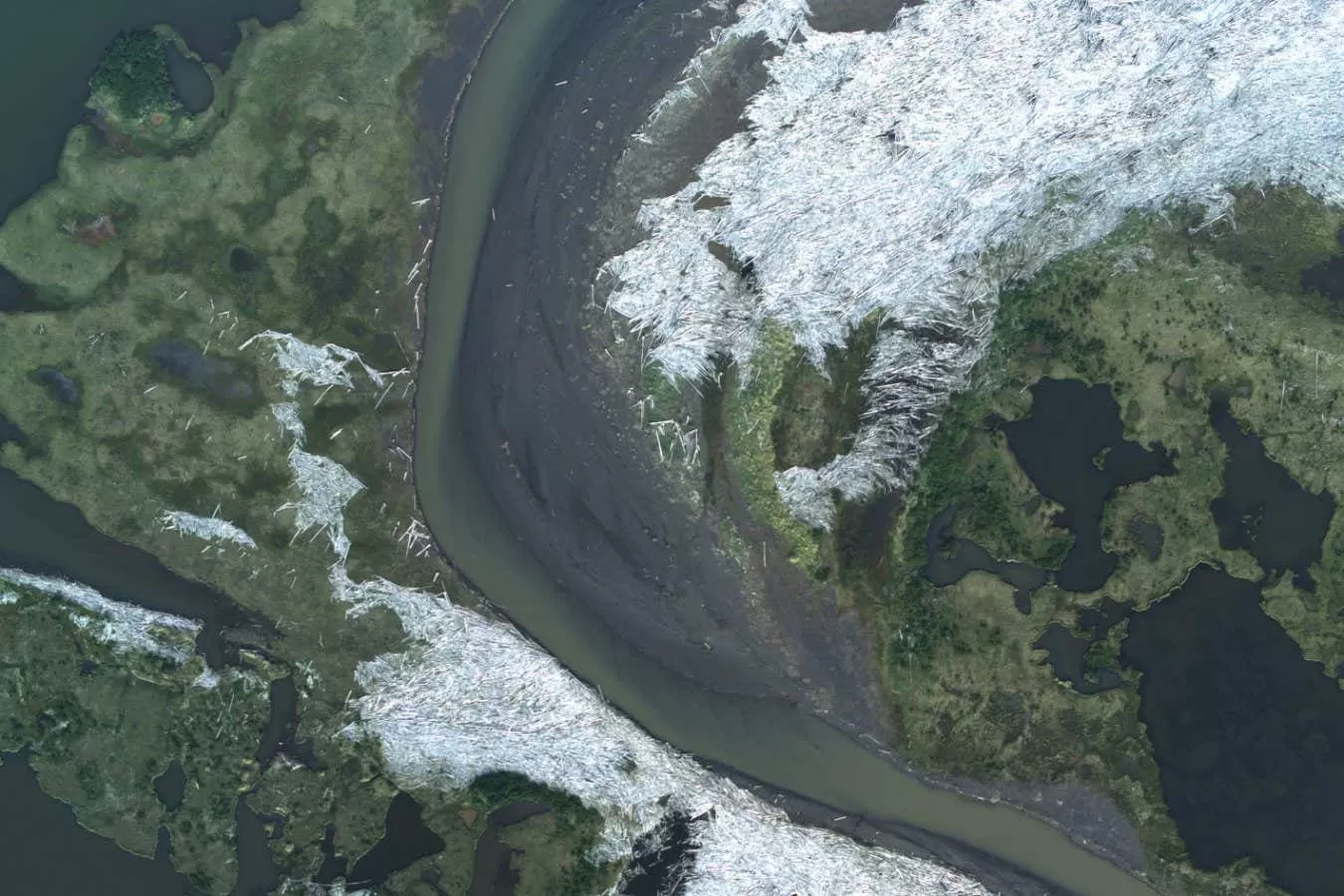
The boreal forest, also known as the taiga, covers vast areas of land in the northern hemisphere. It is a vital ecosystem that provides a home to countless species of plants and animals, and plays a crucial role in regulating the Earth’s climate. However, in recent years, the boreal forest has been facing a significant threat – deforestation.
Deforestation is the process of cutting down trees for various purposes, such as agriculture, logging, and urbanization. The boreal forest has been a target for deforestation due to its valuable timber and land for development. This has led to a significant loss of forest cover, which not only affects the biodiversity of the region but also contributes to the global issue of climate change.
But what if there was a way to not only stop deforestation in the boreal forest but also help combat climate change? A recent study suggests that sinking felled trees in the depths of the Arctic Ocean could remove up to 1 billion tonnes of carbon dioxide from the atmosphere each year. This could be a game-changer in the fight against climate change, but it could also come at a cost to the delicate Arctic ecosystem.
The study, published in the journal Environmental Research Letters, proposes a unique solution to the problem of deforestation in the boreal forest. Instead of burning or leaving the felled trees to decompose, they could be transported to the Arctic Ocean and sunk to the seafloor. This process, known as “blue carbon sequestration,” would not only remove carbon dioxide from the atmosphere but also store it in the ocean for centuries.
The idea behind this solution is that the Arctic Ocean has a unique ability to store carbon dioxide due to its low temperature and high salinity. When the trees are sunk to the seafloor, they become buried under layers of sediment, preventing the carbon from being released back into the atmosphere. This process is similar to the natural process of carbon storage in the ocean, where marine plants and animals absorb carbon and sink to the seafloor when they die.
The study estimates that this method could remove up to 1 billion tonnes of carbon dioxide from the atmosphere each year, which is equivalent to the annual emissions of about 200 million cars. This could have a significant impact on reducing the levels of carbon dioxide in the atmosphere and slowing down the effects of climate change.
However, this solution also comes with potential risks to the Arctic ecosystem. The boreal forest is home to a diverse range of species, including plants, animals, and insects, which are all interconnected and rely on each other for survival. Cutting down trees and sinking them in the ocean could disrupt this delicate balance and have unforeseen consequences on the ecosystem.
Moreover, the transportation and sinking of trees would require significant resources and could have a negative impact on the marine environment. The study suggests that careful planning and monitoring would be necessary to minimize any potential harm to the Arctic ecosystem.
Despite these risks, the idea of using blue carbon sequestration to combat climate change is gaining traction. The study’s authors believe that this method could be a cost-effective and scalable solution to reduce carbon emissions. It could also provide economic benefits to local communities by creating jobs and promoting sustainable forestry practices.
In conclusion, the boreal forest is a vital ecosystem that is facing the threat of deforestation. The proposed solution of sinking felled trees in the Arctic Ocean could help combat climate change by removing carbon dioxide from the atmosphere. However, it is essential to consider the potential risks to the Arctic ecosystem and carefully plan and monitor the process. With proper implementation, this solution could be a significant step towards a more sustainable future for our planet.
