
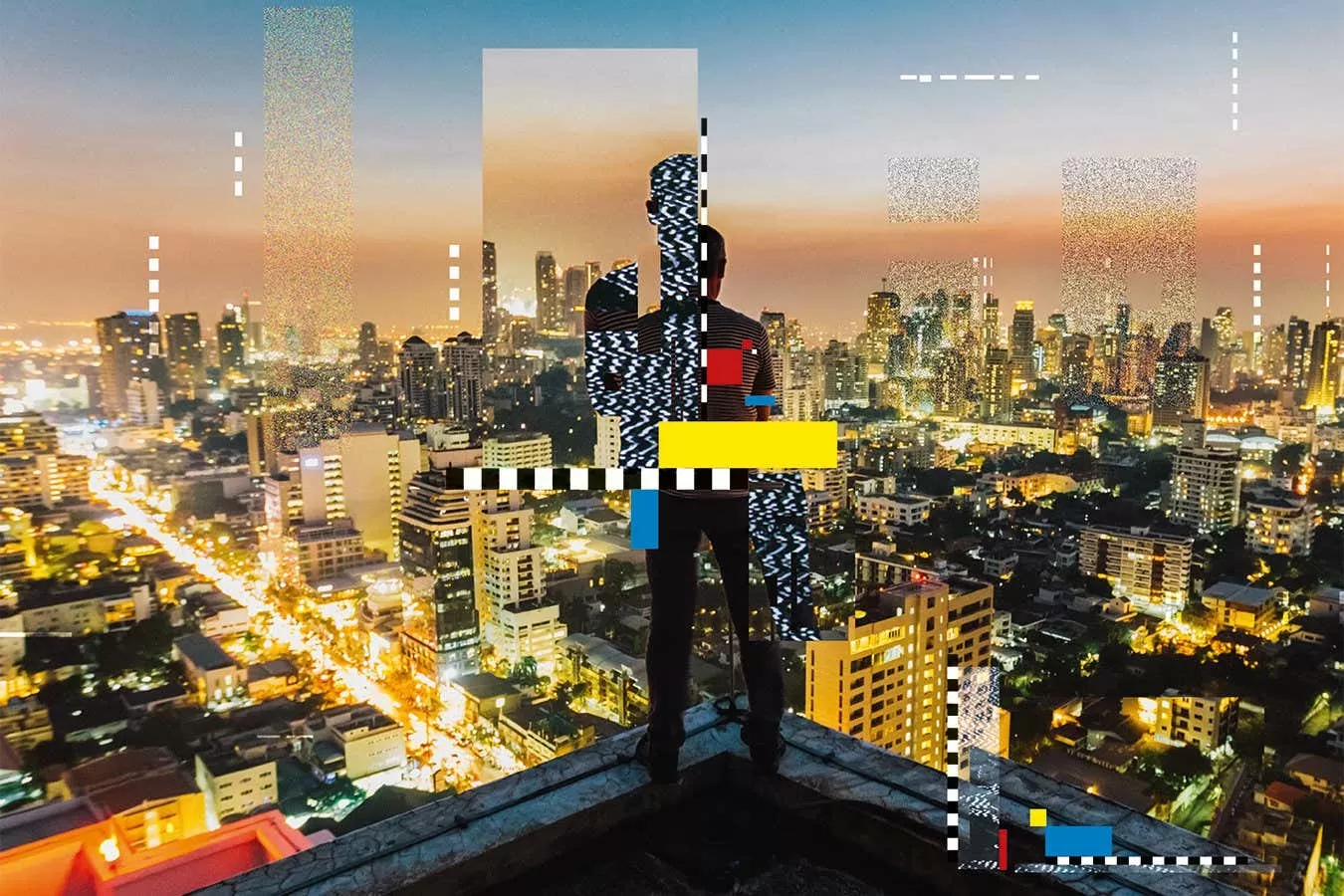
The concept of living in a simulated reality has been a source of fascination and fear for centuries. The idea that our entire existence could be nothing more than a computer-generated simulation has captured the imagination of many, from philosophers to science fiction writers. But what was once considered a mere thought experiment is now being taken seriously by physicists, who have found some intriguing clues that suggest we may indeed be living in a simulated reality. And they have even devised an experiment that could potentially reveal the truth.
The idea of a simulated reality, also known as the “simulation hypothesis”, was first proposed by philosopher Nick Bostrom in 2003. Bostrom argued that at least one of the following statements must be true: 1) the human species is very likely to go extinct before reaching a “posthuman” stage, 2) any posthuman civilization is extremely unlikely to run a significant number of simulations of their evolutionary history, or 3) we are almost certainly living in a computer simulation. This last statement is the one that has captured the attention of physicists and sparked a debate about the nature of our reality.
One of the main arguments for the simulation hypothesis is the rapid advancement of technology. In just a few decades, we have gone from basic computers to virtual reality and artificial intelligence. It is not hard to imagine that in the future, we could create simulations that are indistinguishable from reality. And if we can do it, it is possible that a more advanced civilization has already done it. In fact, some scientists believe that it is more likely that we are living in a simulation than in base reality.
But what evidence do we have to support this hypothesis? Physicists have found some intriguing clues that suggest our reality may not be as real as we think. One of these clues is the “quantum foam” – a concept in quantum mechanics that describes the fluctuations of space and time at a very small scale. Some scientists argue that these fluctuations could be a sign of the underlying code that makes up our simulated reality.
Another clue comes from the study of cosmic rays – high-energy particles that constantly bombard the Earth from outer space. These particles should be evenly distributed, but scientists have found that they are not. Instead, there is a “cosmic ray horizon” – a maximum energy level that these particles can reach. This could be a result of the limitations of the computer running our simulation.
But perhaps the most compelling evidence comes from the study of the universe itself. Our universe seems to follow certain mathematical laws and principles that make it appear like a computer program. For example, the speed of light is a fundamental constant in our universe, just like a computer code has a set speed. And the fact that our universe is expanding at an accelerating rate could be a sign of a computer program running at a faster speed.
So, what can we do to test the simulation hypothesis? Physicists have come up with an experiment that could potentially reveal the truth. The idea is to create a simulation within a simulation. If we can create a simulated universe that is indistinguishable from our own, then it is likely that we are also living in a simulation. Of course, this experiment is still in its early stages and there are many technical challenges to overcome. But it is a step towards finding out the truth about our reality.
But why does it matter if we are living in a simulated reality? Some argue that it doesn’t – our experiences and emotions are still real to us, regardless of the nature of our reality. However, others believe that if we are indeed living in a simulation, it could have profound implications for our understanding of the universe and our place in it.
In conclusion, the idea that we might be living in a simulated reality has been a topic of debate for centuries. But now, with the advancement of technology and the intriguing clues found by physicists, it is being taken seriously as a scientific hypothesis. The experiment proposed by physicists could potentially reveal the truth about our reality, but until then, the debate continues. Whether we are living in a simulation or not, one thing is for sure – the search for answers will continue to push the boundaries of our knowledge and understanding of the universe.
