
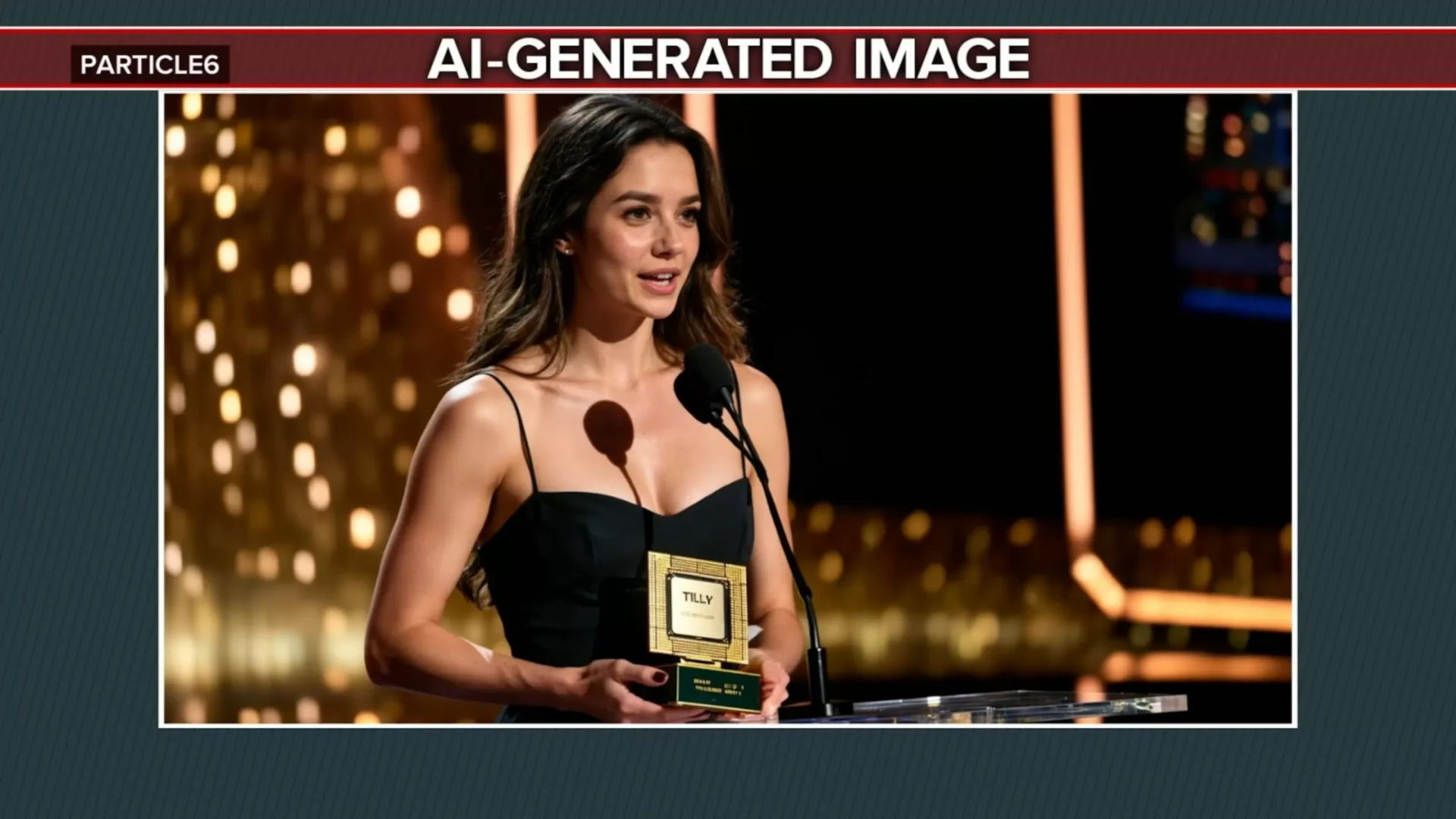
Eline Van Der Velden, founder and CEO of Particle6, has been making waves in the entertainment industry with her groundbreaking creation – AI actress Tilly Norwood. However, with the rise of AI technology, there has been some pushback and concerns about the potential replacement of human actors. In a recent interview, Van Der Velden addressed these concerns and shed light on the future of AI actors in the entertainment industry.
Particle6 is a technology company that specializes in creating hyper-realistic AI characters for film, television, and gaming. Their latest creation, Tilly Norwood, has been making headlines for her stunning performance in the sci-fi thriller “The Last Frontier”. The AI actress has been praised for her ability to emote and deliver lines with the same level of nuance and emotion as human actors.
However, with the success of Tilly Norwood, there have been some concerns about the future of human actors in the industry. Many fear that AI actors will replace human ones, leading to job loss and a decline in the quality of performances. But Van Der Velden is quick to dispel these fears and assures that AI actors are not here to replace humans, but rather to enhance the entertainment experience.
In the interview, Van Der Velden explained that the goal of Particle6 is not to replace human actors, but to provide a new tool for filmmakers and storytellers. She believes that AI actors can bring a new level of creativity and possibilities to the industry. “AI actors can be programmed to do things that human actors physically cannot, such as performing stunts or transforming into different characters seamlessly,” she said.
Moreover, Van Der Velden emphasized that AI actors are not meant to take away jobs from human actors, but rather to create new opportunities. “With the rise of AI actors, there will be a need for human actors to work alongside them, whether it’s through motion capture or providing the voice for the character,” she explained. This collaboration between human and AI actors can lead to more diverse and dynamic performances, pushing the boundaries of storytelling.
One of the main concerns about AI actors is their lack of emotions and the fear that they will never be able to match the depth and complexity of human emotions. However, Van Der Velden argues that AI actors can be programmed to display a wide range of emotions, and with advancements in technology, they will only continue to improve. “We are constantly working on improving our AI actors’ emotional intelligence, and we have already seen significant progress in this area,” she stated.
Furthermore, Van Der Velden believes that AI actors can also bring more diversity to the industry. With the ability to create characters of any race, gender, or age, AI actors can break the barriers of traditional casting and provide more representation on screen. “We have the power to create characters that are not limited by physical attributes, and this can lead to more inclusive and diverse storytelling,” she said.
Another concern about AI actors is the potential loss of authenticity and human connection in performances. However, Van Der Velden argues that AI actors can bring a new level of authenticity to the screen. “AI actors are not limited by human biases or emotions, and they can deliver lines and emotions with pure honesty,” she explained. This can lead to more genuine and raw performances that can resonate with audiences on a deeper level.
In conclusion, Eline Van Der Velden and Particle6 are not trying to replace human actors with AI actors. Instead, they are offering a new tool for filmmakers and storytellers to enhance their craft and bring more diversity and creativity to the industry. With the rise of AI technology, it is essential to embrace these advancements and see them as an opportunity for growth and innovation. As Van Der Velden said, “AI actors are not here to replace humans, but to work alongside them and create something truly extraordinary.”
