
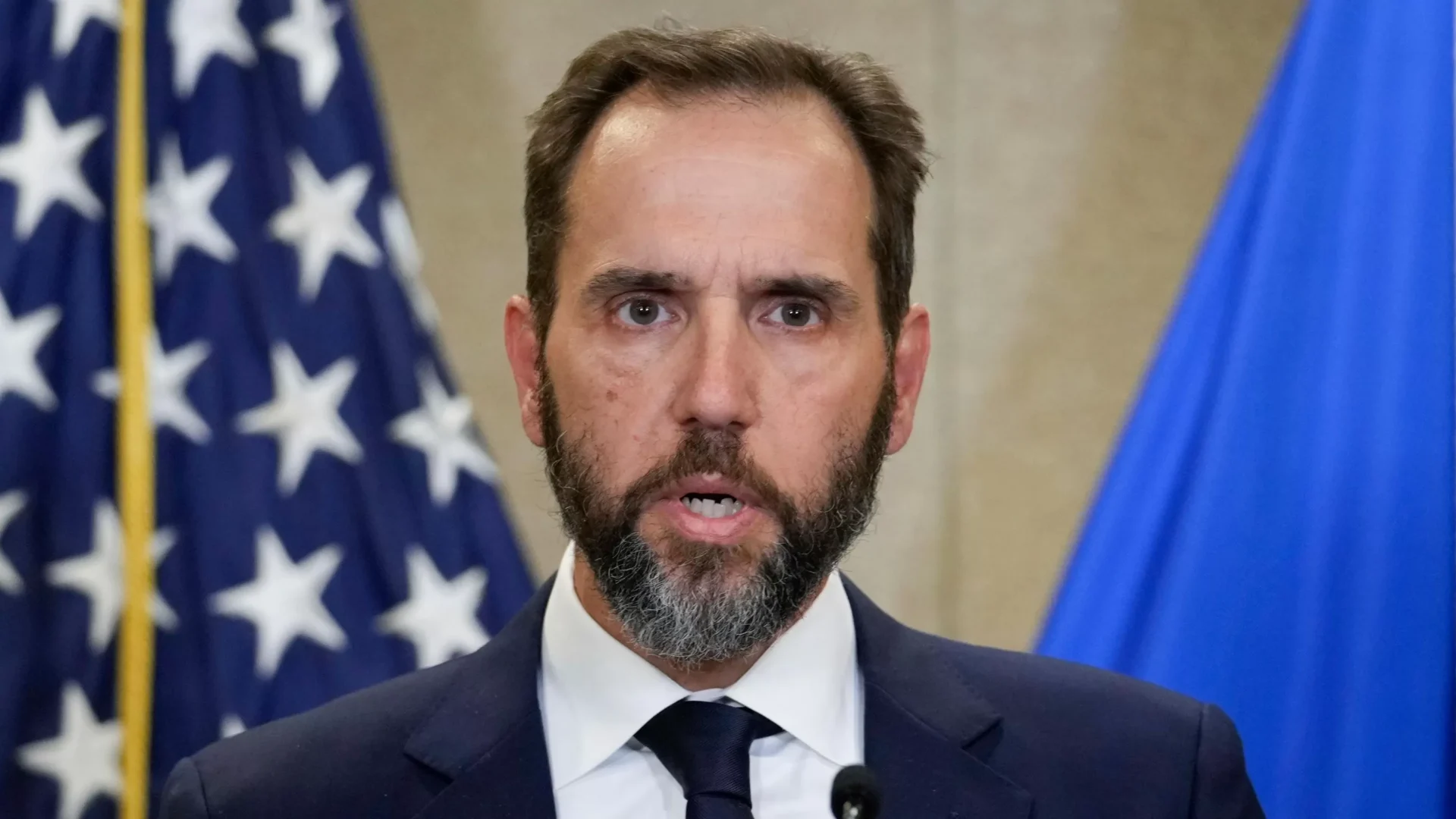
The Republican-led House Judiciary Committee has recently issued a subpoena for former Justice Department special counsel Jack Smith to appear for a closed-door interview later this month. This move comes as a surprise to many, as Smith had previously volunteered to testify in an open hearing about his prosecutions of high-profile cases.
This decision by the committee has sparked a debate among political analysts and citizens alike. Some see it as a necessary step to gain a deeper understanding of Smith’s actions during his time as special counsel, while others view it as a political move to discredit his work and the Justice Department as a whole.
However, it is important to note that Smith himself had offered to testify in an open hearing, showing his willingness to be transparent and accountable for his actions. This raises the question of why the committee has chosen to go ahead with a closed-door interview instead.
One possible explanation could be that the committee wants to protect sensitive information from being disclosed to the public. As a former special counsel, Smith may have access to classified information that cannot be shared in an open hearing. In such a case, a closed-door interview would be the appropriate course of action.
Furthermore, the committee may also be concerned about the potential politicization of the hearing. In recent years, hearings and testimonies have become highly polarized and often turn into a platform for political grandstanding. By conducting the interview in a closed setting, the focus can remain on the facts and the truth, rather than political posturing.
It is also worth mentioning that Smith’s prosecutions have been under intense scrutiny, with some questioning the motives behind his decisions. The closed-door interview could provide an opportunity for the committee to thoroughly examine these cases and gain a better understanding of the thought process behind them.
Moreover, the committee’s decision to subpoena Smith for a closed-door interview does not necessarily mean that the public will not have access to the information. The committee has the power to release transcripts or summaries of the interview, ensuring that the public is still informed about the proceedings.
It is important to remember that the House Judiciary Committee has a responsibility to conduct oversight of the Justice Department and its actions. As such, it is within their purview to call upon individuals like Smith to testify and provide insight into their work.
In the end, the decision to subpoena Smith for a closed-door interview may seem controversial, but it is a necessary step in ensuring transparency and accountability. The committee is doing its due diligence in thoroughly examining Smith’s prosecutions and gaining a deeper understanding of his actions.
It is also commendable that Smith has shown his willingness to testify and be held accountable for his work. This speaks to his integrity and dedication to upholding the law. The closed-door interview will provide a fair and unbiased platform for Smith to share his perspective and clarify any doubts or concerns.
In conclusion, the Republican-led House Judiciary Committee’s decision to subpoena former Justice Department special counsel Jack Smith for a closed-door interview is a necessary step in fulfilling their oversight responsibilities. It is a testament to the committee’s commitment to upholding the rule of law and ensuring transparency in the justice system. Let us hope that the interview will provide valuable insights and help restore public trust in our institutions.
