
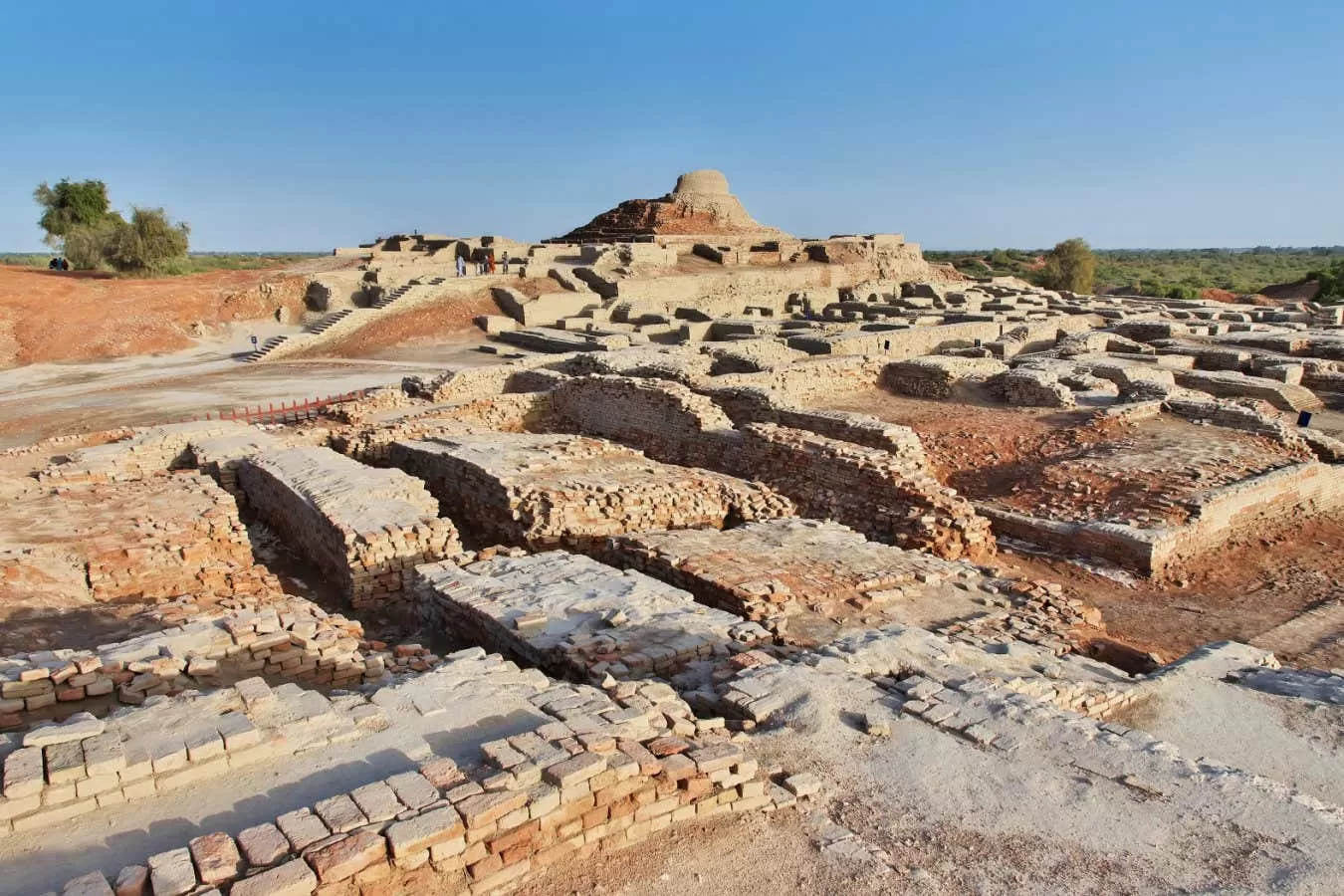
Hotter temperatures and a series of droughts in what is now Pakistan and India had a profound impact on one of the world’s earliest civilisations, the Indus Valley Civilisation. This ancient society flourished between 3300 BCE and 1300 BCE, and its decline has been attributed to a combination of environmental and social factors. However, recent research has shed light on the role that climate change played in the downfall of this once-great civilisation. This serves as a warning for us today, as we face similar challenges in the form of global warming and its effects on our planet.
The Indus Valley Civilisation was a highly advanced society, with sophisticated urban planning, a system of writing, and advanced agricultural techniques. Its cities, such as Mohenjo-Daro and Harappa, were among the largest and most advanced in the world at the time. However, around 2200 BCE, the region experienced a shift in climate, with temperatures rising and rainfall decreasing. This led to a series of droughts, which had a devastating impact on the Indus Valley Civilisation.
The first signs of trouble were seen in the form of declining agricultural productivity. The Indus Valley people were highly dependent on the Indus River for their crops, and with the decrease in rainfall, the river’s flow became erratic. This led to crop failures and famine, which in turn led to social unrest and a breakdown of the society’s structure. As resources became scarce, conflicts arose, and the once-thriving cities were abandoned.
The decline of the Indus Valley Civilisation serves as a cautionary tale for us today. We are facing a similar situation, with rising global temperatures and extreme weather events becoming more frequent. The difference is that we have the advantage of scientific knowledge and technology to understand and mitigate the effects of climate change. We have the opportunity to learn from the mistakes of the past and take action to prevent a similar fate for our own civilisation.
One of the key lessons we can learn from the Indus Valley Civilisation is the importance of sustainable living. The people of the Indus Valley had a deep connection with nature and lived in harmony with their environment. They had a sophisticated system of water management, with reservoirs and canals to store and distribute water. This allowed them to adapt to changing climatic conditions and sustain their society for centuries. In contrast, our modern way of life is often at odds with nature, with our reliance on fossil fuels and unsustainable practices leading to the destruction of our planet.
Another lesson we can take from the Indus Valley Civilisation is the importance of social and political stability in the face of environmental challenges. The breakdown of the society’s structure and the resulting conflicts and migrations were major contributing factors to its decline. Today, we must work together as a global community to address the issue of climate change and its impact on our societies. This requires cooperation and leadership from governments, as well as individual action from each and every one of us.
The downfall of the Indus Valley Civilisation also highlights the need for resilience and adaptation in the face of changing environments. The people of the Indus Valley were able to thrive for centuries, thanks to their ability to adapt to changing conditions. We must follow their example and find ways to adapt to the challenges posed by climate change. This could include developing new technologies, implementing sustainable practices, and finding innovative solutions to mitigate the effects of global warming.
In conclusion, the Hotter temperatures and a series of droughts in what is now Pakistan and India had a significant impact on the downfall of the Indus Valley Civilisation. This serves as a warning for us today, as we face similar challenges in the form of climate change. However, we also have the advantage of knowledge and technology to address these challenges. By learning from the mistakes of the past and taking action, we can ensure a sustainable future for our planet and prevent a similar fate for our own civilisation. Let us take this warning shot and turn it into a call to action for a better, greener future.
