
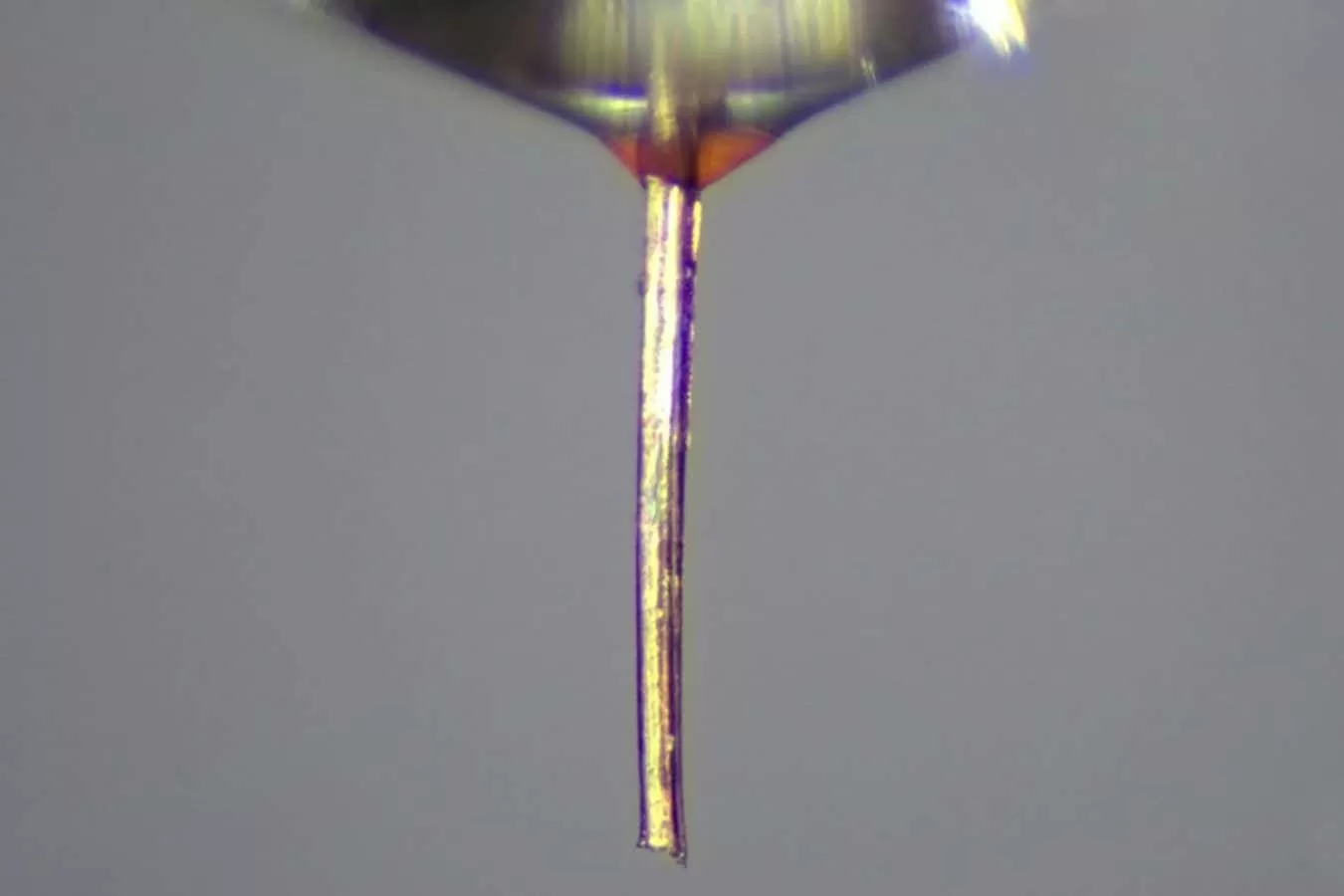
In the world of engineering, innovation and problem-solving are at the core of every project. Engineers are constantly pushing the boundaries of what is possible, striving to create solutions that are more efficient, effective, and precise. However, there are times when even the most brilliant minds face challenges that seem insurmountable. Such was the case when engineers struggled to make 3D printer nozzles narrow enough for their needs. But, as they say, necessity is the mother of invention, and in this case, nature provided the perfect solution – the proboscis of a female mosquito.
The use of 3D printing technology has revolutionized the manufacturing industry, allowing for the creation of complex and intricate designs with precision and speed. However, one of the major limitations of 3D printing was the size of the nozzle. The smaller the nozzle, the finer the details that could be achieved in the printed object. This was crucial for industries such as aerospace and medical, where even the tiniest imperfection could have serious consequences. But engineers were struggling to make nozzles small enough to meet their needs.
That’s when they turned to nature for inspiration. The proboscis of a female mosquito caught their attention. This long, slender mouthpart is used by female mosquitoes to pierce the skin of their victims and extract blood. But what made it so fascinating to engineers was its incredibly small size and its ability to penetrate even the tiniest of spaces. It was exactly what they needed for their 3D printing nozzles.
The proboscis of a female mosquito is made up of several components, including a sharp, needle-like structure called the fascicle. This structure is surrounded by two other components – the labrum and the hypopharynx. The labrum acts as a sheath, protecting the fascicle while the hypopharynx acts as a channel for the mosquito to inject its saliva into the victim’s skin. This saliva contains enzymes that prevent blood from clotting, making it easier for the mosquito to extract blood.
Engineers studied the structure of the proboscis in detail and found that it had all the properties they needed for their 3D printer nozzles. The fascicle was incredibly thin and sharp, allowing for precise and accurate printing. The labrum and hypopharynx provided the necessary support and flexibility, allowing the nozzle to navigate through tight spaces and intricate designs. It was a perfect combination of strength and flexibility, just what engineers were looking for.
But it wasn’t just the structure of the proboscis that inspired engineers. They also looked at the way mosquitoes use their proboscis to extract blood. The proboscis is inserted into the skin at a specific angle, and the mosquito uses a combination of movements to extract blood. This technique was replicated in the design of the 3D printer nozzle, allowing for more efficient and effective printing.
The use of the proboscis of a female mosquito in 3D printing nozzles has opened up a world of possibilities for engineers. With the help of this natural inspiration, they were able to create nozzles that were smaller, more precise, and more versatile than ever before. This has had a significant impact on industries such as aerospace, medical, and even consumer products, where intricate designs and precision are crucial.
But the benefits of this innovation go beyond just the engineering world. By turning to nature for inspiration, engineers have also highlighted the importance of sustainability and biomimicry in design. Nature has been solving problems and perfecting designs for millions of years, and we can learn a lot from it. By mimicking nature, we can create solutions that are not only efficient and effective but also sustainable and eco-friendly.
The use of the proboscis of a female mosquito in 3D printing nozzles is a testament to the power of nature and the ingenuity of engineers. It is a reminder that sometimes, the answers to our most challenging problems can be found in the most unexpected places. This breakthrough has not only pushed the boundaries of 3D printing but has also opened up new possibilities for innovation and collaboration between different fields.
In conclusion, the struggle to make 3D printer nozzles narrow enough for their needs led engineers to turn to nature, and they found the perfect solution in the proboscis of a female mosquito. This natural inspiration has not only revolutionized 3D printing but has also highlighted the
