
In today’s world where science and technology are constantly advancing, the possibilities seem endless. One such advancement that has taken the scientific community by storm is gene-editing. This powerful tool has the potential to revolutionize a variety of industries, including agriculture. However, not all plants can benefit from this technique. Plants such as cocoa, coffee, and avocado have traditionally been thought of as “un-editable.” But, thanks to a new grafting technique, that may be about to change, opening the doors to more productive and nutritious varieties.
Gene-editing involves making precise changes to the DNA of an organism, resulting in desirable traits such as disease resistance, increased productivity, and enhanced nutrition. This technique has been successfully used on a range of crops, from corn and soybeans to apples and potatoes. However, plants like cocoa, coffee, and avocado have not been as fortunate, as their complex genomes make them difficult to edit, leaving them vulnerable to diseases and pests.
But, a team of scientists from the University of California, Berkeley, has found a way to overcome this hurdle. They have developed a grafting technique that enables the transfer of genetic material between plants, making it possible to introduce desirable traits into traditionally “un-editable” plants. This breakthrough has the potential to not only benefit farmers and consumers but also the environment.
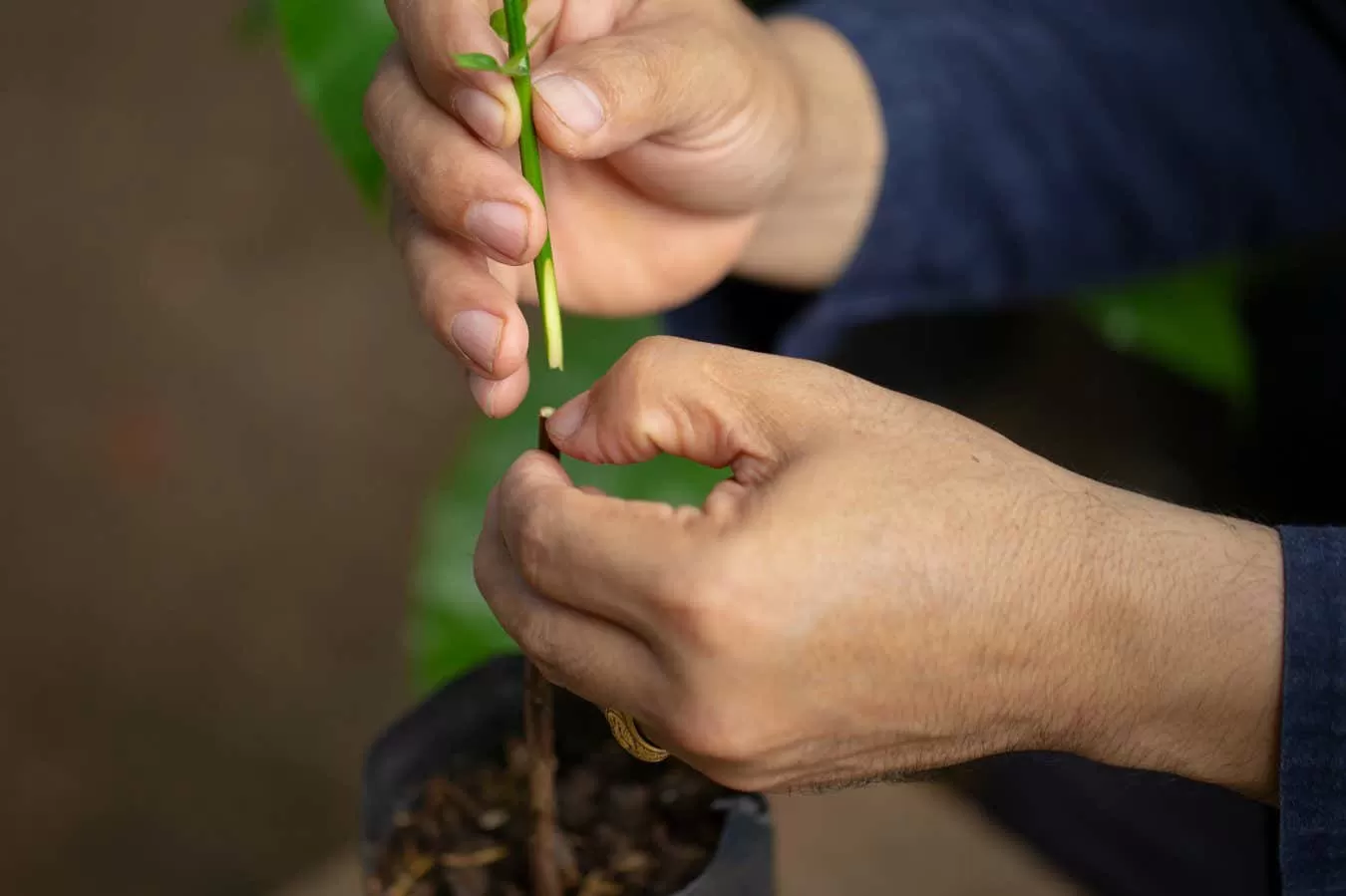
The process involves grafting a small portion of a “donor” plant onto a “receiver” plant, so that the two plants merge and grow together. During the process, the genetic material from the donor plant is transferred to the receiver plant, making it possible to incorporate desirable traits such as disease resistance and increased productivity. This technique has already been successfully demonstrated in cocoa plants, with promising results.
Cocoa is one of the world’s most popular crops, with a global production worth over $10 billion. However, it is susceptible to various diseases that can significantly impact its production. One of the most devastating diseases is cocoa swollen shoot virus, which has caused a decline in cocoa production in West Africa. But with the new grafting technique, scientists have successfully transferred genetic material from a disease-resistant plant into susceptible cocoa plants, resulting in resistance to the virus. This breakthrough could potentially save millions of dollars in losses for cocoa farmers and ensure a steady supply of this beloved commodity.
Similarly, the grafting technique has also shown promising results in coffee plants. Coffee is the second most traded commodity in the world, with a global market value of over $100 billion. But like cocoa, coffee crops are also vulnerable to diseases and pests that can affect the quality and yield of the beans. With the new grafting technique, scientists have been able to transfer genetic material from a disease-resistant variety of coffee to susceptible ones, enhancing their resistance against diseases and pests. This could lead to more stable and sustainable coffee production, benefiting both farmers and coffee lovers worldwide.
Apart from disease resistance, the grafting technique also has the potential to improve the nutritional value of crops. Avocado, a fruit loved by many for its creamy texture and healthy fats, is another example of a plant that cannot be gene-edited. But with the new technique, scientists have successfully transferred genes responsible for increasing the fruit’s lipid content from one plant into another. This could mean more nutritious avocados for consumers and more profitable avocados for farmers.
This breakthrough in the field of agriculture not only opens up new possibilities for traditionally “un-editable” plants but also has significant environmental implications. By grafting disease-resistant and more productive plants, farmers can reduce their reliance on harmful pesticides and chemicals, making the crops more environmentally sustainable. This could also lead to better soil health and a reduction in greenhouse gas emissions, contributing to a more sustainable and greener future.
While the grafting technique is still in its early stages, the potential it offers is immense. Not only does it tackle the challenges faced by traditionally “un-editable” plants, but it also has the potential to transform the agriculture industry as a whole. Farmers can benefit from higher yields, improved crop quality, and reduced costs, while consumers can enjoy more nutritious and sustainable produce.
In conclusion, the grafting technique has opened the doors to more productive and nutritious varieties of plants that were previously thought to be “un-editable.” This breakthrough has the potential to revolutionize the agriculture industry, benefiting farmers, consumers, and the environment. With continued research and development, we can look forward to a future where all plants can be enhanced through
