
Age-related macular degeneration (AMD) is a common eye disease that affects millions of people worldwide, especially those over the age of 50. It is the leading cause of vision loss in adults and can significantly impact a person’s quality of life. While there are treatments available to slow its progression, there has been no cure for this condition – until now.
Thanks to recent advancements in technology, a new implant in the back of the eye and a pair of high-tech glasses have given hope to people with AMD by enabling them to read again. This breakthrough has not only improved their vision but has also brought back their independence and ability to perform daily tasks with ease.
AMD is a degenerative eye disease that affects the macula, a small but crucial part of the retina responsible for central vision. As we age, the macula can deteriorate, causing blurred or distorted vision, dark spots, and even blindness. This condition can make it challenging to read, drive, recognize faces, and perform other essential tasks.
Until now, the only available treatments for AMD were injections or laser therapy, which could only slow down the progression of the disease. However, these treatments were not effective for everyone, and many people still struggled with vision loss.
But now, a team of researchers and engineers has developed a new implant, called the “EyeMax Mono,” which is placed in the back of the eye to improve vision. This implant works by projecting an enlarged image onto the healthy parts of the retina, compensating for the damaged macula. The implant is made of tiny mirrors that reflect light from the glasses onto the retina, creating a clearer and more magnified image.
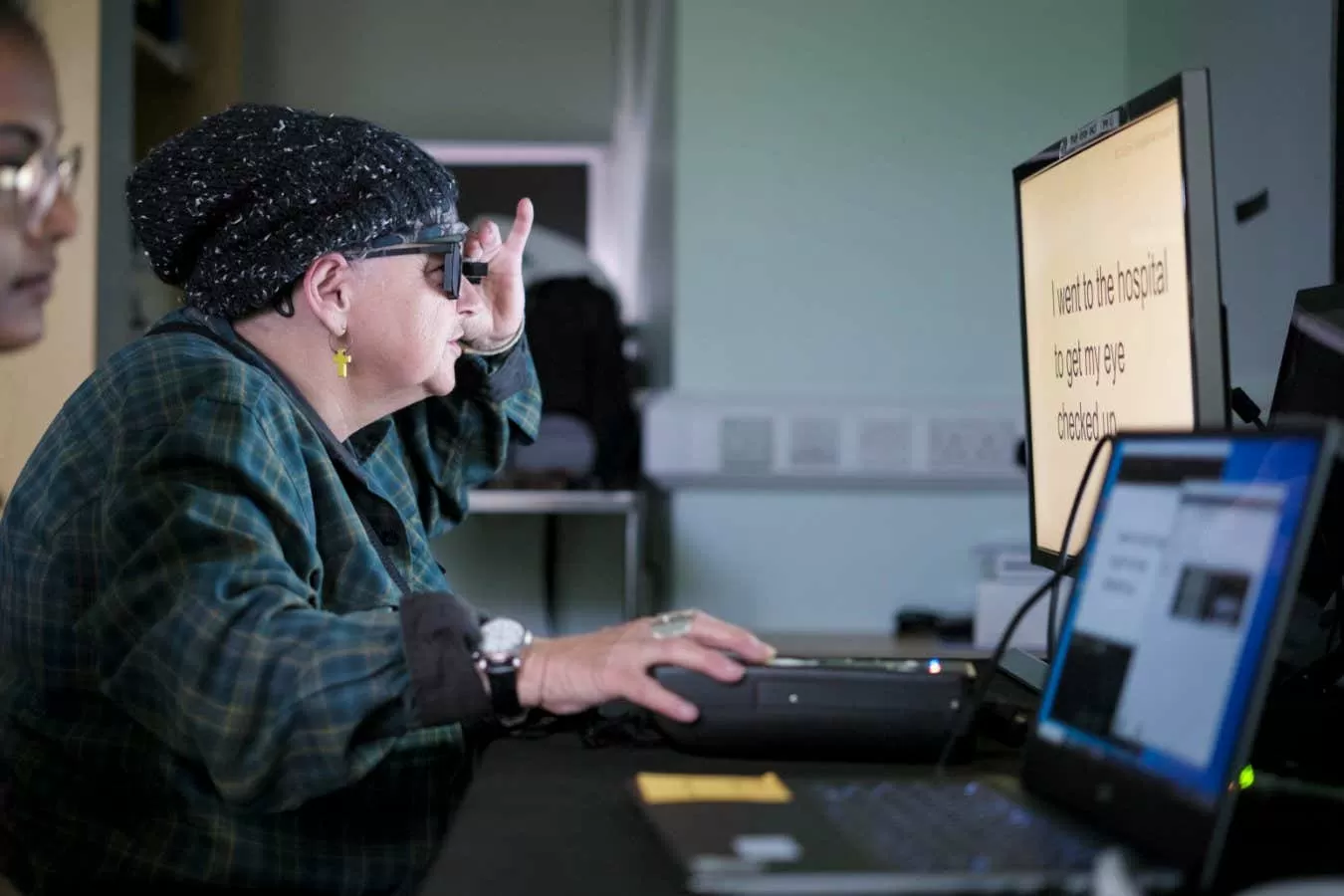
To use the implant, patients wear special glasses fitted with a camera and a computer. The camera captures the image and sends it to the computer, which then transmits it to the implant. The implant then projects the image onto the retina, allowing the person to see more clearly.
But the innovation does not stop there. The glasses also have a built-in eye-tracking system that adjusts the image according to the person’s eye movements, ensuring a stable and comfortable vision. This feature is especially helpful for people with AMD, as they often have difficulty focusing on a single point due to the damaged macula.
The EyeMax Mono implant and glasses have been tested on a group of 21 patients with AMD, and the results have been remarkable. All the participants were able to read letters and words on a screen, which was previously impossible for them. They also reported improved vision for daily tasks such as reading a newspaper, watching TV, and recognizing faces.
This breakthrough technology has not only restored the ability to read for people with AMD, but it has also improved their overall quality of life. Many patients have expressed their joy and gratitude for being able to do things they thought they would never be able to do again.
The EyeMax Mono implant and glasses have received approval from the European Union and are expected to be available for commercial use in the near future. This advancement in technology brings hope to millions of people suffering from AMD, giving them a chance to regain their independence and live a more fulfilling life.
Moreover, this breakthrough also opens doors for further research and development in the field of vision restoration. With continuous advancements, we can hope for even better treatments and possibly a cure for AMD in the future.
In conclusion, the EyeMax Mono implant and high-tech glasses have revolutionized the treatment of age-related macular degeneration. This groundbreaking technology has given people with AMD a new lease on life by enabling them to read again and perform daily tasks with ease. It is a shining example of how advancements in technology can improve the lives of those suffering from debilitating diseases. With this success, we can look forward to a brighter future for people with AMD and other eye diseases.
