
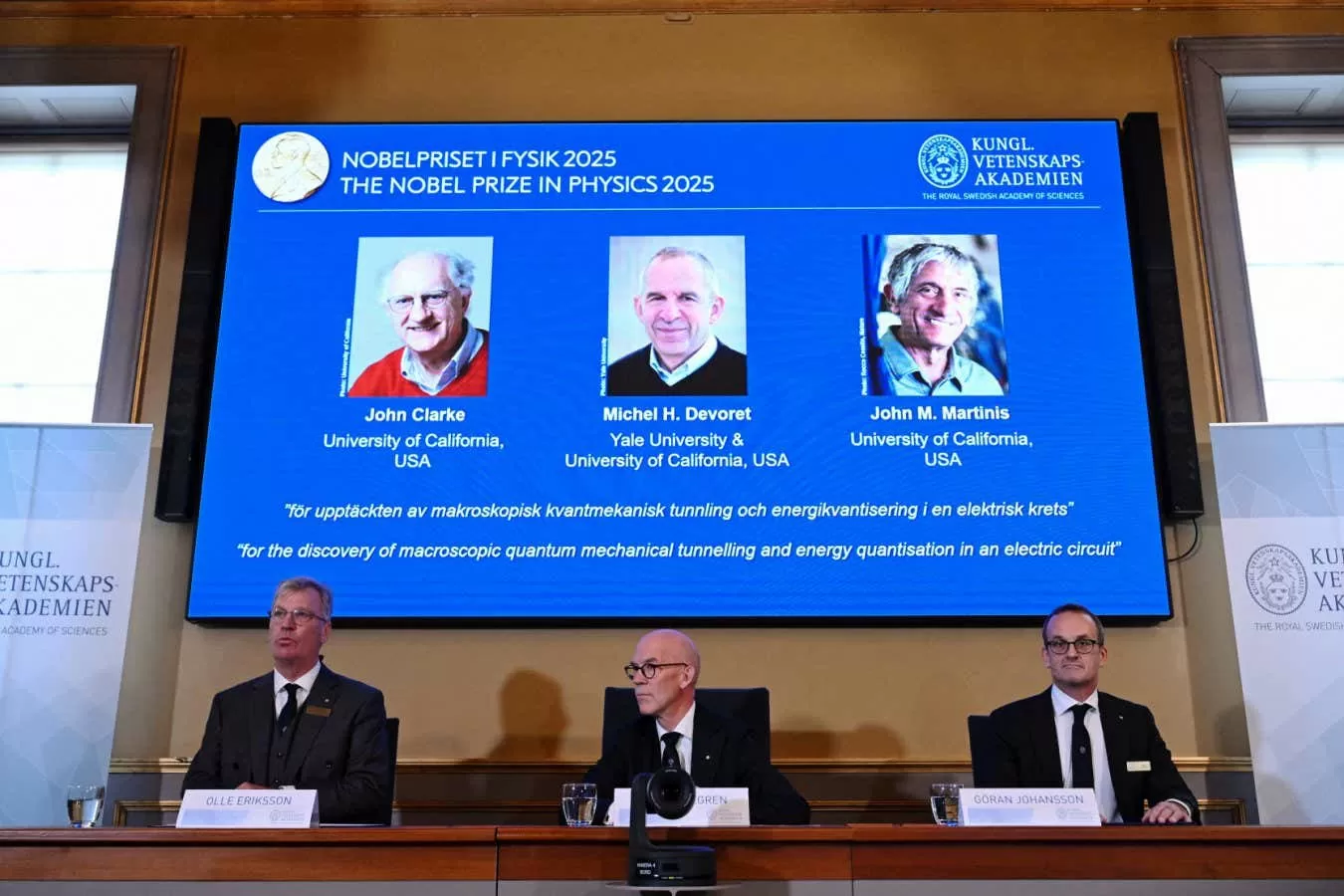
In a ground-breaking announcement, the 2025 Nobel Prize in Physics has been awarded jointly to John Clarke, Michel Devoret, and John Martinis for their revolutionary work in the development of quantum computers. This award recognizes the immense impact of their research on the field of quantum computing and how it has paved the way for the future of technology.
The concept of quantum computing has long been a subject of fascination and imagination, but it was these three brilliant minds who turned it into a reality. Their breakthroughs have allowed for the creation of computers that are thousands of times more powerful than traditional computers, with the potential to solve complex problems at an unprecedented speed.
John Clarke, a professor at the University of California, Berkeley, has been a driving force in the field of quantum computing for many years. His research on superconducting quantum circuits has been instrumental in the development of quantum computers. His contributions in the understanding and manipulation of these circuits have laid the foundation for the creation of quantum processors.
Michel Devoret, a professor at Yale University, has made significant contributions to the field of quantum computing through his work on quantum error correction. His innovative techniques have made it possible to correct errors in quantum systems, which was previously considered a major obstacle in the development of quantum computers. His work has greatly improved the reliability and performance of these computers.
John Martinis, a professor at the University of California, Santa Barbara, has been at the forefront of quantum computing research for over two decades. His research on superconducting quantum bits, or qubits, has been a major breakthrough in the field. His team’s success in creating a 50-qubit quantum processor has been a major milestone in the development of quantum computers.
The Nobel Committee has recognized the combined efforts of these three scientists in driving the field of quantum computing forward. Their work has been crucial in overcoming the challenges and limitations of traditional computing and has opened up a whole new world of possibilities. With their contributions, quantum computers have the potential to revolutionize industries such as finance, healthcare, and cybersecurity, and pave the way for new discoveries in fields such as chemistry and material science.
The impact of their work is already being felt in the scientific community, with many companies and research institutions investing heavily in quantum computing research. The development of quantum computers has also sparked a new wave of curiosity and excitement among young scientists, who are now exploring the endless possibilities of this technology.
The 2025 Nobel Prize in Physics is a well-deserved recognition for the dedication and perseverance of John Clarke, Michel Devoret, and John Martinis. Their contributions have not only advanced the field of quantum computing but have also inspired future generations to push the boundaries of science and technology.
As we look towards the future, it is clear that the impact of their work will continue to grow. With the rapid progress in quantum computing, we can only imagine the potential breakthroughs and innovations that lie ahead. The 2025 Nobel Prize in Physics is a testament to the limitless possibilities of science and the immense potential of quantum computing in shaping our world.
In conclusion, the recognition of John Clarke, Michel Devoret, and John Martinis with the 2025 Nobel Prize in Physics is a momentous occasion that celebrates their incredible contributions to the field of quantum computing. Their work has not only pushed the boundaries of science but also opened up a whole new era of technology. We congratulate them on this well-deserved honor and look forward to the exciting developments that lie ahead in the world of quantum computing.
