
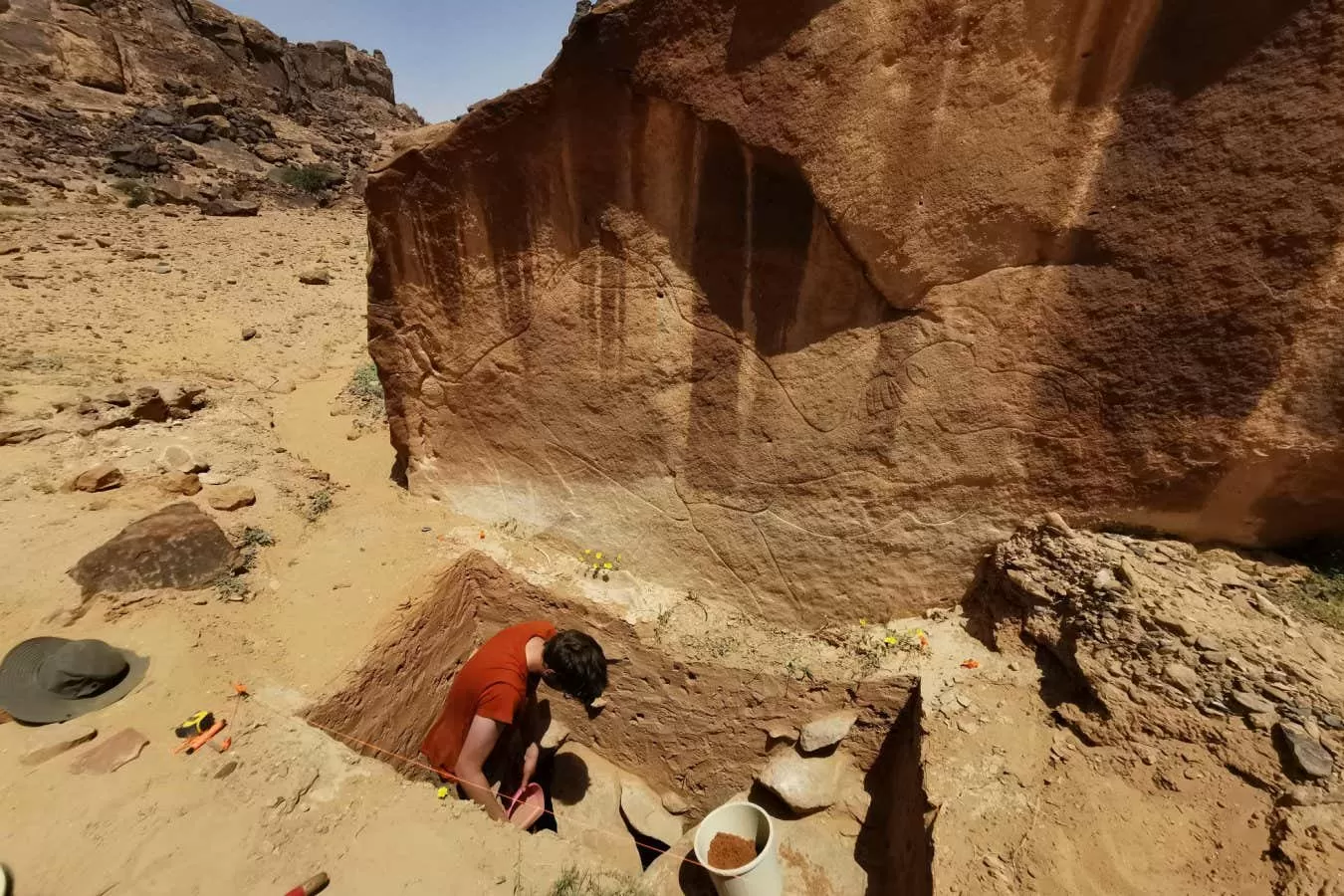
The beautiful and diverse landscapes of Saudi Arabia have long been admired, but recent archaeological discoveries have shed even more light on the country’s rich history and culture. Almost 200 engravings, created around 12,000 years ago, have been unearthed, showcasing the skill and creativity of ancient inhabitants of the Arabian Peninsula.
These engravings, also known as petroglyphs, were found in the northern region of the country, particularly in the Al-Jouf region. They were created by the ancient inhabitants of the area, who used stone tools to meticulously etch their depictions onto the cliffs and rocks of the region. The engravings range from simple geometric shapes to more intricate and detailed drawings of animals and human figures.
One of the most striking finds among these engravings are the depictions of camels, etched into cliff faces over 40 meters high. These engravings are not only visually impressive, but also hold significant cultural value as camels have been an integral part of the region’s history and heritage. These engravings are a testament to the strong connection that the ancient inhabitants had with these animals, showing their importance in their daily lives.
But the camels are not the only animals depicted in these engravings. Other animals such as horses, dogs, and even a lion have been discovered, showcasing the diverse wildlife that once roamed the region. These engravings also offer a glimpse into the activities of the ancient inhabitants, with scenes of hunting and herding depicted in some of the engravings.
What makes these engravings even more remarkable is the fact that they are around 12,000 years old, making them some of the oldest petroglyphs in the world. This discovery pushes back the timeline of human presence in the Arabian Peninsula and adds another layer of complexity to the region’s history.
The engravings were first discovered by a team of researchers from the University of Western Australia, working in collaboration with the Saudi Commission for Tourism and National Heritage. The team used drones equipped with high-resolution cameras to document the engravings, creating a detailed map of the site for further study.
The discovery of these petroglyphs not only sheds light on the ancient inhabitants of the Arabian Peninsula but also adds to our understanding of human history and art. These engravings are a testament to the creativity and ingenuity of our ancestors, as well as their deep connection to the land they inhabited.
The Saudi Commission for Tourism and National Heritage has announced plans to preserve and protect these engravings, recognizing their cultural and historical significance. This will allow future generations to experience and appreciate these ancient works of art.
The discovery of these engravings is a testament to the importance of preserving and protecting our cultural heritage. Not only do they provide a glimpse into our past, but they also serve as a reminder of the rich cultural diversity that exists in our world.
In conclusion, the discovery of almost 200 engravings in Saudi Arabia, including the impressive depictions of camels, is a remarkable find that adds to the country’s already rich history and culture. These petroglyphs offer a window into the lives of our ancient ancestors and remind us of the importance of preserving and protecting our cultural heritage. Let us continue to explore and learn from the past to gain a deeper understanding of our present and shape a better future.
