
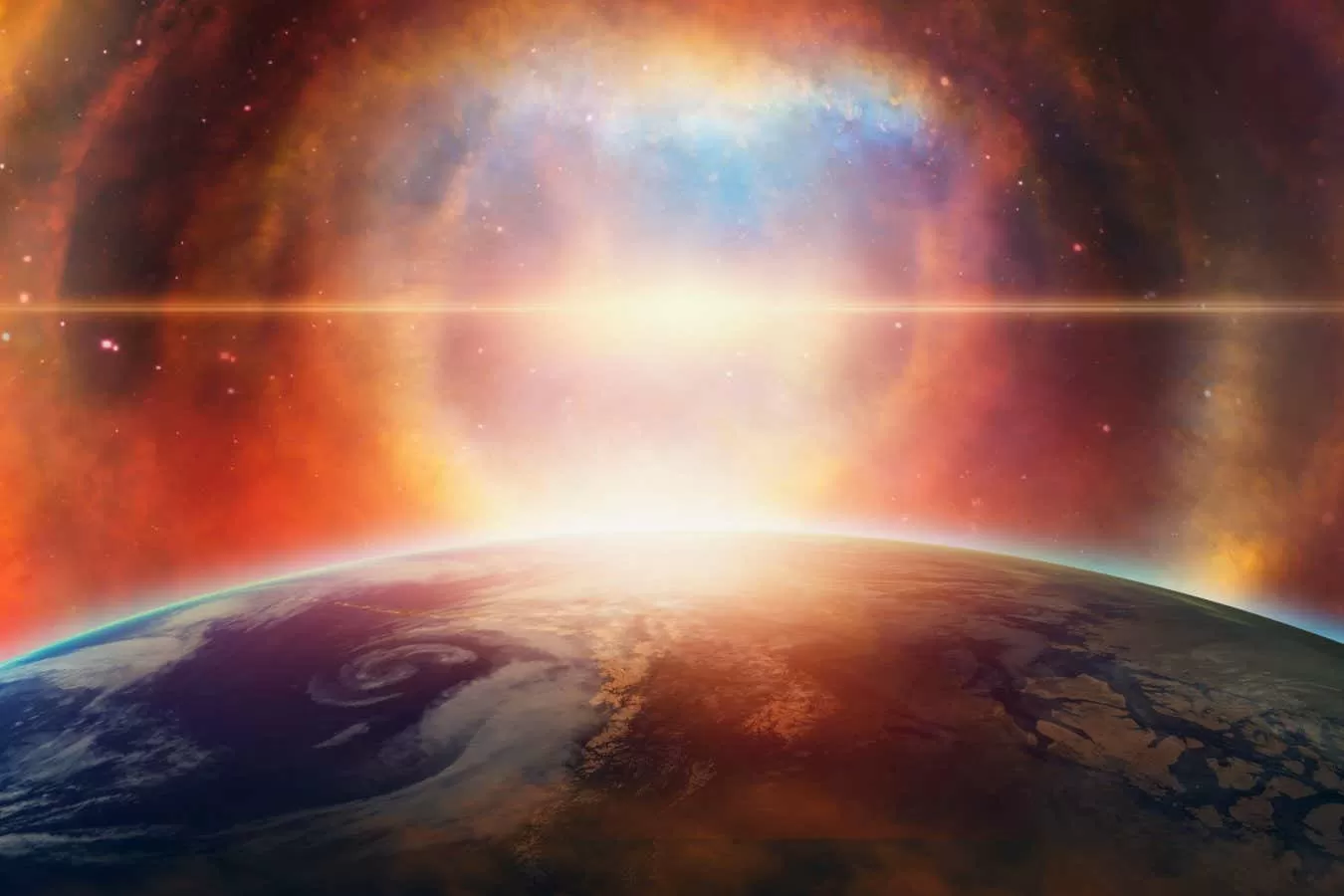
Deep beneath the vast expanse of the Pacific Ocean, there are signs of an extraordinary event that occurred millions of years ago. Scientists have recently discovered evidence that suggests an exploding star, known as a supernova, sent cosmic rays blasting towards Earth. This discovery has shed light on a long-standing mystery and provided insight into the origins of these powerful particles. But what exactly are cosmic rays and how did they get here? Let’s dive into the depths of the Pacific and explore this fascinating discovery.
Cosmic rays are high-energy particles that originate from outer space. They constantly bombard our planet, and while most of them are harmless, some can be extremely powerful and even pose a threat to astronauts and satellites. For decades, scientists have been trying to unravel the mystery of where these cosmic rays come from and how they are produced.
Now, thanks to a team of researchers led by the University of Hawaii, we may finally have some answers. By studying the chemical composition of the ocean floor, the team found evidence of an ancient supernova explosion that occurred about 3.2 million years ago. The remnants of this explosion, known as iron-60, were found in sediment samples taken from the floor of the Pacific Ocean. This is a significant discovery as iron-60 can only be produced in a supernova explosion, making it a tell-tale sign of the event.
But what makes this discovery even more remarkable is that the team was able to pinpoint the source of the cosmic rays. By analyzing the chemical composition of the iron-60, they were able to determine that it came from a specific type of supernova known as a Type II supernova. This type of supernova occurs when a massive star reaches the end of its life and explodes, releasing an enormous amount of energy. This energy then propels cosmic rays out into space at incredible speeds.
So why is this discovery so important? For one, it provides a new understanding of the origins of cosmic rays. Knowing that they come from supernova explosions can help scientists better predict and prepare for these powerful particles. It also opens up new avenues for research, as scientists can now study the remnants of these ancient explosions to learn more about the processes that occur during a supernova.
But perhaps the most exciting aspect of this discovery is the possibility of discovering more cosmic ray sources. The team believes that there may be other remnants of ancient supernova explosions waiting to be found, providing even more clues about the origins of cosmic rays. And with new technology and advancements in space exploration, we may be able to detect these sources and learn even more about the universe.
While this discovery is a significant step forward in our understanding of cosmic rays, there is still much to be learned. The team’s findings have been published in the journal Science, but they are already planning further research to confirm their findings and explore other potential sources of cosmic rays. In the meantime, scientists around the world are excited about this breakthrough and the possibilities it holds for future discoveries.
In conclusion, the signs deep beneath the Pacific Ocean have given us a glimpse into a cosmic event that occurred millions of years ago. The remnants of an ancient supernova explosion have provided evidence of the source of cosmic rays, and scientists now have a better understanding of these powerful particles. This discovery opens up new avenues for research and brings us one step closer to unraveling the mysteries of our universe. Who knows what other secrets lie waiting to be discovered in the depths of our oceans and beyond? The possibilities are endless, and this exciting discovery is just the beginning.
