
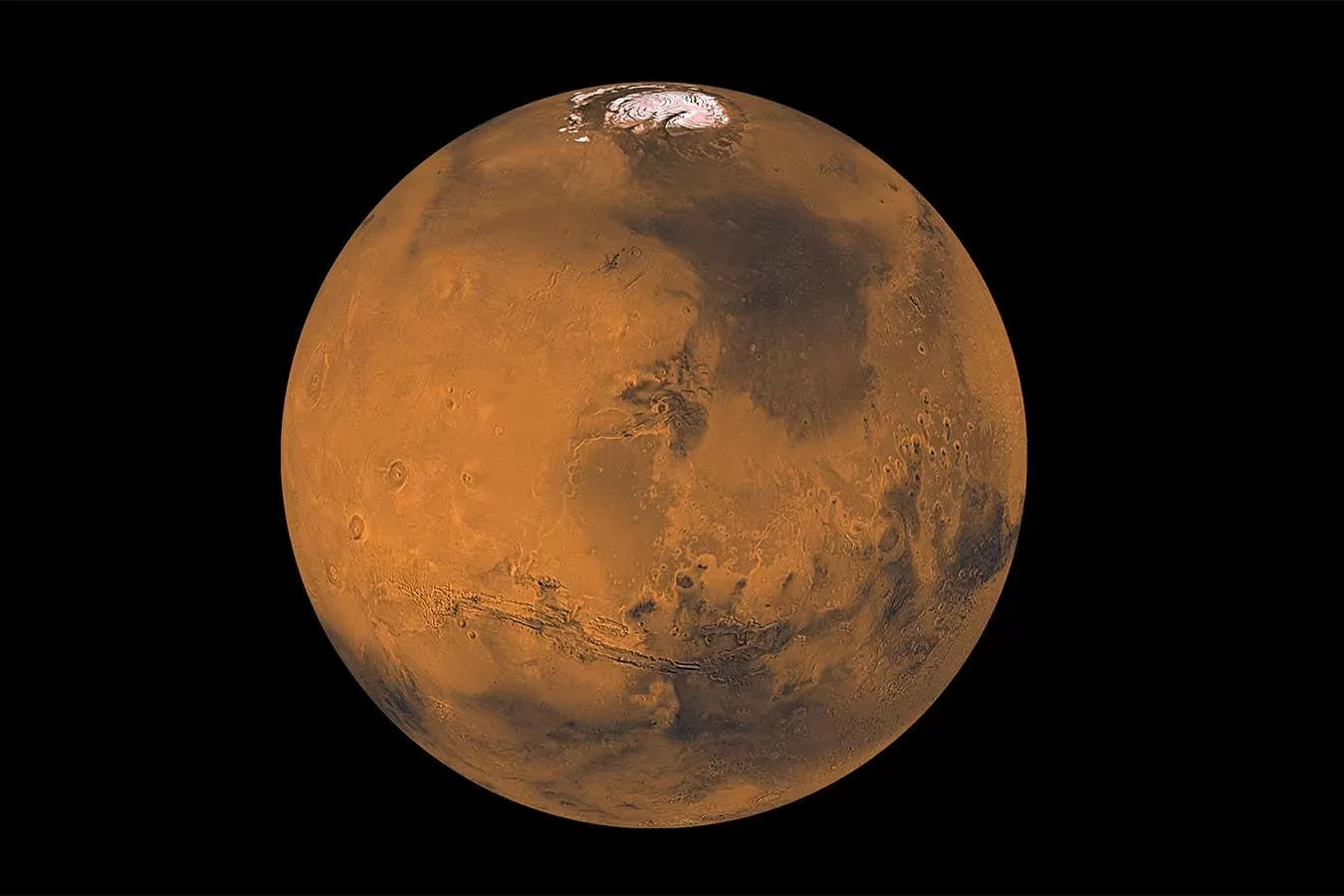
Mars, the fourth planet from the Sun, has long been a source of fascination and wonder for humanity. With its reddish appearance and proximity to Earth, it has captured the imaginations of scientists and space enthusiasts alike. But what many people don’t know is that Mars was not always the cold, dry planet that we see today. In fact, it may have once had a thick atmosphere, with a pressure three times that of Earth’s. This revelation has opened up a whole new world of possibilities and has sparked a renewed interest in the exploration of Mars.
Today, Mars has a very thin atmosphere, with a pressure only about 1% that of Earth’s. It is composed mainly of carbon dioxide, with traces of other gases such as nitrogen and argon. This thin atmosphere is unable to support life as we know it, and the harsh conditions on the surface make it inhospitable for any living organisms. However, recent discoveries have shown that this was not always the case.
Scientists have long suspected that Mars may have had a much thicker atmosphere in the past, but it was only in the last few decades that they were able to confirm it. The first evidence came from the Mariner 4 spacecraft in 1965, which revealed a barren, cratered surface with no signs of an atmosphere. But subsequent missions, such as the Viking landers in the 1970s and the Mars Global Surveyor in the 1990s, provided more clues and a clearer picture of Mars’ atmospheric history.
One of the most significant pieces of evidence came from the Mars Reconnaissance Orbiter, which has been orbiting the planet since 2006. It detected large amounts of water ice in the polar regions, indicating that Mars may have once had a much warmer and wetter climate. This is further supported by the presence of ancient riverbeds, lakes, and even a vast ocean that may have covered a third of the planet’s surface.
So, what happened to Mars’ thick atmosphere? The answer lies in the planet’s size and composition. Mars is only about half the size of Earth, and its gravitational pull is much weaker. This means that it was unable to hold onto its atmosphere as effectively as Earth did. Over time, the solar wind and other cosmic forces stripped away the atmosphere, leaving behind the thin layer we see today.
But the question remains, what was Mars like when it had a thick atmosphere? Scientists believe that it may have been much more Earth-like, with a warmer and more hospitable climate. The thicker atmosphere would have trapped heat from the Sun, creating a greenhouse effect and raising the planet’s temperature. This would have allowed liquid water to flow on the surface, providing the necessary conditions for life to thrive.
The discovery of Mars’ ancient atmosphere has sparked a renewed interest in the exploration of the Red Planet. Scientists are now working on various missions to Mars, with the ultimate goal of sending humans to the planet in the near future. The hope is that by studying Mars’ past, we can gain a better understanding of how planets evolve and how life can potentially develop on other worlds.
One of the most exciting missions is the Mars 2020 rover, which is set to launch in July 2020. It will be equipped with state-of-the-art instruments to search for signs of ancient life and collect samples that will be returned to Earth for further analysis. This mission, along with others, will help us unravel the mysteries of Mars’ past and potentially pave the way for future human exploration.
The discovery of Mars’ ancient atmosphere also has implications for our own planet. By understanding how Mars lost its atmosphere, we can learn more about the factors that contribute to a planet’s habitability. This knowledge can then be applied to Earth, helping us to better understand and potentially mitigate the effects of climate change.
In conclusion, Mars may appear to be a barren and desolate planet today, but it was once a much more vibrant and potentially habitable world. Its thick atmosphere, hundreds of times thicker than it is now, may have supported life in the past. This discovery has opened up a new chapter in the exploration of Mars and has reignited our curiosity about the mysteries of our neighboring planet. As we continue to unravel its secrets, who knows what other surprises Mars may have in store for us.
