
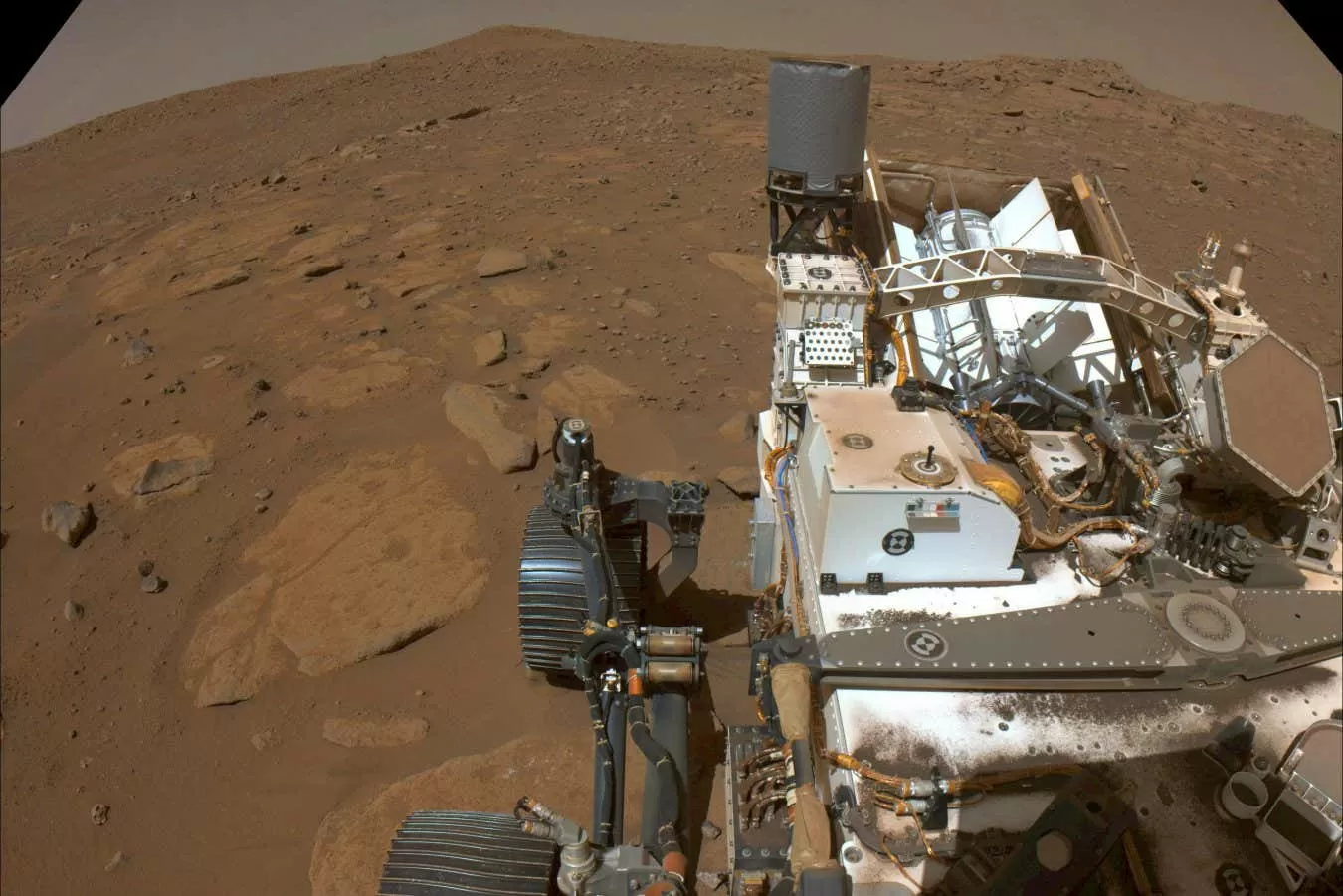
For centuries, humans have looked up at the night sky and wondered about the possibility of life beyond our own planet. And while we have yet to discover any extraterrestrial beings, recent discoveries have reignited our hope and curiosity. Last year, a rock found on the surface of Mars provided tantalising evidence that life may have once existed on the Red Planet. And now, scientists have uncovered even more evidence that points to the possibility of ancient organisms on Mars. However, without returning samples to Earth, we can only speculate and wonder about the truth.
The Mars rover, Curiosity, has been tirelessly exploring the Martian surface since 2012, and has made some incredible discoveries along the way. But perhaps one of the most significant findings was made last year when it stumbled upon a rock that contained organic molecules – the building blocks of life. This was a groundbreaking discovery that provided the first concrete evidence that Mars may have once been habitable.
But the latest findings from Curiosity have taken this discovery a step further. The rover has detected methane in the Martian atmosphere, which is a gas that is often produced by living organisms. While this alone does not confirm the existence of life on Mars, it is a strong indication that there may have been ancient microbial life on the planet.
These findings have sparked excitement and debate among the scientific community. Some believe that these discoveries are enough to confirm the existence of life on Mars, while others argue that we need to be cautious and continue to gather more evidence. And that is where the challenge lies – without physically examining samples from Mars, we can never be certain.
Bringing samples back to Earth from Mars is an incredibly complex and challenging task. It requires advanced technology and a significant amount of resources. But the potential rewards are immeasurable. By studying these samples in detail, scientists could unlock the mysteries of Mars and potentially find concrete evidence of ancient life.
NASA and other space agencies around the world have been working on various missions to bring samples back from Mars. The most ambitious of these is the Mars Sample Return mission, which aims to collect and return samples to Earth by the end of the decade. This mission will involve multiple spacecraft working together to collect and launch the samples back to Earth, where they will be carefully examined by scientists.
The importance of returning samples from Mars cannot be overstated. Not only could it provide us with the answers we have been seeking for decades, but it could also pave the way for future human exploration and even potential colonization of the Red Planet. By studying the samples, we could learn more about the Martian environment and potentially find ways to sustain human life on Mars.
But the journey to bring samples back from Mars is not without its challenges. It will require a significant amount of funding and international collaboration. And while the technology and plans are in place, there is always a risk of failure. However, the potential rewards far outweigh the risks, and the scientific community is determined to make this mission a success.
In the meantime, we can continue to marvel at the incredible discoveries being made by the Mars rover, Curiosity. With each new finding, our understanding of the Red Planet deepens, and our hope for finding evidence of ancient life grows stronger. And while we may have to wait a little longer for the definitive answer, the journey to uncover the truth about Mars is an exciting and awe-inspiring one.
In conclusion, the recent findings on Mars have reignited our fascination and hope for the possibility of life beyond Earth. The evidence for ancient organisms on the Red Planet continues to grow, but we can only confirm their existence by bringing samples back to Earth. The Mars Sample Return mission is an ambitious and crucial step in our quest to unravel the mysteries of Mars and potentially find answers to one of the greatest questions of all – are we alone in the universe?
