
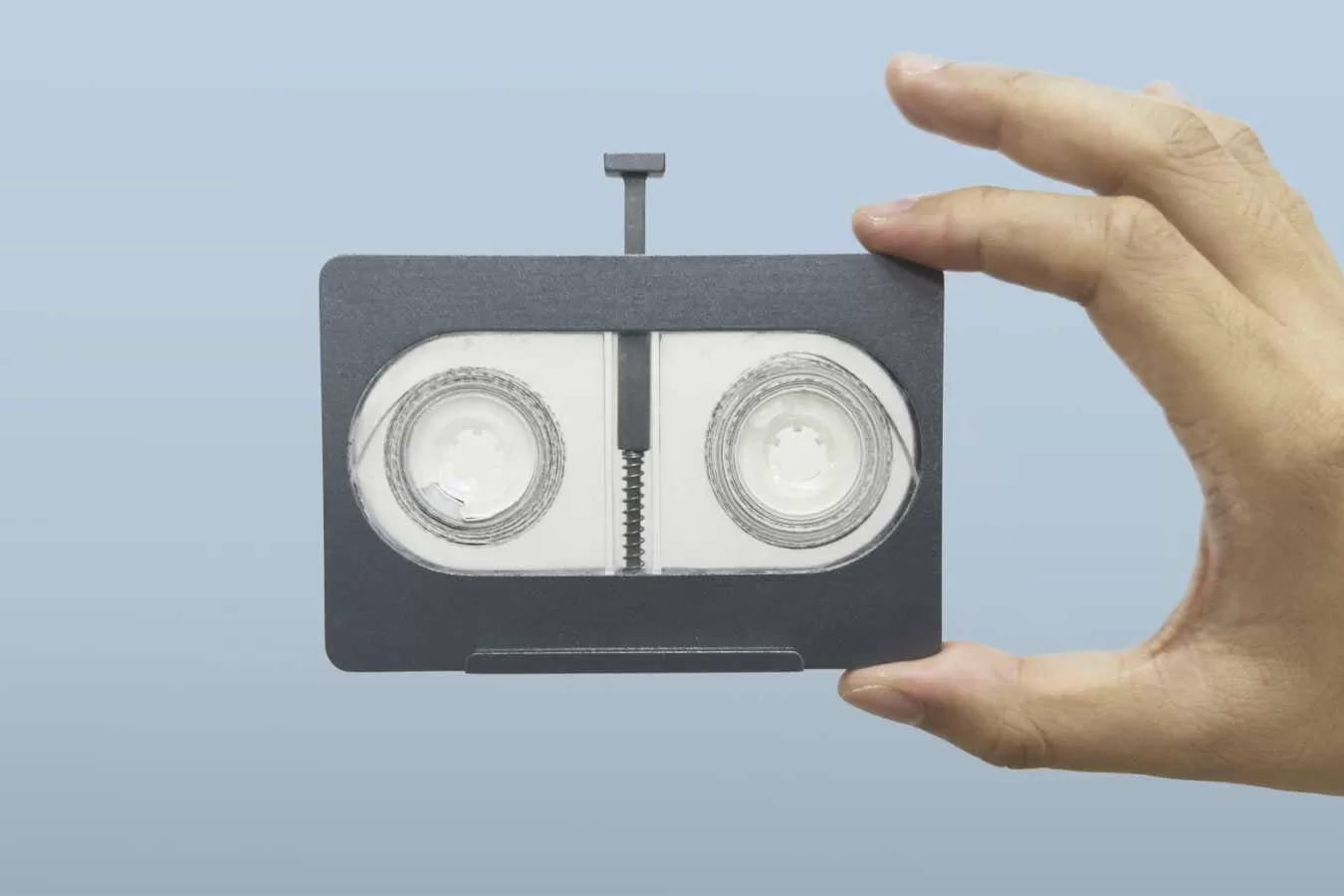
In a world where data is constantly being generated at an unprecedented rate, the need for efficient and reliable storage solutions has become more crucial than ever. While traditional methods of data storage have served us well, the limitations of these systems are becoming increasingly apparent. This has led researchers to explore alternative solutions, and one such solution has recently caught the attention of the scientific community – a storage medium that combines the information storage capabilities of DNA with a design inspired by a cassette tape.
DNA, or deoxyribonucleic acid, is the genetic material that carries the instructions for the development and functioning of all living organisms. It is known for its incredible ability to store vast amounts of information in a compact and durable form. In fact, just one gram of DNA can hold as much information as a trillion CDs. This makes it a highly attractive option for data storage, especially in a world where the amount of data being produced is growing exponentially.
However, the challenge lies in finding a way to access and retrieve this information from DNA in a quick and efficient manner. This is where the inspiration from cassette tapes comes in. Just like how a cassette tape stores audio information in a linear sequence of magnetic particles, the researchers have designed a method to store and retrieve data from DNA in a similar fashion.
The process involves converting digital data into a DNA sequence, which is then synthesized and stored in a compact form. To retrieve the data, the DNA is amplified and sequenced, and the information is decoded back into its digital form. This process is not only highly efficient but also allows for easy scalability, as more data can be stored simply by adding more DNA sequences.
What makes this storage medium even more impressive is its capacity. The researchers have successfully demonstrated that a single gram of DNA can hold 36 petabytes of data, which is equivalent to 36 million gigabytes. To put this into perspective, this is enough storage space to hold the entire contents of the Library of Congress more than 100 times over.
But the benefits of this new storage medium don’t end there. Unlike traditional methods, DNA is incredibly durable and can last for thousands of years if stored properly. This means that data can be preserved for future generations, making it a highly sustainable option for long-term storage.
Moreover, the use of DNA as a storage medium also has significant environmental implications. Traditional data centers require vast amounts of energy to operate and cool the servers, contributing to carbon emissions and environmental degradation. In contrast, DNA storage does not require any energy to maintain, making it a more eco-friendly option.
The potential applications of this new storage medium are vast and varied. It could revolutionize the way we store and access data, from personal information to large-scale data storage for organizations and governments. It could also have a significant impact on fields such as healthcare and genetics, where vast amounts of data are generated and need to be stored securely.
However, like any new technology, there are still challenges that need to be addressed before this storage medium can become widely available. The cost of synthesizing and sequencing DNA is still relatively high, making it a more expensive option compared to traditional methods. But with advancements in technology and increasing demand for efficient data storage solutions, it is expected that the cost will decrease in the future.
In conclusion, the combination of DNA’s information storage capabilities with a design inspired by cassette tapes has opened up a whole new world of possibilities for data storage. With its impressive capacity, durability, and potential applications, this storage medium has the potential to transform the way we store and access data. As research in this field continues to progress, we can look forward to a future where our data is not only secure but also sustainable.
